Introduction
More and more endurance athletes in Taiwan are choosing a plant-based diet for health, environmental, or ethical reasons. A plant-based diet is not a barrier to performance—Olympic gold medalists, ultramarathon champions, and professional triathletes include vegans among their ranks. However, a plant-based diet does present several “performance risks” that need to be actively managed, particularly regarding protein quality, iron, calcium, vitamin B12, omega-3 fatty acids, and creatine.
Six Key Nutritional Concerns for Vegan Athletes
1. Protein: Quality and Quantity
Plant-based proteins typically lack one or more essential amino acids (incomplete proteins), but this can be compensated for through diverse combinations:
| Food Combination | Amino Acid Deficiency Addressed | Taiwanese Ingredient Examples |
|---|---|---|
| Grains + Legumes | Complements lysine/methionine | Brown rice + tofu; steamed bun + edamame |
| Legumes + Nuts | Complements methionine | Peanut butter on whole wheat toast |
| Grains + Dairy (lacto-ovo) | Easiest complete protein | Oatmeal + soy milk |
Recommended vegan protein intake: 1.6–2.0 g/kg (slightly higher than omnivorous athletes to compensate for lower digestibility and absorption rates).
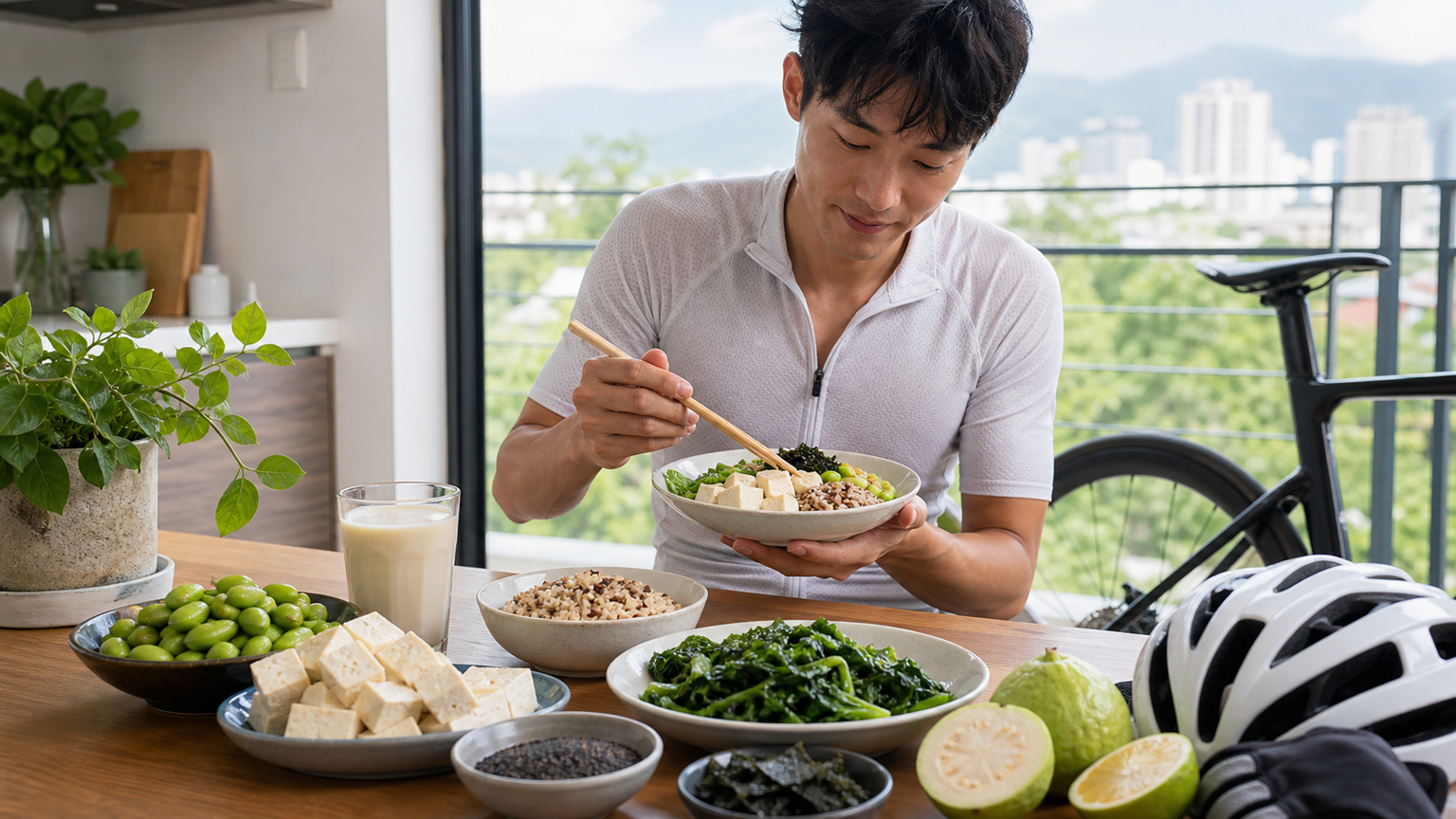
Protein-rich Taiwanese vegan ingredients:
- Tofu (firm tofu 150g → 14g)
- Dried tofu (50g → 10g)
- Edamame (cooked 150g → 15g)
- Soy milk (unsweetened 250mL → 10g)
- Tempeh (100g → 19g, available in Taiwan)
- Plant-based protein powder (pea protein, rice protein)
2. Iron: The Challenge of Absorption
Plant foods only contain non-heme iron, with an absorption rate of 2–15%, far lower than animal-based iron (15–35%).
Keys to improving absorption:
- Pair each meal with vitamin C (tomatoes, guava, kiwi, oranges)
- Avoid tea and coffee at the same time as iron-rich meals
- Cook with cast iron cookware (acidic ingredients can extract iron during cooking)
Iron-rich plant foods: red amaranth (5mg/100g cooked), black sesame seeds (8mg/tbsp), pumpkin seeds (9mg/30g), black fungus, tofu.
3. Calcium
Vegan athletes who don’t drink milk need to actively seek alternatives:
- Firm tofu (made with calcium sulfate): 350–500 mg/150g
- Dried small fish (vegan version: nori, wakame)
- Fortified plant milk (choose brands with at least 120mg calcium per 100mL)
- Dark leafy vegetables: broccoli, Chinese kale, mustard greens (low in oxalate)
4. Vitamin B12
This is the one non-negotiable supplement in a vegan diet. B12 exists almost exclusively in animal foods, so vegan athletes must obtain it through fortified foods or supplements. B12 deficiency causes megaloblastic anemia and nerve damage, severely impacting endurance performance.
Recommendation: 250 mcg of methylcobalamin daily, or 2,500 mcg weekly (weekly dose). Fortified plant milk provides about 0.6–1.5 mcg per cup—relying on food alone makes it difficult to reach adequate levels, so direct supplementation is recommended.
5. Omega-3 Fatty Acids
The conversion of plant-based ALA (from flaxseed, chia seeds, walnuts) to EPA/DHA is only 5–10% efficient, yet EPA/DHA play important roles in anti-inflammation, heart protection, and training recovery. Vegan athletes are recommended to supplement with algae-based DHA/EPA capsules (Algae Omega-3)—this is also the original source of fish omega-3 and is completely plant-based.
6. Creatine
Creatine is primarily found in meat, and vegan athletes have on average 20–30% lower creatine stores than omnivores. Supplementing with 3 g/day of creatine monohydrate provides more significant benefits for power output and high-intensity training capacity in vegan athletes compared to omnivorous athletes.
Sample One-Day Meal Plan (65 kg Vegan Endurance Athlete)
| Meal | Food | Carbs (g) | Protein (g) |
|---|---|---|---|
| Breakfast | Oatmeal (50g) + unsweetened soy milk 300mL + banana | 65 | 18 |
| Morning snack | Edamame 150g + 1 slice whole wheat toast | 30 | 18 |
| Lunch | 1.5 bowls brown rice + braised firm tofu 150g + blanched spinach + kiwi | 80 | 20 |
| Afternoon snack | Quinoa salad + peanut butter | 30 | 12 |
| Post-training | Pea protein powder 30g + banana smoothie (plant milk) | 35 | 24 |
| Dinner | 1.5 bowls white rice + stir-fried tempeh with vegetables + dried tofu | 75 | 28 |
| Evening snack | Pumpkin seeds 30g + mango | 20 | 9 |
| Total | ≈ 335 g | ≈ 129 g (≈2.0 g/kg) |
Practical Recommendations
- Must supplement: Vitamin B12 (non-negotiable under any circumstances), algae-based DHA/EPA.
- May need to supplement: Calcium (if dairy intake is low), vitamin D (same as for all athletes), iron (monitor ferritin with regular blood tests), creatine (for high-intensity training).
- Taiwan has abundant vegetarian options—diversity is key: avoid eating the same tofu-and-rice meal every day; try tempeh, dried tofu, black beans, peanuts, nuts, and seeds.
- For sports supplements, choose plant-based whey alternatives (pea protein or a rice protein + pea protein combination).
Conclusion
A vegan endurance diet requires more planning and awareness, but it can fully support high-level training and competition. Master the six key concerns, pair them with Taiwan’s abundant plant-based ingredients, and your vegan diet will not only help you run farther and ride faster—it will also let you tell your friends: “A plant-based diet? No problem at all.”
Related Reading
- Vegetarian and Vegan Cyclists: How to Ensure Complete Nutritional Intake
- Dietary Strategies for Vegetarian Runners: A Complete Plant-Based Protein Supplementation Plan
- Dietary Strategies for Vegetarian Cyclists: Complete Nutritional Supplementation on a Plant-Based Diet
- Vegetarian Nutrition Strategies for Running: A Guide to Plant-Based Protein Sources and Iron Supplementation
CT暗黑廚房) 車友必備 宇宙無敵鮮蚵湯 幫助訓練恢復 天然食補 好市多 超肥鮮蚵 破PR
7 年前
單車 一日北高 ( 雙城 ) 肥宅雙人瘋狂行 紀錄片 REACTO
10 年前
一日北高/長距離團騎 常見問題補充篇 / 組團或跟團的眉角 / 壯車友容易被瘦車友慢性拉爆 / 原來屁股痛可能是這個原因...? / 風場配速法 / 公路車 / CT Yeh
2 年前
FTL 與 SYB 車隊專訪 西進武嶺 實用攻略分享! 2小時 如何練?!你不知道的眉角!新手準備武嶺必看 EP1 | 實力派女車友 | 精華版 | 公路車 | CTYeh
4 年前
秘境雪場 日本 八甲田 冰樹探險與滑雪體驗 ft. Q老師 & 運動生活
7 年前
一日北高前的高裝檢 | 北高 360 | 挑戰11小時的裝備 | 一日雙塔 | 補給
6 年前
靠單車減肥35公斤 心得分享與整理
7 年前
太平山單車員工旅遊 | 這樣玩CP值最高!| 公路車
5 年前