[2026 Giro d'Italia] 21-Stage Route Map, Pink Jersey Hot Rider Power Analysis, and Taiwan Broadcast Viewing Guide
文章導覽
Overview of Giro d’Italia 2026
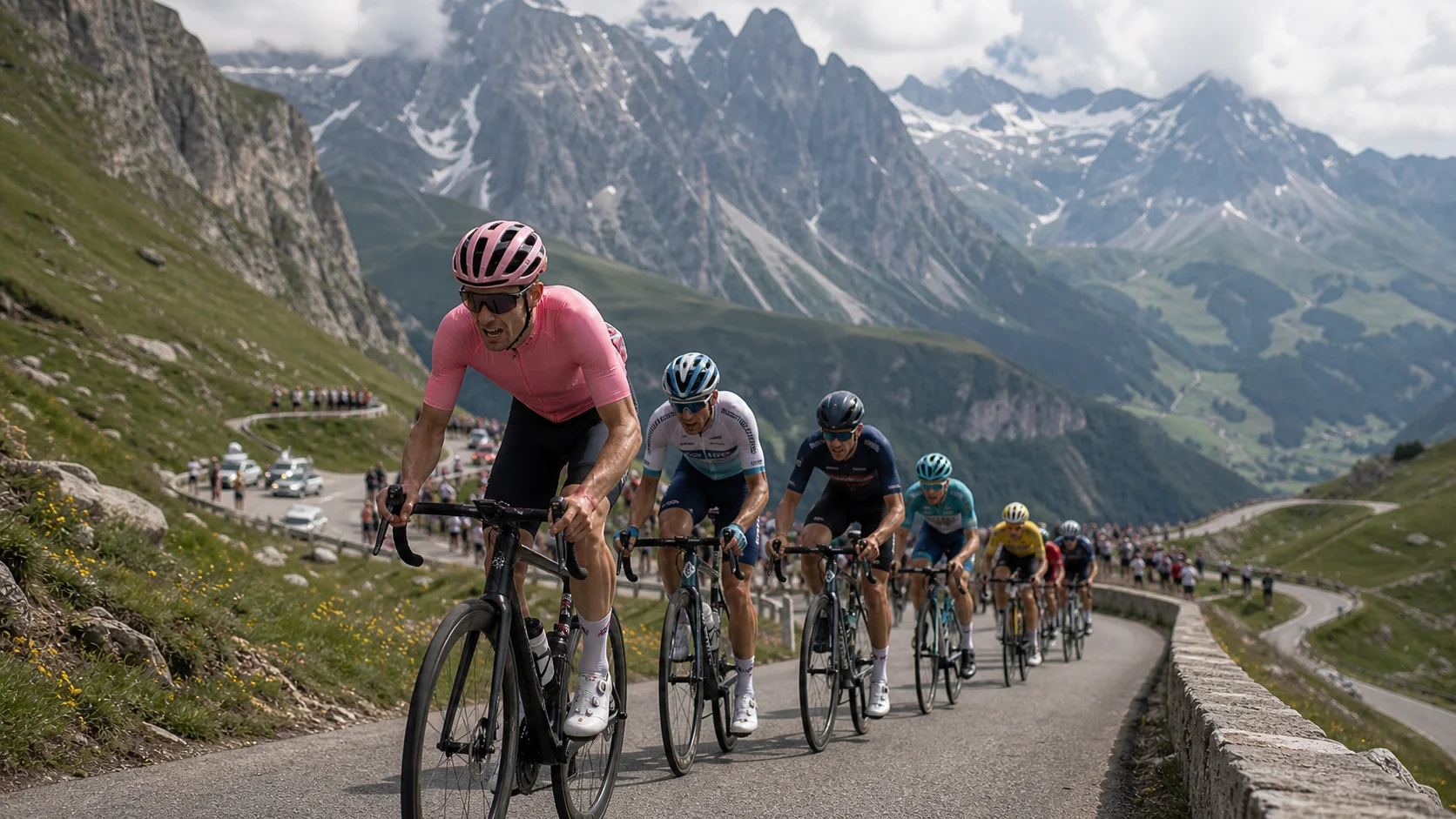
The Giro d’Italia is one of the three Grand Tours in cycling, alongside the Tour de France and Vuelta a España. The 2026 Giro will take place in May, spanning three weeks across the entire Italian peninsula, with a total distance of over 3,400 km.
The Maglia Rosa (pink jersey) symbolizes the overall race leader, and the battle for this pink jersey is often decided in a few key mountain stages.
The Unique Appeal of the Giro
Differences from the Tour de France
| Feature | Giro | Tour de France |
|---|---|---|
| Month held | May | July |
| Leader’s jersey color | Pink | Yellow |
| Mountain characteristics | Italian Alps, white gravel roads | French Alps, Pyrenees |
| Weather | Variable, often rain and snow | Usually more stable |
| Style | More aggressive | More controlled and conservative |
| Spectator atmosphere | Passionate Italian fans | The world’s largest annual sporting event |
The appeal of the Giro lies in its unpredictability. Italy’s mountain roads are more rugged and changeable, and May weather often brings heavy rain or even snow in the mountains, adding drama to the race.
Sterrato (white gravel road stages)
In recent years, the Giro has introduced Sterrato (gravel) stages, paying tribute to the Italian classic race Strade Bianche. These sections use unpaved white gravel surfaces, posing unique demands on riders’ bike-handling skills and equipment choices.
Analysis of Key Mountain Stages
High‑Altitude Battlefields
In the 2026 route design, the following mountain stages could become decisive battlegrounds for the pink jersey:
Dolomites stages:
The Dolomites are the most iconic mountain area of the Giro, featuring:
- Extremely steep gradients (some sections over 15%)
- Spectacular white limestone cliffs
- Narrow, winding roads
- Passes above 2,000 m altitude
Classic passes include:
- Passo dello Stelvio (Stelvio Pass, 2,758 m): one of the highest points on European roads
- Passo del Mortirolo (Mortirolo Pass): average gradient over 10%
- Passo Fedaia (Fedaia Pass): road leading to the Marmolada glacier
- Monte Zoncolan: called the “hardest climb in Giro history,” with a maximum gradient of 22%
Appennines stages:
The central Italian Apennines offer challenges different from the Alps:
- More gradual slopes
- Continuous rolling terrain that drains stamina
- Greater variability in road conditions
Individual Time Trials
The Giro usually includes 1–2 individual time‑trial stages, which are crucial for the overall classification:
- Flat time trial: tests aerodynamic position and sustained power output
- Mountain time trial: combines climbing ability with time‑trial technique
- Time gaps: differences between top riders can reach several minutes
Tactics for the Pink Jersey Battle
Energy Allocation Over Three Weeks
In a three‑week Grand Tour, managing energy is the key to victory:
Week 1 (Settimana 1):
- Ride conservatively, avoid large expenditures
- Build an early advantage in the time trial
- Observe rivals’ condition and tactical intentions
Week 2 (Settimana 2):
- Start applying pressure on mountain stages
- Use steep climbs to create gaps with competitors
- Team domestiques begin to feel the strain
Week 3 (Settimana 3):
- Decisive moments, all cards are played
- The toughest mountain stages are usually placed in this week
- Accumulated fatigue makes mental resilience a decisive factor
Team Tactics
In the Giro, team tactics include:
- Control the pace: the leader’s team controls speed on the early part of mountain stages
- Wear down rival domestiques: increase speed to force the opponent’s team to exhaust their domestiques
- Repeated attacks: launch attacks repeatedly on climbs to drain rivals’ energy
- Alliances: trailing teams unite to collectively attack the leader
Viewing Guide
How to Understand Giro Broadcasts
For novice viewers, the following points can help you better follow the race:
- Pink jersey: overall race leader
- Purple jersey: points (sprinter) leader
- Blue jersey: mountains (Gran Premio della Montagna) leader
- White jersey: best young rider under 25
- Time gaps: the time shown on screen represents the gap to the front group or the leader
Viewing Times
Giro stages usually take place in the afternoon Central European Time, corresponding to Taiwan time roughly as:
- Stage start: Taiwan time 5 – 7 pm
- Key battles: Taiwan time 9 – 11 pm
- Ideal for watching live after work
Conclusion
The Giro d’Italia is one of the most romantic and unpredictable of the three Grand Tours in cycling. The 2026 route design showcases Italy’s mountainous beauty and the race’s challenging nature. Whether you are a seasoned fan or a newcomer to cycling, the Giro can offer you an unparalleled viewing experience. Grab your popcorn and let’s look forward to the exciting showdown for the pink jersey.