Introduction
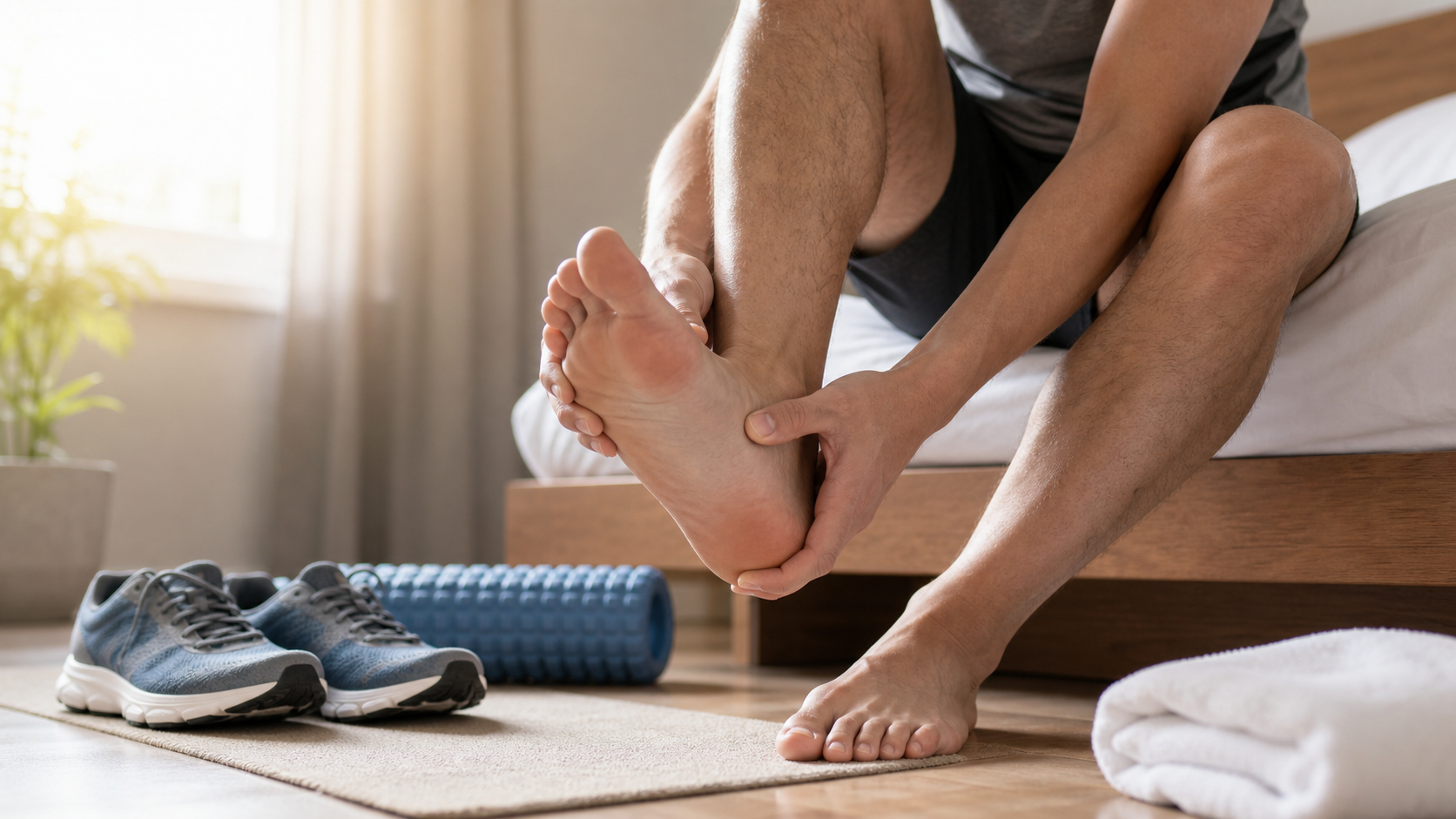
That sharp pain in your heel the moment your feet hit the floor in the morning—this is the most classic symptom of plantar fasciitis. While you sleep, the plantar fascia shortens; the first step after waking suddenly stretches it, triggering a tearing sensation. Runners, people who stand for long periods, and those who are overweight are high-risk groups. With Taiwan’s thriving road-running culture, plantar fasciitis has become a regular in orthopedic and rehabilitation clinic visits.
Understanding the Plantar Fascia: The Foot’s Natural Shock Absorber
The plantar fascia is a thick, ligament-like band of fibrous tissue extending from the heel bone (calcaneus) to the base of the toes (metatarsal heads). Functioning like a bowstring, it supports the arch and absorbs the impact of running. With each foot strike, body weight compresses the arch and stretches the plantar fascia; during push-off, it rapidly rebounds, helping generate forward propulsion.
When this fibrous band repeatedly endures excessive tension, micro-tears and inflammation develop at its heel attachment point—that is plantar fasciitis. In cases of long-term chronic inflammation, a heel spur may form, but the spur itself is not necessarily the direct cause of pain.
Causes and Risk Factors
| Risk Factor | Mechanism |
|---|---|
| Suddenly increasing running volume | Plantar fascia cannot adapt to repeated stretching in time |
| Tight calf muscles and Achilles tendon | Limited ankle dorsiflexion forces the plantar fascia to compensate |
| Flat feet or high arches | Abnormal arch alters tension distribution on the plantar fascia |
| Wearing shoes with poor cushioning | Hard-soled slippers and sandals increase heel impact |
| Being overweight | Extra pressure accumulates on the heel with every step |
| Prolonged barefoot standing | Lack of support keeps the plantar fascia overstretched |
Three Core Treatment Approaches
1. Stretching Exercises for the Plantar Fascia and Calves
This is the most scientifically supported treatment for plantar fasciitis:
- Plantar fascia self-stretch: Sit on a chair, pull the toes of the affected foot upward (dorsiflexion), and feel the fascia on the bottom of the foot tighten. Hold for 10 seconds, 10 reps per set, 3 sets daily. It is recommended to do this before stepping down from bed in the morning, which can significantly reduce morning pain.
- Wall calf stretch: Stand facing a wall, step the affected foot back, keep the knee straight, and press the heel to the floor. Hold for 30 seconds; then switch to a slightly bent-knee version to stretch the gastrocnemius and soleus muscles respectively.
- Towel toe curls: While seated, use your toes to grip a towel or marbles to strengthen the intrinsic muscles of the foot and support the arch.
2. Orthotics and Physical Support
- Heel silicone pads: Reduce direct heel impact; can be inserted into existing running shoes and purchased at pharmacies.
- Custom orthotics: For runners with flat feet or overpronation, custom orthotics are more effective than standard silicone pads.
- Night splint: Maintains the ankle at 90 degrees during sleep, preventing the plantar fascia from shortening overnight. Studies show that consistent use for 4–6 weeks can significantly improve morning pain.
3. Advanced Treatment Options
- Extracorporeal shock wave therapy (ESWT): For chronic plantar fasciitis that has not responded to 3–6 months of conservative treatment, shock wave therapy has a success rate of approximately 70–80% and is available at rehabilitation departments in major hospitals across Taiwan.
- Platelet-rich plasma (PRP) injection: Uses growth factors from your own platelets to promote tissue repair; more effective than steroid injections with fewer side effects, but at a higher cost.
- Steroid injection: Provides significant short-term relief, but repeated injections carry a risk of plantar fascia rupture and require careful consideration.
Return-to-Running Recommendations
- Avoid barefoot running and jumping activities until pain has completely resolved.
- When first returning, switch to well-cushioned, thick-soled running shoes to reduce heel impact.
- Increase cadence (target 170 steps/min) to reduce landing impact forces.
- Limit weekly mileage increases to no more than 10%.
Practical Tips
- Keep a pair of arch-supporting indoor slippers at home to avoid walking barefoot on hard floors.
- Do one set of plantar fascia self-stretches before showering each day to build the habit.
- If pain is accompanied by swelling in the ankle or top of the foot, a calcaneal stress fracture should be ruled out with X-ray or MRI.
Conclusion
Plantar fasciitis is a classic “slow and steady wins the race” injury—pushing through pain while running only prolongs inflammation and leads to chronicity. With regular stretching, appropriate orthotics, and patience, over 90% of patients recover fully within 6–12 months. Early detection and early treatment are the shortest path to freeing your feet again.
Related Reading
- Prevention and Treatment of Plantar Fasciitis: A Complete Guide to Runner’s Foot Pain
- Plantar Fasciitis: The Root Cause of Morning First-Step Pain and Rehabilitation
- Morning First-Step Heel Pain Explained: A Complete Guide to Plantar Fascia Mechanics, Causes, and Management
- The Complete Plantar Fasciitis Guide: Treatment Strategies and Training Adjustments for the Most Common Running Injury
一日北高常見問題大集合 | 攻略 | 路線 | 訓練 | 補給 | 自行車 單車 | 一日雙城 | 雙塔 | TWB北高360 | 屁股痛
6 年前
Never Stop 西進武嶺 前後雙機 完整全程錄影 訓練台 實境
8 年前
單車 一日北高 ( 雙城 ) 肥宅雙人瘋狂行 紀錄片 REACTO
10 年前
一日北高/長距離團騎 常見問題補充篇 / 組團或跟團的眉角 / 壯車友容易被瘦車友慢性拉爆 / 原來屁股痛可能是這個原因...? / 風場配速法 / 公路車 / CT Yeh
2 年前
摔車後補裝備: 好市多新款單車安全帽& Specialized Romin 北高整路屁股都不痛的坐墊 | 一千元居然有MIPS | CT Yeh | 公路車
4 年前
CT 喇低賽) 武嶺牽車 才是王道 西進牽車四小時內秘訣 攝手位置 如何判斷 防抽筋小秘訣
7 年前
高雄綠園道鐵路自行車道 / 外地人能輕鬆駕馭 還是整路崩潰? / 2025 全線開通 春節實地探索一次!(附GPS連結)/ 公路車 / CT Yeh
1 年前
白沙屯媽祖進香在家走!UREVO 坡度自調走步機 / 可連接訓練遊戲APP MyWhoosh / 邊看直播邊走起來 / CT Yeh
11 個月前