Introduction
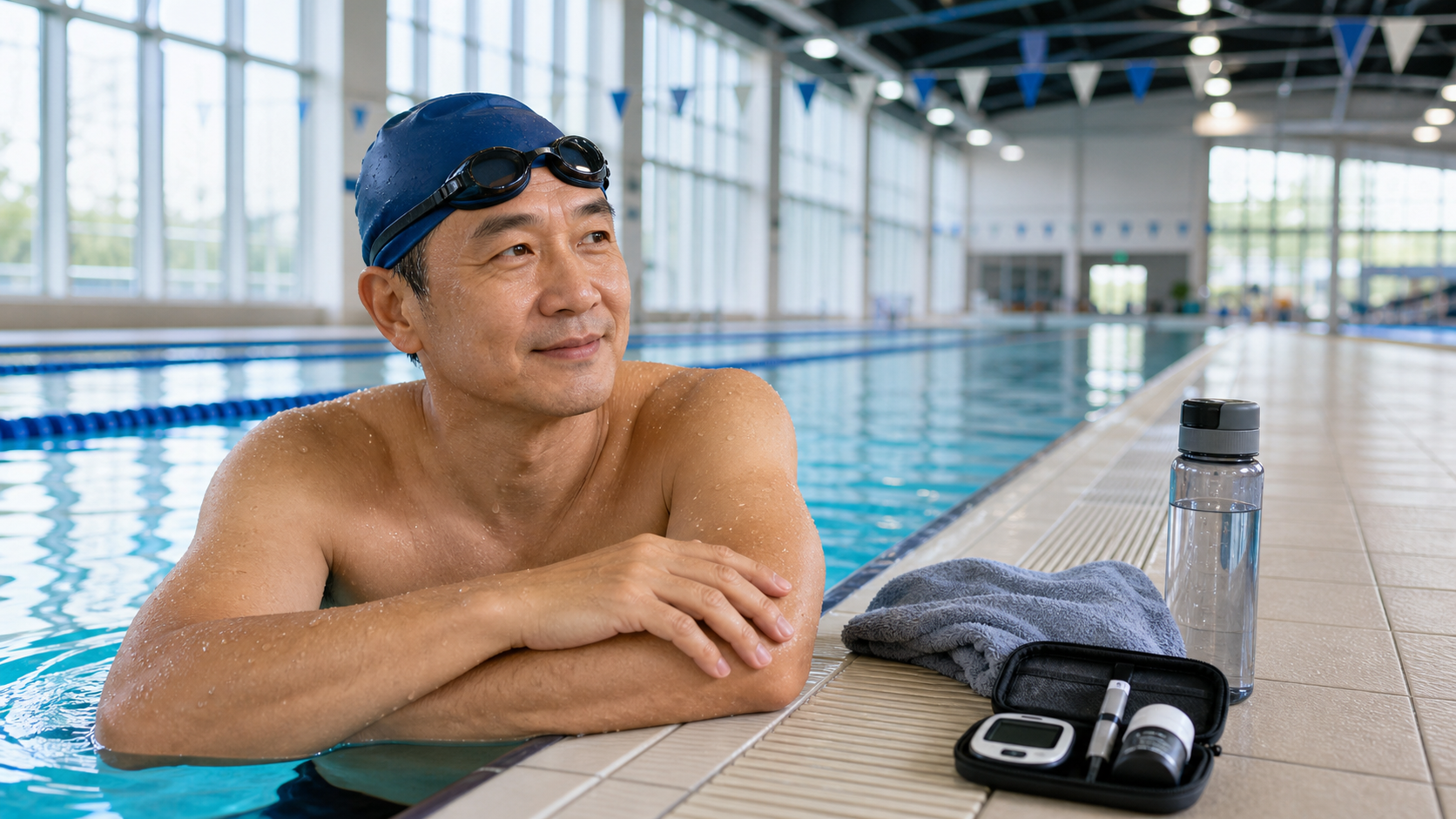
Taiwan currently has over 2.3 million people living with diabetes, and this number is increasing by approximately 25,000 each year. Exercise is widely recognized as one of the three pillars of diabetes management (alongside dietary control and medication), yet many patients struggle with running or brisk walking due to obesity, peripheral neuropathy, or foot problems. Swimming offers an exercise option that places almost no stress on the joints while effectively stimulating metabolism.
The Physiological Mechanisms of Swimming in Blood Sugar Regulation
Muscle Glucose Uptake
During aerobic exercise, muscle cells take up glucose directly from the bloodstream through an insulin-independent pathway (GLUT-4 translocation), without the need for insulin intervention. As a full-body exercise, swimming simultaneously engages the upper limbs, lower limbs, and core muscles, maximizing glucose consumption and directly lowering blood sugar.
Improved Insulin Sensitivity
Regular swimming increases the expression of GLUT-4 proteins in muscle cells and enhances insulin receptor sensitivity, allowing the same amount of insulin to promote greater glucose uptake. One study showed that after swimming three times per week for 12 weeks, insulin sensitivity index (HOMA-IR) in patients with type 2 diabetes improved by an average of 25%.
Metabolic Benefits of Increased Muscle Mass
The water resistance training of swimming moderately increases muscle mass, and muscle is the body’s largest glucose reservoir (stored in the form of glycogen). Greater muscle mass means a larger glucose storage capacity, which helps suppress sharp post-meal blood sugar spikes.
Improvements in Key Diabetes Indicators from Swimming
| Indicator | Meaning | Improvement After 12–16 Weeks of Swimming |
|---|---|---|
| Glycated hemoglobin (HbA1c) | Average blood sugar over the past three months | Average reduction of 0.6–0.8% |
| Fasting blood glucose | Baseline blood sugar regulation | Reduction of 10–15 mg/dL |
| Two-hour post-meal blood glucose | Insulin response efficiency | Reduction of 20–30 mg/dL |
| Insulin resistance (HOMA-IR) | Insulin sensitivity | Improvement of 20–30% |
| Waist circumference | Visceral fat indicator | Reduction of 2–4 cm |
A 0.6–0.8% reduction in HbA1c may seem modest, but clinical studies show that for every 1% reduction in HbA1c, diabetes-related mortality decreases by 21% and cardiovascular disease risk drops by 14%, making this degree of improvement clinically meaningful.
Special Safety Considerations for Swimming with Diabetes
Preventing Hypoglycemia
- Check blood sugar before swimming: It is recommended to enter the water with levels in the 126–180 mg/dL range; if below 100 mg/dL, consume carbohydrates first
- Prepare sugary foods: Keep glucose tablets or juice at the poolside to address hypoglycemic episodes
- Inform the lifeguard: Ensure pool staff know you have diabetes and understand the symptoms of hypoglycemia
- Avoid swimming alone: Especially for those using insulin injections, swimming alone should be avoided to prevent fainting from hypoglycemia
Foot Protection
- Due to peripheral neuropathy, diabetic patients may have reduced sensation of injury; wear water shoes when entering the water and avoid walking barefoot on the pool deck
- After swimming, carefully inspect both feet for wounds, blisters, or skin damage, and treat them promptly
- If there are wounds or ulcers on the feet, swimming is strictly prohibited; resume only after complete healing
Blood Sugar Monitoring Timing
- 30 minutes before swimming
- Immediately after swimming
- 2 hours after swimming (the peak window for delayed hypoglycemia)
Water-Based Exercise Prescription Recommendations for Diabetes
Based on the American Diabetes Association (ADA) guidelines, tailored to the characteristics of water-based exercise:
- Frequency: 3–5 times per week
- Intensity: Moderate intensity (slightly breathless while talking, heart rate reaching 50–70% of maximum heart rate)
- Duration: 30–60 minutes per session
- Type: Primarily aerobic swimming, with the option to add water resistance training (using foam noodles or water resistance gloves)
Practical Recommendations
- Be cautious when diabetes is poorly controlled: If fasting blood sugar is consistently above 250 mg/dL, adjust medication before starting exercise
- Carry a diabetes identification card: Keep it in your swim bag, including emergency contacts and medication information
- Wear a waterproof insulin pump: Patients using an insulin pump should confirm the device’s waterproof rating (at least IPX8)
- Start with short sessions: 15 minutes for the first swim is sufficient; gradually increase duration after observing blood sugar responses
- Choose a pool with lifeguards: All public pools in Taiwan are staffed with lifeguards, providing a safety net for diabetic swimmers
Conclusion
The benefits of swimming for diabetes management are well supported by scientific evidence, from direct blood sugar reduction to long-term improvements in insulin sensitivity. Water-based exercise offers a combination of low impact and high efficacy that land-based exercise cannot fully replicate. For the many diabetic patients in Taiwan—particularly those with foot problems or who are overweight—swimming may be the most suitable exercise choice. Enter the water safely, stay consistent, and swimming will become your most powerful blood sugar management tool alongside medication.
Related Reading
- Swimming Prescriptions for Diabetic Patients: The Safe Range of Blood Sugar Control and Exercise Intensity
- The Benefits of Swimming for Chronic Diseases: Water-Based Exercise Prescriptions for Diabetic and Hypertensive Patients
- Post-Swim Hypoglycemia Risk: A Blood Sugar Monitoring Guide for Diabetic Patients Exercising in Water
- The Benefits of Swimming for Chronic Diseases: Water-Based Exercise for Hypertension and Diabetes
CT暗黑廚房) 車友必備 宇宙無敵鮮蚵湯 幫助訓練恢復 天然食補 好市多 超肥鮮蚵 破PR
7 年前
靠單車減肥35公斤 心得分享與整理
7 年前
4K 東眼山 x 水蜜桃冰沙 百人單車約騎! 操完再吃冰 多爽快
7 年前
#公路車 #Fitting 靠人工智慧APP 幫你調整單車
6 年前
16/02/16 - 夜訪中社路 緩慢進步中
10 年前
台北大雁西飛 約騎挑戰 feat. Doris | 公路車 | CT Yeh
3 年前
#PUSHBIKE 原來這麼好玩! 小朋友 滑步車 初體驗 超可愛
6 年前
西進武嶺 免費訓練分析服務 Intervals | 練不夠還是練過頭?你哪一種類型選手?AI模型告訴你! | 備戰神器 | 公路車 訓練 | CT Yeh
4 年前