Introduction
Many people in Taiwan who swim regularly face similar frustrations: itchy skin after swimming, dry and peeling skin, hair that becomes brittle and prone to breakage, and even eczema-like rashes. These symptoms mainly stem from the impact of pool disinfectants—chlorine and its derivatives—on the skin barrier. Understanding how chlorine works and taking appropriate protective measures can help you enjoy the benefits of swimming while maintaining healthy, radiant skin.
How Chlorine Affects the Skin
Damage to the Skin Barrier
The outermost layer of the skin, the “stratum corneum,” is the primary barrier protecting the skin from external irritants. It is composed of keratin, sebum, and natural moisturizing factors (NMF). Chlorine (Cl₂) and the hypochlorous acid (HClO) it forms in water are highly oxidizing and can:
- Break down the sebum layer: Dissolve natural oils, causing the skin to lose its moisturizing ability
- Oxidize keratin: Loosen the protein structure of the stratum corneum, reducing skin barrier function
- Lower NMF levels: As natural moisturizing factors are depleted, the skin’s water-retention capacity drops sharply
People with prolonged exposure (swimming sessions over 60 minutes) or high swimming frequency (more than 5 times per week) accumulate higher chlorine exposure, resulting in more pronounced skin barrier damage.
The Irritating Effects of Chloramine
When chlorine reacts with organic matter from swimmers (nitrogen compounds in sweat, urine, and skincare products), it forms “chloramine,” which is more irritating than chlorine itself. Chloramine is the source of the distinctive pool smell and is the main culprit behind red eyes and itchy skin after swimming. Therefore, rinsing off before entering the pool and not urinating in the water are not just matters of etiquette—they are also healthy behaviors that reduce your own chloramine exposure.
Post-Swim Skin Symptom Reference Table
| Symptom | Possible Cause | Severity | Treatment |
|---|---|---|---|
| Generalized dry skin | Sebum layer dissolved | Mild | Moisturize immediately after swimming |
| Itchy skin (no rash) | Chloramine irritation, dry skin | Mild | Rinse and cleanse, moisturize |
| Red rash, hives | Chlorine allergy or contact dermatitis | Moderate | See a dermatologist |
| Worsening eczema | Chlorine damages an already compromised skin barrier | Moderate to severe | Dermatological treatment + protective measures |
| Dry, discolored hair | Chlorine oxidizes hair proteins | Mild to moderate | Hair oil, deep conditioning |
Complete Skin Protection Routine Before and After Swimming
Before Swimming (5–10 minutes before entering the water)
- Rinse your entire body: When the skin is wet, chlorine penetrates more slowly—a protective effect similar to “filling the pores with clean water”
- Apply a waterproof barrier oil (optional): Coconut oil, jojoba oil, or a dedicated “pre-swim protective oil” forms a hydrophobic protective film on the skin’s surface
- Wear a swim cap and goggles: Protect your hair and eyes; goggles prevent chloramine irritation to the eyes
- Avoid nitrogen-containing skincare products (such as certain sunscreens): Wash off any products that could react with chlorine before entering the water to reduce chloramine formation
After Swimming (immediately upon exiting the water)
- Rinse off immediately (most important): Rinse your entire body thoroughly within 5 minutes of exiting the water; the sooner, the better. Plain water is sufficient—you don’t need to use body wash every time
- Gentle cleansing: Use a hypoallergenic body wash with a pH close to that of the skin (pH 5–6), avoiding strongly alkaline soaps that can further damage the lipid barrier
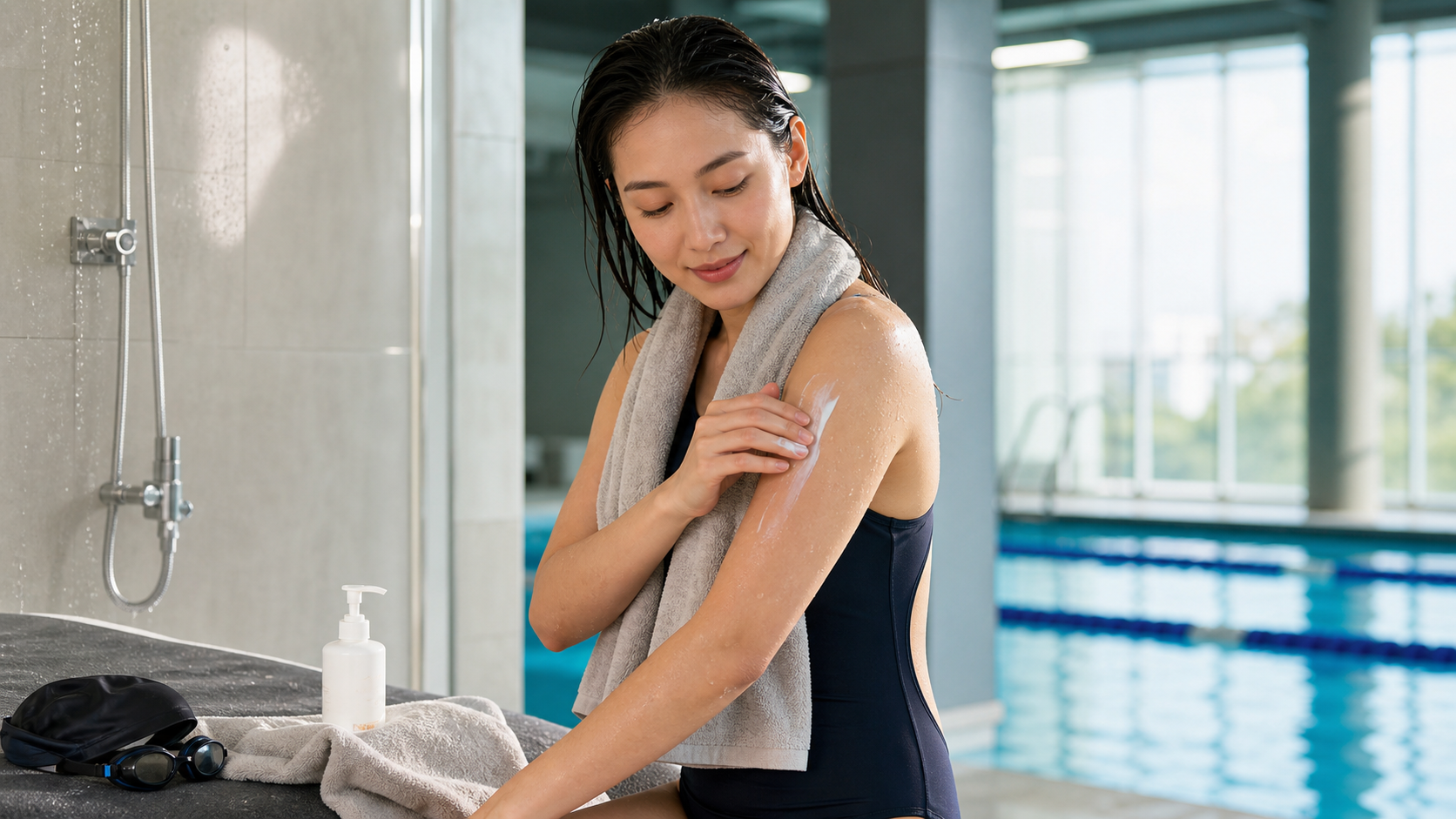
- Moisturize immediately (within 3 minutes of exiting the water): Apply moisturizer while the skin is still slightly damp to lock in moisture. Recommended ingredients: ceramides, hyaluronic acid, urea 5–10%
- Hair care: Use a color-protecting or deep conditioning treatment after swimming, focusing on restoring protein and moisture to the hair
Special Considerations for Specific Groups
- People with atopic dermatitis: Need extra protection before and after swimming; apply petroleum jelly to affected areas. Limit swimming frequency to no more than 2–3 times per week
- People with dry skin: Use a cream rather than a lotion for longer-lasting moisturizing effects
- People with sensitive skin: Choose pools with ozone disinfection or lower chlorine levels (chlorine concentration of 0.5–1.0 ppm rather than the standard 1–3 ppm)
Practical Tips
- Choose a pool with good water quality: Taiwan’s health authorities require pool chlorine concentrations to be maintained at 0.3–1.0 ppm. Choose pools that are well managed and regularly publish water quality reports
- Keep a travel-size moisturizer on hand: Store it in your swim bag so you can apply it immediately after swimming without waiting until you get home
- Supplement with Omega-3: DHA/EPA can improve skin barrier function from within; regular swimmers may consider taking fish oil supplements
- Monitor your skin’s reactions: If you experience persistent rashes, severe itching, or rashes that don’t subside after swimming, see a dermatologist to determine whether you have a chlorine allergy
- Prefer outdoor pools (in summer): Sunlight accelerates chlorine evaporation, so chloramine levels in outdoor pools are typically lower than in indoor pools
Conclusion
The use of chlorine is a necessary measure to ensure the safety and hygiene of public pools, but it does have an impact on the skin. The good news is that these effects can be significantly reduced through pre-swim protection and post-swim care. Incorporate skin care into your swimming routine and make it a beautiful ritual before and after every dip—so you can enjoy both the health benefits of swimming and the luxury of smooth, well-cared-for skin.
Related Reading
- Swimming and Skin Protection: The Effects of Chlorinated Water on Skin and Skincare Recommendations
- Skin Care After Swimming: Preventing Chlorinated Water Damage and Moisture Repair
- Swimming-Related Skin Issues: Chlorinated Water Allergies, Dry Skin, and Moisturizing Strategies
- The Effects of Chlorine on Skin and Eyes: A Complete Post-Swim Care Routine and Product Selection
碟煞公路車 銑面器 !? 原來銑完差這麼多! 降低蹭碟機率! | TIME 公路車 保養小記錄 | CT Yeh
3 年前
洗完單車整隻手黑的解決妙招🤣 #bike
1 年前
洗單車神器 吹水機! 實際洗車用用看 暴力洗鍊條大法 | 公路車 | CT Yeh
4 年前
CT暗黑廚房) 車友必備 宇宙無敵鮮蚵湯 幫助訓練恢復 天然食補 好市多 超肥鮮蚵 破PR
7 年前
一起升級!海鷗盃LSD團練...JJSC Zone2招待 騎到手抖 / 公路車 / CT Yeh
1 天前
鉅齒紋輪組!? ControlTech MEG-T50 EVO 碳纖維幅條輪組/ 功率對比實驗 / 公路車 / CT Yeh
2 年前
一日北高/長距離團騎 常見問題補充篇 / 組團或跟團的眉角 / 壯車友容易被瘦車友慢性拉爆 / 原來屁股痛可能是這個原因...? / 風場配速法 / 公路車 / CT Yeh
2 年前
嘉義大埔、阿婆灣挑戰賽,美到以為在日本!ft. 環騎5 Cool 西拉雅188 / 公路車 / CT Yeh
7 個月前