Introduction
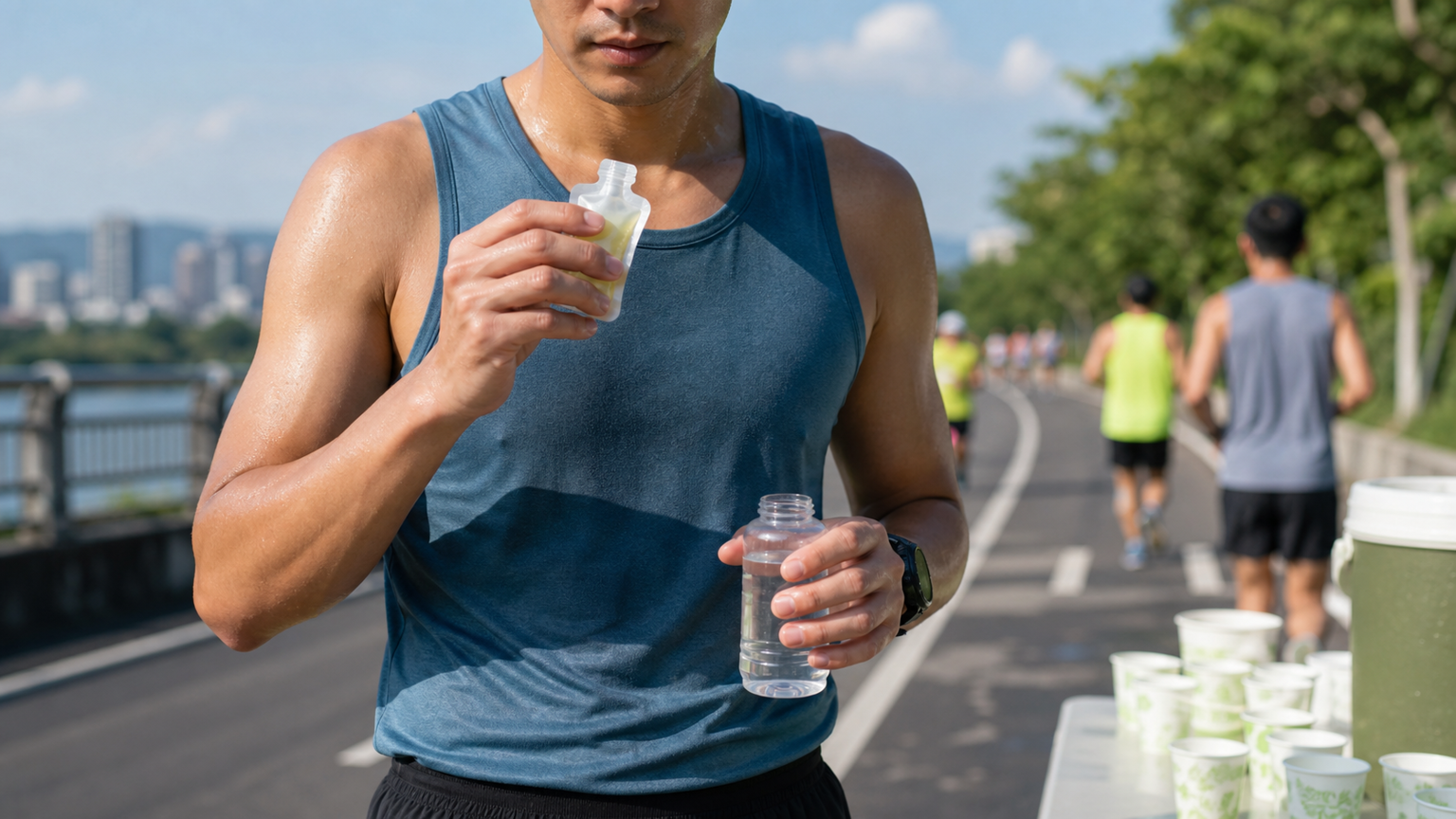
Standing at the aid station, a teammate hands you a brightly colored packet of energy gel. Have you ever hesitated, wondering: “Is now the right time to take it? Is this brand right for me?” For many runners in Taiwan, energy gel is a familiar yet unfamiliar supplement—you know you should use it, but you’re not sure how to use it correctly.
Energy gel is a semi-liquid supplement with a high concentration of carbohydrates, primarily composed of maltodextrin and fructose. Its purpose is to allow runners to quickly replenish carbohydrates during exercise, maintaining stable blood sugar and delaying fatigue. However, incorrect usage can cause stomach cramps, diarrhea, and even make a runner’s race miserable.
The Science Behind Energy Gels
During marathon running, the body burns approximately 60–80 calories per minute, with carbohydrates serving as the primary fuel at high intensities. Research indicates that consuming 30–60 grams of carbohydrates per hour during a run (up to 90 grams if multiple sugar sources are included) helps maintain performance and delay the hitting-the-wall point. A standard packet of energy gel contains about 20–25 grams of carbohydrates, so taking one packet every 45–60 minutes is a common recommendation.
When to Use Energy Gels
When Should You Start Supplementing?
The biggest mistake many runners make is “waiting until they feel hungry to eat.” By then, blood sugar has already dropped, and the body needs more time to convert the gel’s sugars into usable energy (digestion and absorption take about 15–30 minutes).
Recommended timing:
- Take the first packet 30–45 minutes after starting (don’t wait until you feel fatigued)
- Then take one every 45–60 minutes
- In the final 5 kilometers, you may add an extra packet as needed to maintain sprinting energy
The Importance of Taking It with Water
Energy gel should be taken with 150–200 ml of water to help dilute the concentration, speed up absorption, and reduce the risk of gastrointestinal discomfort. Do not take it with sports drinks, as the sugar concentration becomes too high, placing additional strain on the stomach.
Comparison of Mainstream Energy Gels
| Brand | Carbohydrate Content | Caffeinated Version | Price (approx.) | Features |
|---|---|---|---|---|
| GU Energy | 20–22 g | Yes (some flavors) | NT$60–80 | Diverse flavors, most widely used globally |
| Maurten 100/160 | 25/40 g | No | NT$150–200 | Hydrogel technology, high gut tolerance |
| Powerbar Gel | 27 g | Yes (some) | NT$50–70 | High carbohydrate, contains electrolytes |
| SIS Go Gel | 22 g | Yes (some) | NT$60–80 | More watery, no need for additional water |
| Domestic / Asian brands | 20–25 g | Rare | NT$30–50 | Affordable, some flavors are sweeter |
Maurten uses “Hydrogel” technology, forming a gel-like structure in the stomach that reduces gastrointestinal irritation, making it suitable for runners with sensitive stomachs; the downside is its higher price and less pronounced sweetness, so it needs to be tested during training.
Gut Adaptation Training
Consuming energy gel under resting conditions is usually not a problem, but during running, blood flow to the internal organs decreases and gastrointestinal motility is suppressed, causing some runners to experience nausea, bloating, or diarrhea. This doesn’t mean you’re “not suited” for energy gel—it means your gut needs training.
Training Methods:
- Start with shorter distances: First try taking one gel during a 15–20 km long run and observe your gastrointestinal response.
- Gradually increase frequency: Once adapted, try taking one every 45 minutes during long runs to simulate race-day pacing.
- Try different brands: Your gut reacts differently to various ingredients. Once you find the brand that suits you, never switch during an official race.
- Practice drinking while running: Practice with the rhythm of aid stations to avoid choking or breaking your stride due to unfamiliarity with drinking on the move.
Strategies for Using Caffeinated Energy Gels
Caffeinated energy gels (typically containing 25–50 mg of caffeine) are suitable for the latter half of a race. Research shows that caffeine helps reduce perceived fatigue and boosts late-race power. Recommended strategy:
- Use caffeine-free versions in the first half
- Switch to caffeinated versions after the 30 km mark (1–2 packets)
- Avoid caffeine in the week before the race to increase race-day sensitivity (caffeinate cycling strategy)
Practical Tips
- Never use unfamiliar brands during the entire race-prep period: For official races, only use brands you’ve tested during long runs and that your body is accustomed to.
- Carry enough: A full marathon requires about 4–6 packets. Store them in a waist pack or compression top pocket; don’t rely entirely on aid station supplies.
- Set a fueling alarm: Beginners can set a 45-minute reminder on their sports watch to avoid forgetting to fuel while focused on running.
- Review after each run: After every long run, record which gel was taken at which time point so you can optimize your fueling schedule next time.
Conclusion
Energy gel isn’t magic food, but it is indeed an important tool to help marathon runners overcome the wall. The key lies in three principles: “fuel early, take with water, use familiar brands.” Starting with your next long training run, bring along a packet of energy gel and let your gut learn to work during a race first.
Related Reading
- The Complete Guide to Energy Gel Use in Road Running: When to Take It, How Much, and How Much Water to Pair
- Choosing Energy Gels and Timing: Race Planning with Caffeinated vs. Caffeine-Free Gels
- The Complete Guide to Running Fuel: How to Use Energy Gels, Caffeine, and Sports Drinks
- Solid Food vs. Energy Gel During Races: How to Choose the Fuel Form That Suits You Best
CT暗黑廚房) 車友必備 宇宙無敵鮮蚵湯 幫助訓練恢復 天然食補 好市多 超肥鮮蚵 破PR
7 年前
詳測) 小米 電動打氣筒 公路車胎要充多久? 值得買嗎? 米家充氣寶 小心燙手!
7 年前
一日北高前的高裝檢 | 北高 360 | 挑戰11小時的裝備 | 一日雙塔 | 補給
6 年前
一日北高/長距離團騎 常見問題補充篇 / 組團或跟團的眉角 / 壯車友容易被瘦車友慢性拉爆 / 原來屁股痛可能是這個原因...? / 風場配速法 / 公路車 / CT Yeh
2 年前
單車 一日北高 ( 雙城 ) 肥宅雙人瘋狂行 紀錄片 REACTO
10 年前
#公路車 #Fitting 靠人工智慧APP 幫你調整單車
6 年前
Live) 備戰2019彰化經典百K 賽前攻略 (已完賽請看新影片
7 年前
西進武嶺 免費訓練分析服務 Intervals | 練不夠還是練過頭?你哪一種類型選手?AI模型告訴你! | 備戰神器 | 公路車 訓練 | CT Yeh
4 年前