Introduction
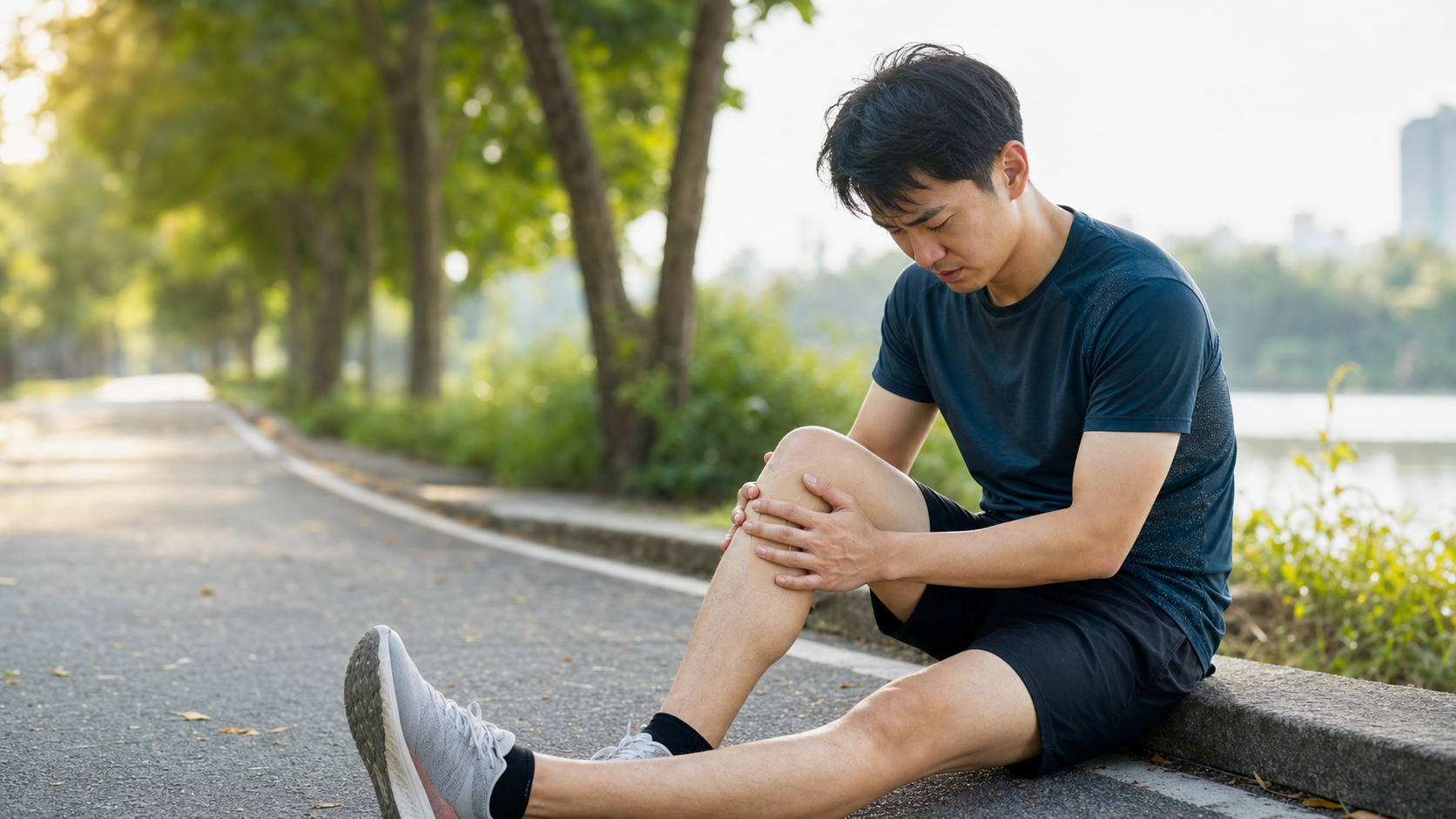
Every weekend morning, Daan Forest Park and the riverside trails are packed with runners, but many of them continue training while enduring soreness and aching in the front of the knee. In more than 80% of such cases, the condition is “Patellofemoral Pain Syndrome” (PFPS), commonly known in the medical community as “runner’s knee.” According to sports medicine research, PFPS accounts for approximately 25–40% of all running-related injuries, making it the single most common diagnosis among road runners seeking medical care.
The good news is: as long as you understand the causes and follow a proper rehabilitation plan, the vast majority of runners can fully recover and return to the racecourse.
What is Patellofemoral Pain Syndrome?
The patella (kneecap) sits in front of the femur (thigh bone) and slides within the trochlear groove via cartilage. Under normal conditions, the four heads of the quadriceps contract in balance, allowing the patella to track along the midline. Once muscle imbalance occurs—especially when the vastus medialis oblique (VMO) is weaker relative to the vastus lateralis—the patella shifts laterally, causing abnormal cartilage friction and triggering pain.
Analysis of Common Causes
| Category | Specific Causes |
|---|---|
| Training Factors | Sudden increase in mileage (exceeding the 10% per week rule), excessive hill training |
| Biomechanics | Overpronated feet, excessive Q-angle (more common in women), weak hip abductors |
| Equipment Factors | Worn-out running shoes (over 600–800 km), insufficient cushioning |
| Environmental Factors | Prolonged running on concrete surfaces, running curves in only one direction |
How to Confirm It’s Runner’s Knee?
Typical symptoms include:
- Dull pain or a feeling of soreness and swelling around or directly behind the kneecap
- Noticeable aggravation when standing up after prolonged sitting (the “movie sign”), when descending stairs, or when running downhill
- Increased pain after squats or repeated jumping
- Crepitus or pain when pressing the patella posteriorly or flexing the knee
If the pain is on the inner side of the knee or accompanied by significant swelling, meniscus or ligament injuries should first be ruled out; seeking medical diagnosis is recommended.
Rehabilitation Treatment Plan: Four Phases
Phase 1: Acute Phase (Weeks 1–2)
The principle is “control inflammation, maintain mobility,” rather than completely stopping training.
- Pause or significantly reduce running mileage, switching to swimming or cycling to maintain cardiovascular fitness
- Apply ice for 15–20 minutes after each run (never apply ice directly to the skin; use a towel as a barrier)
- Avoid triggering movements such as squats, hill climbing, or prolonged sitting with bent knees
- Patellar taping (McConnell Taping) can be used to reduce pain during training
Phase 2: Strengthening Phase (Weeks 3–6)
This phase focuses on strengthening the VMO and hip abductors. Research shows that simultaneously strengthening the hip musculature speeds up recovery by approximately 50% compared to quadriceps training alone.
Recommended exercises:
- Terminal Knee Extension: Place a resistance band around the back of the knee, perform small-range knee extensions to strengthen the VMO
- Side-Lying Clamshell: Targets the gluteus medius to improve hip abduction strength
- Single-Leg Bridge: Integrates gluteus maximus and core stability
- Lateral Walks (Monster Walks): Place a resistance band around the ankles to strengthen the lateral hip chain
Perform each exercise for 3 sets × 15 reps, training every other day to allow adequate muscle recovery.
Phase 3: Functional Training (Weeks 7–10)
Once single-leg static exercises no longer provoke pain, begin incorporating dynamic and running-specific training:
- Single-leg squats (ensure the knee does not cave inward)
- Lateral lunges
- Test running feel on a treadmill at a slower pace and observe knee response
- Gradually reintroduce running (adhering to the 10% incremental rule)
Phase 4: Preventing Recurrence (Long-Term)
- Perform hip and leg strengthening training at least 2 times per week
- Replace running shoes every 600–800 km
- Stretch the quadriceps, iliotibial band, and calves after running
- If you have overpronated feet, consult a podiatrist about custom orthotics
Practical Advice
Taping and Bracing: The McConnell taping method can guide the patella medially, effectively reducing pain in the short term, and is suitable for continuing light training during early rehabilitation. The effectiveness of commercially available patellar stabilizer braces varies from person to person, and long-term reliance may actually weaken the muscles.
Running Gait Adjustment: Research shows that increasing cadence by approximately 5–10% (typically from 160 steps/min to 170 steps/min) effectively reduces the impact load on the patellofemoral joint. A metronome app can be used to assist with practice.
When to Seek Medical Care: If there is no improvement after 6 weeks of home rehabilitation, knee effusion develops, or pain exceeds 7 out of 10 (0–10 scale), you should visit an orthopedic or sports medicine clinic for X-ray or MRI evaluation to rule out cartilage defects.
Conclusion
Although runner’s knee is common, it is by no means a minor issue to be “tolerated.” Long-term neglect may lead to chronic cartilage degeneration and shorten your athletic career. Taiwan has an increasing number of sports injury physical therapists with the ability to perform running biomechanics analysis. It is recommended to seek professional evaluation as soon as possible after injury, and to follow the four-phase plan outlined in this article. The vast majority of runners can return to enjoyable road running within 8–12 weeks.
Related Reading
- Runner’s Knee (Patellofemoral Pain Syndrome) Complete Guide: A Comprehensive Analysis from Causes to Recovery
- Runner’s Knee (Patellofemoral Pain Syndrome): Causes, Prevention, and Rehabilitation
- Runner’s Knee (Patellofemoral Pain Syndrome): Causes, Self-Assessment, and Evidence-Based Rehabilitation Pathways
- An Athlete’s Guide to Knee Pain: A Complete Analysis of Runner’s Knee, Patellofemoral Pain Causes, and Exercise Therapy
一日北高常見問題大集合 | 攻略 | 路線 | 訓練 | 補給 | 自行車 單車 | 一日雙城 | 雙塔 | TWB北高360 | 屁股痛
6 年前
一日北高/長距離團騎 常見問題補充篇 / 組團或跟團的眉角 / 壯車友容易被瘦車友慢性拉爆 / 原來屁股痛可能是這個原因...? / 風場配速法 / 公路車 / CT Yeh
2 年前
爬陡坡被爆胎的車友跑步超車 #cycling #里佳部落
9 個月前
iPhone內建一秒變長腿🤣 車友必備#cycling
2 年前
摔車後補裝備: 好市多新款單車安全帽& Specialized Romin 北高整路屁股都不痛的坐墊 | 一千元居然有MIPS | CT Yeh | 公路車
4 年前
Never Stop 西進武嶺 前後雙機 完整全程錄影 訓練台 實境
8 年前
單車 一日北高 ( 雙城 ) 肥宅雙人瘋狂行 紀錄片 REACTO
10 年前
白沙屯媽祖進香在家走!UREVO 坡度自調走步機 / 可連接訓練遊戲APP MyWhoosh / 邊看直播邊走起來 / CT Yeh
11 個月前