Introduction
The Vuelta a España (abbreviated as “Vuelta”) is the final leg of Europe’s three Grand Tours, held annually in Spain from August to September. Compared to the commercial spectacle of the Tour de France and the historical depth of the Giro d’Italia, the Vuelta attracts a large following of fans who enjoy high-tempo, tactics-heavy racing with its more aggressive attacking style, denser mountain stages, and relatively open competitive landscape. In recent years, the Vuelta has also become a stage where a new generation of riders shine.
Race History and Evolution
The Vuelta was founded in 1935, later than both the Giro (1909) and the Tour (1903). Initially, the route was shorter, and it wasn’t until the 1970s that it gradually expanded to a three-week format. In 1995, the Vuelta moved its dates from spring to late summer/early autumn (August–September), avoiding direct competition with the Tour and Giro while establishing its own unique identity.
Key Historical Milestones
| Year | Event |
|---|---|
| 1935 | First Vuelta held, won by Gustavo Deloor (Belgium) |
| 1950 | First mountain climbing stages introduced |
| 1977 | First start outside the Iberian Peninsula (Portugal) |
| 1995 | Race moved to August–September, becoming the final Grand Tour of the season |
| 2010s | Spanish riders Contador, Froome, and Quintana dominated in turns |
| 2020s | Primož Roglič wins three consecutive titles, Remco Evenepoel bursts onto the scene |
The Vuelta’s Competitive Landscape
Why Does the Vuelta See More Attacks?
The Vuelta is renowned for its “dense attacking,” primarily for three reasons:
- More aggressive course design: Organizer Unipublic deliberately designs more short, steep climbs with gradients between 15–20%, forcing riders to constantly accelerate and attack, making it difficult to maintain a steady pace for long periods
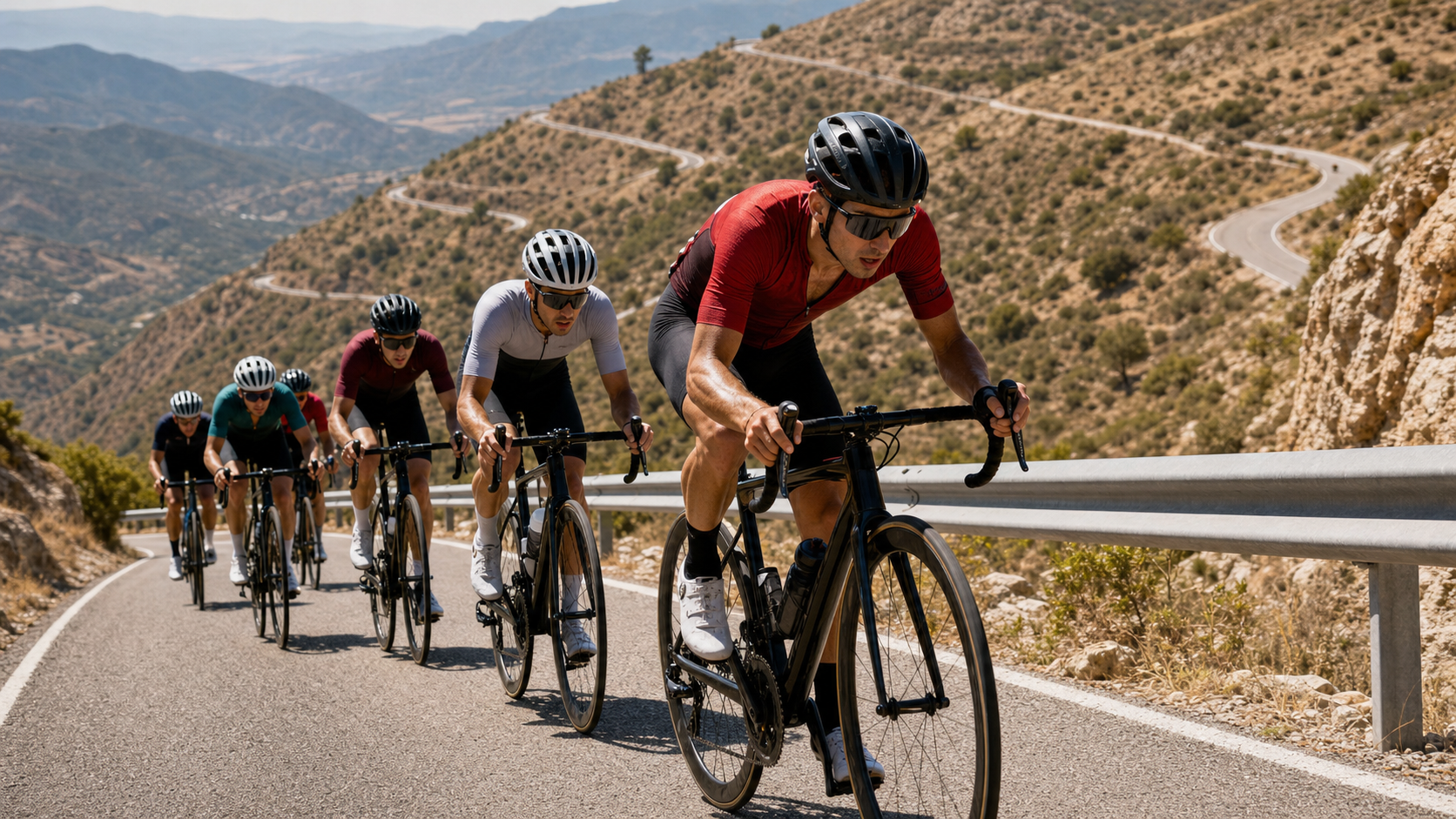
- Weather conditions: The high temperatures in Spain during August–September, combined with the dry climate of the Andalusian and Catalan mountains, accelerate energy depletion, making fatigued riders more vulnerable to being dropped
- More open competition for the overall title: Over the past decade, Vuelta champions have come from Slovenia, Belgium, Britain, Colombia, Ecuador, and other nations, making the fight for the title more diverse than in the Tour de France
Iconic Stages
- La Vuelta al País Vasco stages: Multi-climb stages in the Basque Country with average gradients of 8–12%
- Lagos de Covadonga: A legendary climb in Asturias, 15 km long with a 7% average gradient
- Angliru climb: Dubbed the hardest climb in the three Grand Tours, with its steepest section reaching 23.5%
- Sierra Nevada/Alpe d’Huez of Spain: Finishing at the Sierra Nevada ski resort at 3,000 meters above sea level
Analysis of Recent Competitive Dynamics
The Roglič Era (2019–2021)
Slovenian rider Primož Roglič won the Vuelta three consecutive times from 2019 to 2021, building a formidable Jumbo-Visma (now BORA–hansgrohe) team structure. His strategic characteristics were:
- Strong time trial ability, building time buffers for the general classification
- In mountain stages, relying on direct head-to-head battles with Roglič himself rather than on domestiques
Evenepoel’s Rise (2022)
Belgian rider Remco Evenepoel won the title at age 22, marking the first time in 44 years that a Belgian rider won a Grand Tour, shocking the cycling world. Using the time trial as his core weapon and defending and counter-attacking in mountain stages, he showcased a brand-new tactical approach from the new generation of riders.
Pogačar’s Dominance (2023–2024)
Slovenian Tadej Pogačar has dominated the Vuelta in recent years, overwhelming rivals with his crushing climbing ability, further cementing his status as the strongest rider of the modern era.
Key Viewing Points for the Vuelta
| Stage Type | Viewing Focus |
|---|---|
| Opening time trial | Assess each rider’s form and predict the title favorites |
| First-week mountain stages | Observe who can preserve their results before fatigue accumulates |
| Second-week decisive climbs | Climbs like Angliru best reveal the gaps between riders |
| Final time trial | Whether there are opportunities for comebacks, determining the final standings |
Practical Advice
For Taiwanese cycling fans, the Vuelta’s value for viewing and learning lies in:
- Short, steep climb technique: Spanish-style short, steep climb training suits terrain like Jiufen and Yangmingshan in northern Taiwan
- Riding strategies in high heat: The Vuelta’s late-summer heat conditions can be compared with hydration strategies for summer riding in Taiwan
- Learning attack timing: Observe when professional riders choose to attack and when they choose to ride conservatively
Conclusion
The Vuelta a España may be less well-known among the three Grand Tours, but its racing excitement is in no way inferior. The characterful Spanish mountain roads, the scorching heat test, and the diverse battle for the title in recent years make the Vuelta the season-ending spectacle that cycling fans look forward to most every autumn.
Related Reading
- Vuelta a España: Climate Challenges and Tactical Battles of the Autumn Race
- Vuelta a España: The Climate, Routes, and Unique Charm of the Autumn Grand Tour
- Vuelta a España: The Most Undercurrent-Ridden Contest Among the Three Grand Tours
- Vuelta a España: History and Modern Development of the Spanish Grand Tour
一輪盃環湖挑戰賽 | TIME新車首航 | 一輪帶我飛 | 百萬流量都在場 | 4K畫質 | 公路車 | CT Yeh
3 年前
2023自行車展!與環台賽選手一同表演賽 / 全自動AI Fitting?/ TIME新車發表/神秘充電桌等 精華分享 VLOG | CT Yeh | 公路車
3 年前
2025 乘鞍 KOM 登山賽挑戰實錄 / 日本公路最高 ! 賽前探路篇 / 比富士山厲害,無敵絕景!/ 40週年 / 中文YT首發 / 公路車 / CT Yeh #乘鞍ヒルクライム
11 個月前
2023桃園團體繞圈賽/環台賽等級拍攝/賽事精華/ 10人一隊缺一不可!50隊廝殺大場面 / 第三屆 海鷗繞圈賽 /公路車/CT Yeh
2 年前
單車實況) 車測中心高速賽道 96 彰化讚 挑戰組一圈實錄 | ARTC
6 年前
西拉雅五庫單車挑戰 / 曾文水庫 & 南168 二寮 / 500元報名費居然這麼超值/ 公路車 / CT Yeh
10 個月前
山港 環東台北160K 自行車約騎活動
9 年前
超激烈!2025 南庄仙山KOM 賽事精華 / 男菁英A x 女菁英A / 公路車 / CT Yeh
9 個月前