Adapting to Waves and Currents in Open-Water Swimming: Key Techniques for Swimming Along Taiwan's Coast
Introduction
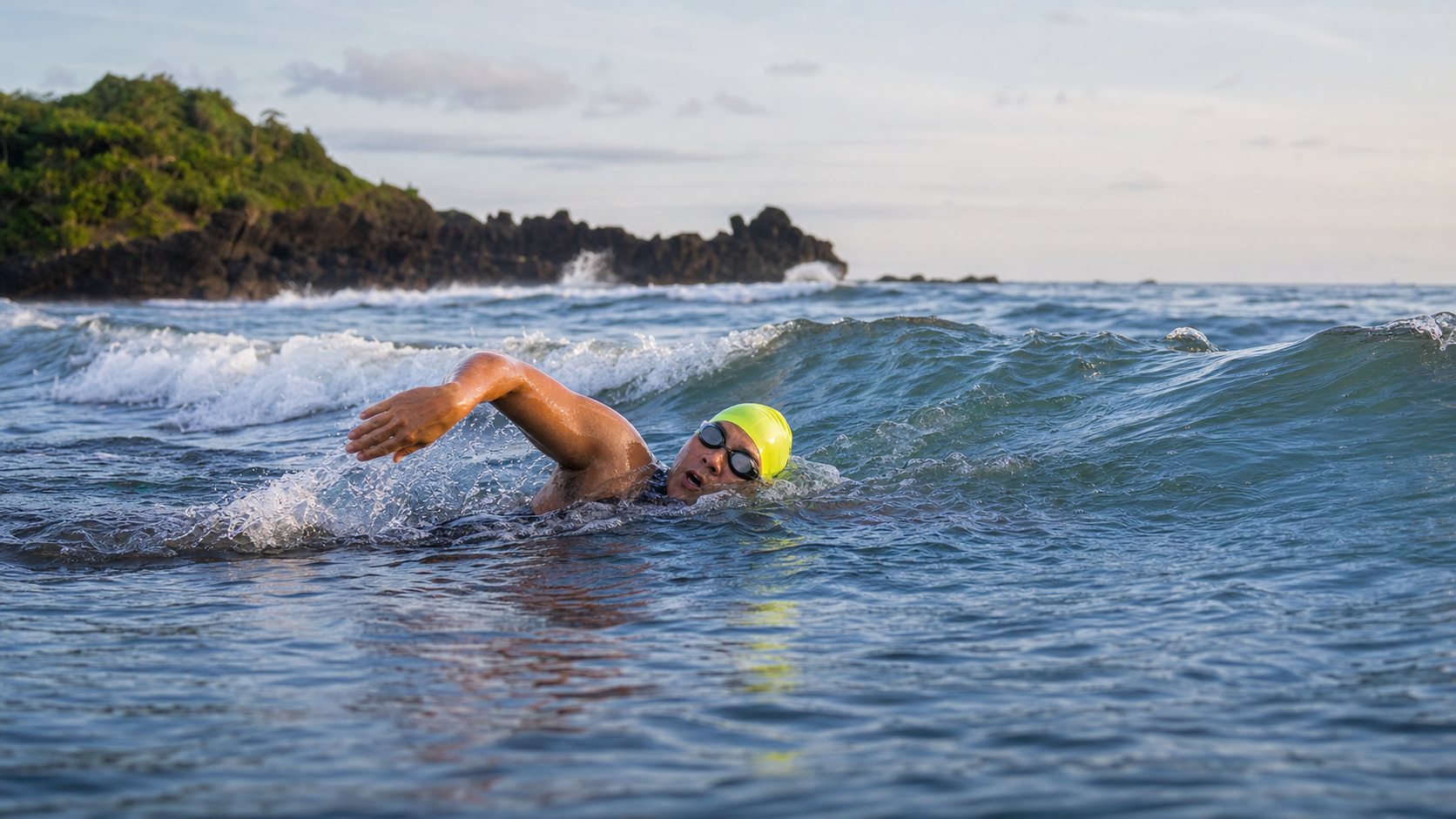
Taiwan’s coastline features diverse topography: the east coast faces powerful waves from the Pacific, the north is affected by the northeast monsoon, and the south has coral reef terrain and summer typhoon swells. For open-water swimmers, these natural conditions are both a challenge and a rich training resource. However, entering the water without understanding wave and current characteristics can lead to exhaustion at best, and accidents at worst. This article details the wave and current characteristics along Taiwan’s coast and the corresponding swimming techniques.
Wave Conditions of Taiwan’s Major Coastlines
| Area | Main Characteristics | Best Swimming Season | Cautions |
|---|---|---|---|
| North (Keelung, Wanli) | Large northeast monsoon waves; winter water temperature 17–20°C | May–September | Avoid the peak northeast monsoon period |
| Northeast (Yilan) | Strong swells, but gentle sandy beaches | June–August | Winter wave heights often reach 2–3 meters |
| East (Hualien, Taitung) | Powerful Pacific waves, many submerged reefs | Limited access | Complex currents; solo swimming strongly discouraged |
| South (Kenting) | Relatively calm in summer, but seasonal currents | May–October | South Bay noticeably affected by typhoon swells |
| West (Tainan, Kaohsiung) | Relatively calm, but high turbidity | Year-round | Sandy bottom, poor visibility |
Types of Waves and Coping Techniques
Shorebreak Waves
Shorebreak waves are the most common form of ocean waves, breaking in shallow water near the shore. Coping techniques:
Entering the water (facing the waves):
- Observe the wave period (usually 7–15 seconds) and sprint into the sea during the lull between two large waves
- When facing an oncoming wave, lower your head, lean your body forward, and push through the wave with your arms—do not try to brace against it with your legs
- For larger waves, use the “duck dive”—press your hands downward and flip your body to dive beneath the wave
Exiting the water (riding the waves):
- Choose to use the wave’s momentum to ride toward shore rather than fighting against it
- Maintain a streamlined position and let the wave carry your body forward
- In shallow water, switch to crawling or fast walking to exit, avoiding being knocked over by the next wave
Swells
Swells are long-period waves generated by distant typhoons or storms, particularly common on Taiwan’s east coast. They are characterized by long periods (10–20 seconds) but have almost no effect on swimming in deep water; in shallow water or reef areas, however, they can generate powerful breaking force.
Impact while swimming:
- Your body will rise and fall with the swell; time your breathing with the wave crest (breathe at the crest—at the trough, you risk swallowing water)
- Avoid swimming out in the direction of the swell on out-and-back routes, or you will face the waves on the return leg and expend excessive energy
Identifying and Responding to Currents
Rip Currents—The Most Dangerous Current
A rip current is a strong, narrow current flowing from the shore out to sea, with speeds reaching 0.5–2 meters per second. Approximately 80% of drowning incidents are related to rip currents.
How to identify a rip current:
- A band of darker (more turbid) water on the sea surface
- A line of foam extending seaward
- A section of waves that “doesn’t break,” indicating water flowing outward
Correct response if caught in a rip current:
| Wrong Approach | Correct Approach |
|---|---|
| Swimming against the current toward shore | Swim parallel to the shore to exit the current’s width (usually 10–30 meters) |
| Panicking and exhausting energy | Stay calm, float with the current, then swim laterally to escape |
| Struggling alone | Raise your hand for help and wait for rescue |
Tidal Currents
During ebb tide, water flows seaward; during flood tide, water flows toward shore. Tidal currents are particularly strong in narrow terrain such as straits and bay mouths (e.g., Penghu, Matsu). Before swimming, check the day’s tide tables and enter the water during slack tide (turning tide) periods.
Training Methods to Improve Wave Adaptability
Floating Training in Waves
In a safe, shallow wave zone, practice floating on your back and letting the waves move your body freely. The goal is to relax your body, avoid resistance, and develop awareness of and trust in the waves.
Wave-Breaking Sprint Training
On a safe, surf-friendly sandy beach, repeatedly practice entering through the waves: sprint from shore to chest depth, then swim back. Training includes:
- Quickly assessing wave timing
- Fluidity of the wave-breaking posture
- Coordination when exiting the water
Directional Swimming in Waves
In a swell environment, practice maintaining a predetermined course while swimming. After each session, compare the actual route with the target route and gradually reduce the deviation.
Practical Advice
- Check surf forecasts: Recommended sources include Surfline, WindGuru, or the Central Weather Administration’s marine forecast; focus on wave height (Hm0) and period (Tp)
- Follow the locals: When arriving at a new beach, first observe how local swimmers or surfers enter the water and which areas they choose
- Don’t swim in the surf zone: The surf zone is the surfers’ territory and the most dangerous area for swimmers
- Respect flag warnings: The flag system (green/yellow/red/purple) at Taiwan’s beach resorts is an important safety reference
Conclusion
Taiwan’s oceans offer a rich open-water swimming environment, but they also come with corresponding challenges. Mastering the characteristics of waves and currents and the techniques to handle them is not about conquering the ocean, but about coexisting harmoniously with it. Every time you enter the water is a learning opportunity, and the experience you accumulate will allow you to safely and confidently enjoy swimming along every stretch of Taiwan’s coast.
Related Reading
- Taiwan’s Beach Culture and Swimming Safety: Understanding Wave Conditions and Rip Currents
- Swimming in Waves: Techniques for Using Wave Momentum and Coping Strategies
- Wave Swimming Techniques in Open Water: Using Wave Rhythm and Managing Energy Expenditure
- Swimming in Waves in Open Water: Technical Differences Between With-Wave, Against-Wave, and Side-Wave Swimming
大武山後門26%歡樂陡坡!JJSC南台灣單車行Day2 / 被颱風追著跑 / 公路車 / CT Yeh
2 年前
虎豹潭!日本老師來台一日約騎 台灣車友熱情招待私房路線 / CT Yeh
19 天前
風櫃嘴 | 全台最多大砲的單車路線 | 尋寶網攝影師告訴你怎麼擺拍起來才好看 | 熱門攝影地點巡禮
6 年前
大武山20%魔王陡坡【JJSC南台灣遊騎Day2】!屁股真的要裂開了...凡士林抹滿也沒用?神秘金教堂還有超便宜夜市
3 個月前
水金九不厭五分 10度寒流冷到不願停!feat. 卡卡 / 公路車 / CT Yeh
6 個月前
2023桃園團體繞圈賽 / 海鷗繞圈賽 | 全程空拍數據版 | 公路車 | CT Yeh
2 年前
備戰 戀戀197 賽前關門點分析 西濱團練 #公路車 4K高畫質
6 年前
一日北高前的西濱集訓 | 跟著11小時軍團 | 300W踩不動的大逆風 | 輪車破風差幾瓦?
6 年前