Introduction
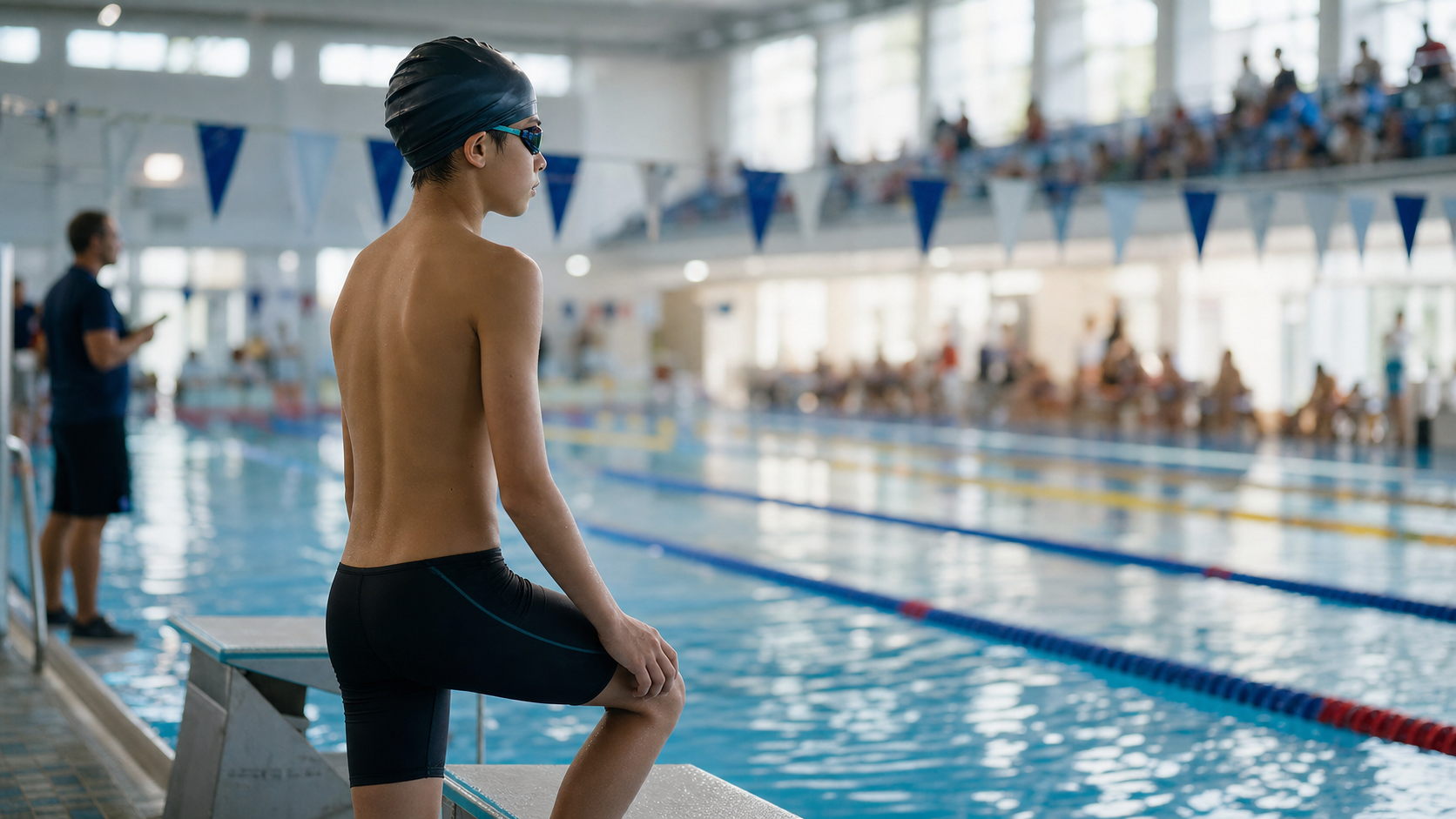
A 12-year-old athlete stands on the starting block, with parents, classmates, and coaches in the stands. The numbers on the timing board will declare her success or failure in a matter of seconds. This moment is not just competitive swimming—it is a microcosm of adolescent psychological development. Competitive swimming provides young athletes with a valuable environment for learning to face pressure, handle failure, and build confidence. However, if mishandled, the same environment can also become a source of psychological harm.
Developmental Characteristics of Adolescent Competitive Psychology
The psychological development of adolescents (ages 10–17) passes through several critical transitional phases:
Cognitive level: Shifting from concrete to abstract thinking, they begin to understand long-term goals, but their self-evaluation remains heavily influenced by external feedback.
Emotional level: Emotional regulation skills are not yet mature. The amygdala (emotional center) is highly active while the prefrontal cortex (rational decision-making center) is not fully developed, leading to intense emotional responses under high-pressure situations.
Social level: Peer relationships surpass adult authority in importance, and teammates’ opinions profoundly shape their self-identity.
The Two Faces of Competitive Pressure
Competitive pressure itself is not inherently negative—the key lies in the nature and intensity of the pressure.
| Pressure Type | Characteristics | Impact on Adolescents |
|---|---|---|
| Eustress | Moderate, controllable, clearly defined goals | Stimulates motivation, enhances focus, builds confidence |
| Distress | Persistent, uncontrollable, unpredictable expectations | Anxiety, avoidance behaviors, burnout, dropout from training |
In Taiwan’s adolescent swimming environment, common sources of pressure include:
- High parental expectations regarding performance
- A culture of ranking and comparison among athletes
- The link between competition results and academic admission qualifications (e.g., special admissions, competition bonus points)
- Coaches’ public criticism styles
The Core Mechanism of Confidence Building: The Achievement Cycle
According to the “Self-Efficacy Theory” in sports psychology (Bandura, 1977), confidence is built primarily from four sources, ranked by importance:
- Mastery experiences: Successfully completing challenging tasks oneself — most important
- Vicarious experiences: Seeing people of similar ability succeed
- Social persuasion: Positive feedback from coaches and parents
- Physiological states: Low anxiety, physically relaxed states
Implications for youth coaches: The most effective way to build confidence is to let athletes repeatedly experience “successfully achieving goals under challenging conditions,” rather than relying solely on verbal encouragement.
Goal Setting: From Outcome Goals to Process Goals
Many adolescent swimmers in Taiwan (and their parents) focus their attention on outcome goals such as “ranking” and “time.” However, research shows that athletes who focus on process goals outperform those who focus only on outcomes in both long-term performance and psychological well-being.
Three-tier goal-setting framework:
- Outcome goal: “Make the finals at the National High School Games”
- Performance goal: “Get the 100m freestyle time under 58 seconds”
- Process goal: “Focus on high-elbow catch technique on every lap in practice”
Recommended ratio: In daily training, 80% of attention should go to process goals, 15% to performance goals, and only 5% to outcome goals. In the week before a competition, attention to outcome goals can be moderately increased, but the core focus should remain on controllable processes.
Handling Failure: Cultivating a Growth Mindset
The impact of competition losses on adolescent athletes often exceeds what adults expect. Helping them build resilience from failure is one of the most important psychological support tasks for coaches and parents.
Examples of effective post-failure conversations:
- ❌ “Why did you swim so slowly? Weren’t you faster than this in practice?”
- ❌ “It’s okay, you tried your best” (mere consolation, lacking learning guidance)
- ✅ “Which part of the race felt smoothest to you? Which part was least ideal? Let’s look at the video together.”
Effective post-failure conversations focus on: specific analysis → extracting learning points → developing an improvement plan, rather than emotional judgment or empty consolation.
Practical Recommendations
For coaches:
- Establish a culture of positive feedback on “effort and process,” rather than praising only when results are good.
- Avoid comparing individual athletes’ results in front of teammates; use personal improvement as the benchmark for praise.
- Conduct brief mental preparation before competitions (such as breathing relaxation or imagery practice) to help athletes learn to regulate nervousness.
- Hold an individual goal-setting conversation with each athlete once per season, listening to their intrinsic motivations.
For parents:
- Before and after competitions, let your child know, “No matter the result, I’m proud of you.”
- Your first words after a race should show concern for your child’s feelings (“How did it go today? Did you enjoy it?”), not “What place? What time?”
- Avoid technical analysis or criticism on the way home; give your child space to process emotions.
- If you notice persistent anxiety symptoms in your child (insomnia, loss of appetite, avoiding training), seek psychological counseling resources.
Conclusion
Competitive swimming has a two-way psychological impact on adolescents. With proper guidance, it can cultivate young people with confidence, resilience, and self-discipline; under the wrong kind of pressure, it can also become a source of psychological trauma. Coaches and parents share this responsibility, which requires not just swimming knowledge, but a deep understanding of adolescent psychological development and a willingness to keep learning.
Related Reading
- The Psychology of Adolescent Running: Balancing Competitive Pressure and Enjoying the Sport
- Adolescent Sports Psychology: Building Proper Competitive Motivation and Resilience Training
- Managing Race-Day Nerves in Swimming: Lane Choice Psychology and Starting Reaction
- Reflections on a High School Swimming Career: The Nerves and Growth of Inter-school Competition
崇越盃武嶺冠軍高手 賽前JJSC 群峰會精華!對應大數據分析,會有落差嗎?/ feat. JJSC中部公路車約騎 /公路車 / CT Yeh
2 年前
西進武嶺 免費訓練分析服務 Intervals | 練不夠還是練過頭?你哪一種類型選手?AI模型告訴你! | 備戰神器 | 公路車 訓練 | CT Yeh
4 年前
live) 超越北高 之一日北高12小時 策略
7 年前
#PUSHBIKE 原來這麼好玩! 小朋友 滑步車 初體驗 超可愛
6 年前
2025 海鷗團體繞圈賽 網路直播 超激烈裁判長視角 / EIPC 李廷威、Waypoint 等眾多高手競爭 / feat. 卡密兒主持 / 海鷗繞圈賽
9 個月前
2025 崇越盃「西進武嶺」CT挑戰直播測試 / 公路車 / CT Yeh
1 年前
滑雪新手們慘摔學習全紀錄(請開字幕),滑雪好好玩 | Snowboard + Ski | 岩原 スキー場 | 滑雪APP使用 | GoPro Max
6 年前
一日北高前的高裝檢 | 北高 360 | 挑戰11小時的裝備 | 一日雙塔 | 補給
6 年前