Introduction
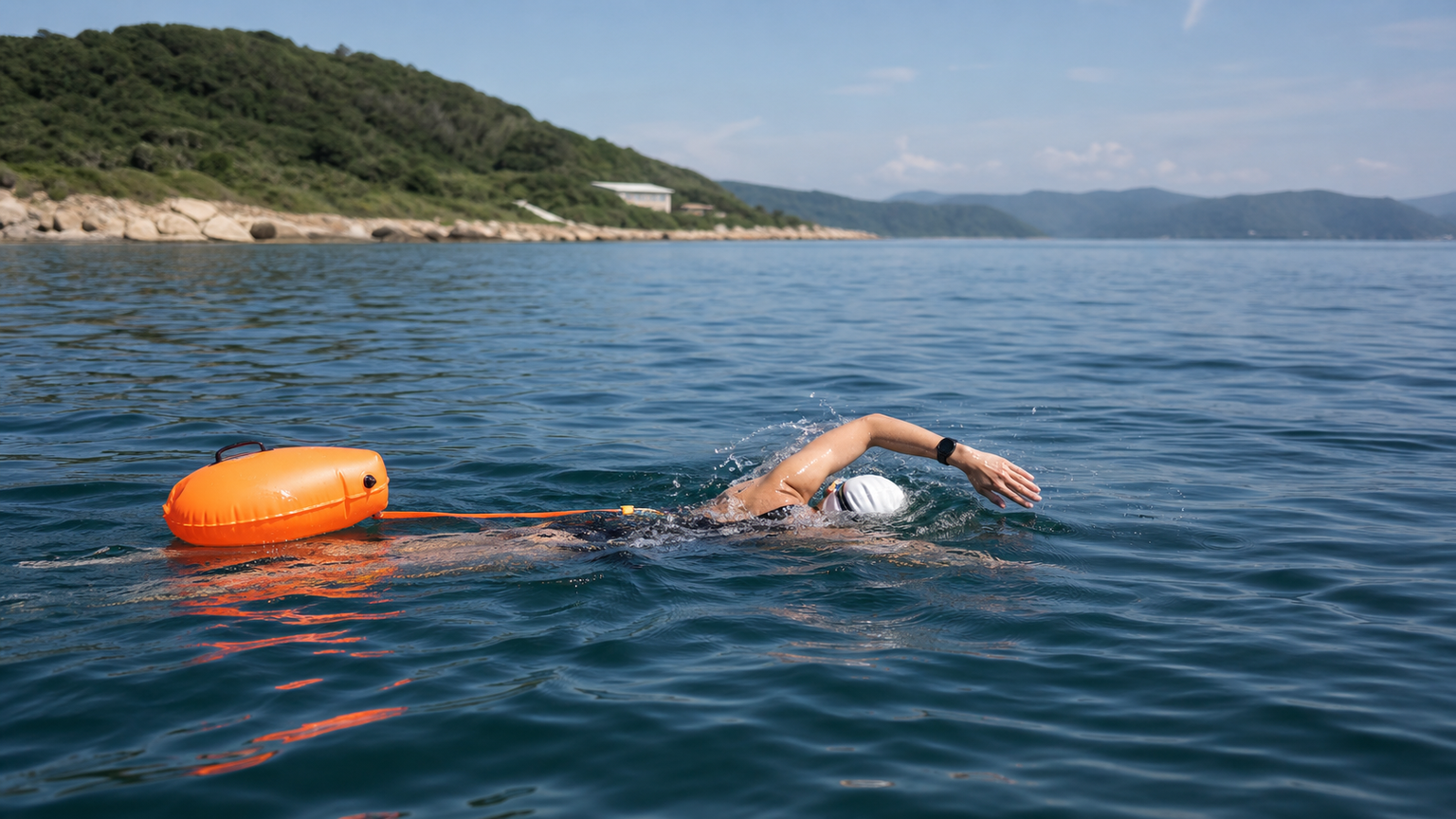
In recent years, swimmers dragging an orange or yellow inflatable buoy behind their waist have become an increasingly common sight along Taiwan’s coasts, lakes, and in swim training sessions. These are known as “safety buoys” (Swim Buoys or Tow Floats), and they represent a major revolution in open water swimming safety. Compact and lightweight, they can be lifesavers in an emergency while also increasing a swimmer’s visibility in the water. This article provides a comprehensive introduction to the functions of safety buoys, how to use them, purchasing advice, and their applicability under competition rules.
Key Functions of Safety Buoys
| Function | Description |
|---|---|
| Emergency buoyancy support | When cramping or exhausted, you can grab the buoy to rest and avoid sinking |
| Increased visibility | Bright colors make it easy for lifeguards, boat operators, and shore personnel to spot you |
| Collision warning | Fishing boats and speedboats can see you more easily, reducing collision risk |
| Dry storage | Most buoys have a waterproof compartment inside for storing your phone, keys |
| Psychological reassurance | Knowing you have a support device reduces anxiety in deep water |
Main Types of Buoys
By Shape
1. Standard Oval Buoy
- The most common type
- Medium size, moderate buoyancy
- Suitable for training and general sea swimming
- Recommended brands: ROKA, Swimmer’s Buoy
2. Dry Bag Buoy
- Features an internal waterproof storage bag (20–28 liters)
- Suitable for long-distance training where you need to carry clothes, supplies, or a phone
- Heavier and has a slight impact on swimming drag
3. Buoy with Whistle
- Comes with an attached rescue whistle
- Suitable for solo training sessions
4. Wedge/Torpedo Shape
- More hydrodynamic, with minimal drag
- Commonly used in open water races that do not restrict buoy use
By Inflation Method
| Type | Advantages | Disadvantages |
|---|---|---|
| Manual inflation | No risk of mechanical failure, low cost | Requires inflation before entering the water, occasionally forgotten |
| Valve inflation (with portable pump) | Quick inflation, accurate air volume | Requires carrying a pump |
| Pre-inflated fixed type | Always ready for use, no inflation needed | Takes up more space, less portable |
How to Use a Buoy
Adjusting the Belt
- Adjust the belt to fit snugly but not tightly (two fingers should fit underneath)
- The buoy’s tether length is recommended at 50–60 cm (keeping the buoy trailing behind your waist without interfering with your leg kick)
- Make sure the tether does not get tangled around your wetsuit or swimsuit
Impact While Swimming
Most people notice the following changes when first using a safety buoy:
- Increased drag: The buoy being towed on the surface adds approximately 2–5% more resistance (less noticeable once you get used to it)
- Restricted leg kick: Wider buoys may bump against your legs during a turn or kick; choosing a streamlined design is better
- Increased psychological comfort: Most users report feeling more relaxed in deep water with a buoy
Buoy Rules in Various Competitions
Regulations regarding safety buoys vary significantly between events:
| Event Type | Buoy Regulations |
|---|---|
| Sun Moon Lake Mass Swim | Mandatory (either official-provided or self-supplied) |
| General sea swims in Taiwan | Strongly recommended; mandatory in some events |
| Triathlon (international events) | Usually prohibited (as they provide a buoyancy advantage) |
| Triathlon (recreational category) | Allowed in some events; check the current year’s athlete handbook |
| FINA Open Water Swimming | Prohibited (competitive rules) |
Key Point: In competitive events, using a buoy may be considered a violation and result in disqualification. If you are an athlete aiming for competitive results, you need to get used to swimming without a buoy in training. If your focus is on safety and experience, a buoy is highly recommended gear.
Purchasing Advice
| Usage Scenario | Recommended Type | Budget (NT$) |
|---|---|---|
| Beginner daily training | Standard oval, manual inflation | NT$500–1,000 |
| Long-distance training | Dry bag type (waterproof bag) | NT$1,200–2,500 |
| Race training (where not prohibited) | Streamlined low-drag model | NT$1,500–3,000 |
| Maximum visibility needs | Bright orange or yellow colors | Any type |
Buoy Care and Maintenance
- Rinse with fresh water after use to remove salt (extends the life of the rubber)
- Deflate before storing when not in use, to avoid prolonged inflation pressure aging the rubber
- Regularly check the valve and belt buckle for proper function
- If the buoy develops a leak, repair it with rubber repair adhesive (similar to bicycle tire repair kits)
Practical Tips
- Practice in a pool first: Tow the buoy for a few sessions in a familiar pool to get used to the drag and the feel of the belt
- Practice emergency use: Practice the motion of “quickly rolling over, grabbing the buoy, and staying afloat” in the water to ensure you can execute it smoothly in an emergency
- Bring it whenever swimming in open water: Even at a guarded beach, carrying a safety buoy makes you safer
- Choose orange or bright yellow: These offer the best visibility and are easier to spot even in backlit sunset conditions
Conclusion
The widespread adoption of safety buoys has significantly reduced the risk of accidents in Taiwan’s open water swimming. A buoy costing just a few hundred dollars could be your lifeline in a critical moment. Whether you are a beginner or an experienced sea swimmer, making it a habit to train with a safety buoy not only protects yourself but also gives peace of mind to your companions and the lifeguards on shore. Make the safety buoy a standard part of your sea swimming gear—it is the most fundamental respect you can show both to yourself and to the ocean.
Related Reading
- Swim Buoys and Safety Gear Fully Explained: A Lifesaving Companion for Open Water Swimmers
- Open Water Navigation Buoy Buying Guide: Safety Float Color Standards, Inflation Methods, and Usage Tips
- Open Water Swim Floats: A Dual-Function Analysis of Safety Visibility and Gear Storage
- Open Water Safety: Lifeguard Deployment, Signal Buoys, and Emergency Response
一日北高 實用 單車手機架!Bone蹦克磁吸單車手機綁 //環島/室內訓練 / 導航的APP推薦 / 日本島波海道取景 / 公路車 / CT Yeh
2 年前
類空拍神器 Feiyu Pocket 2s (有優惠連結)三軸穩定 運動攝影機 開箱!比GoPro 還強的滑順視角!三小時長時間錄影 行車記錄器 | 環花東365實測 | 公路車 CT Yeh
4 年前
大家都在開箱的...單車用藍芽對講耳機真的有幫助嗎? SENA BiKom 20 長距離旅遊 & 海鷗繞圈賽 實際體驗心得 / 公路車 / CT Yeh
9 個月前
單車胎壓觀察到的有趣現象,SRAM Quarq TyreWiz 2.0 無內胎胎壓計 / 裝了有哪些幫助? / Tubeless / 公路車 / CT Yeh
1 年前
#PUSHBIKE 原來這麼好玩! 小朋友 滑步車 初體驗 超可愛
6 年前
用了AirTag 單車就不怕被偷?盲點大測試 結果… |公路車|CT Yeh
5 年前
一日北高前的高裝檢 | 北高 360 | 挑戰11小時的裝備 | 一日雙塔 | 補給
6 年前
單車 一日北高 ( 雙城 ) 肥宅雙人瘋狂行 紀錄片 REACTO
10 年前