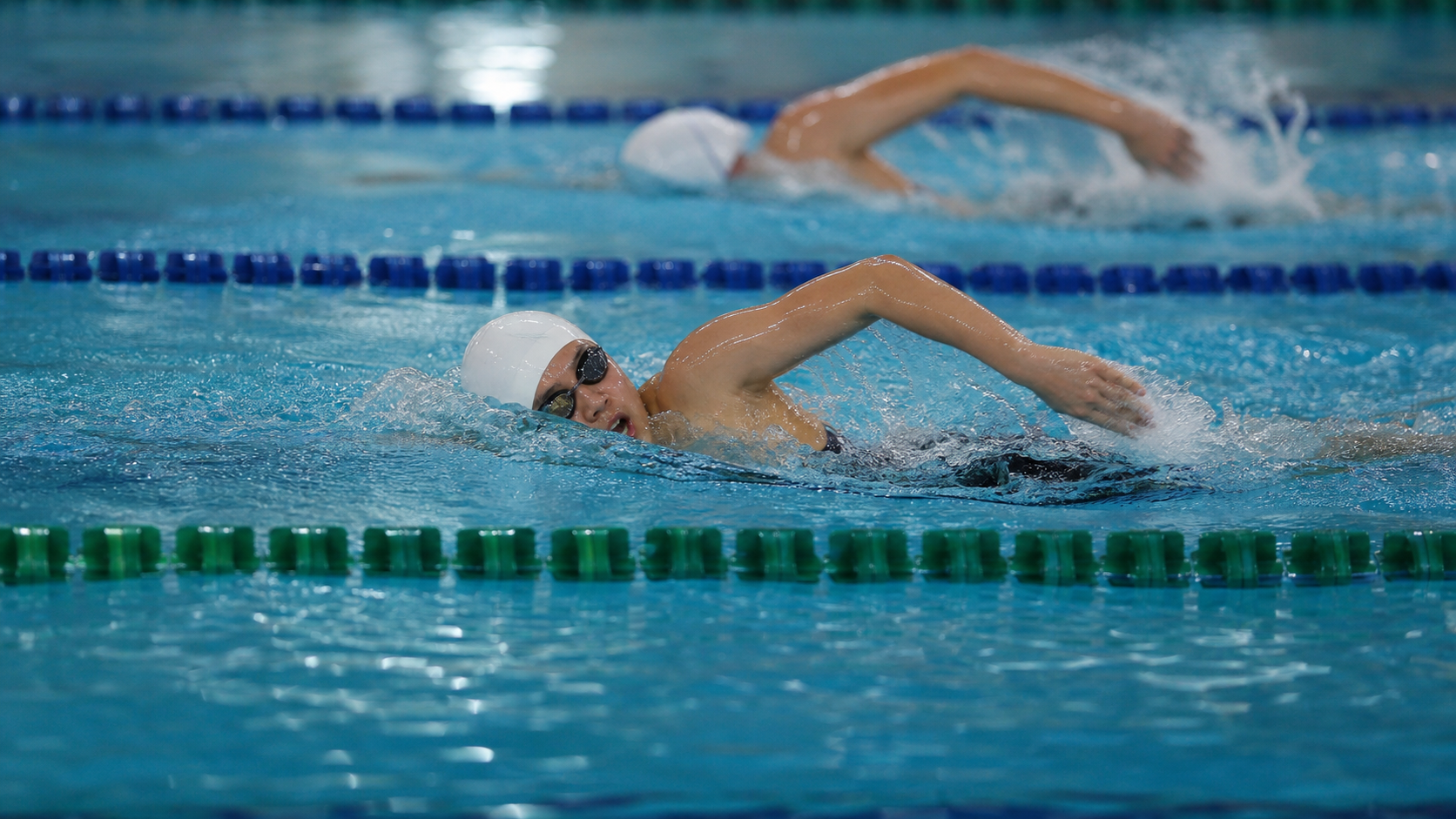
Introduction
The 800m and 1500m freestyle are the Olympic long-distance swimming events, and they are the distances that most test an athlete’s aerobic foundation and pacing wisdom. Unlike the “all-out sprint” of short-distance events, long-distance swimming requires athletes to precisely manage every calorie of energy output throughout the race. The penalty for sprinting too early is a severe collapse in the latter half, while being too conservative may cost the opportunity to win a medal.
Energy System Characteristics of Long-Distance Swimming
| Distance | Primary Energy System | Aerobic Ratio | Typical Race Time |
|---|---|---|---|
| 800m | Aerobic-dominant, with a small anaerobic component | Approximately 85% | Women 8–9 minutes, Men 7–8 minutes |
| 1500m | Highly aerobic | Approximately 90–93% | Women 15–17 minutes, Men 14–15 minutes |
During such long race durations, heart rate typically remains between 85–95% of maximum heart rate, and the efficiency of the aerobic system directly determines the ability to maintain speed in the latter half.
Even Pacing Strategy
Even pacing requires the athlete to maintain nearly identical times for each split (usually measured in 100m or 50m increments), with deviations of no more than 0.5–1 second. This is one of the most supported long-distance pacing strategies in exercise science research, for the following reasons:
- Minimizes lactate fluctuations: Swimming at a steady pace allows the cardiorespiratory system to continuously and efficiently supply aerobic energy, without repeatedly crossing the anaerobic threshold and causing rapid lactate accumulation.
- Reduces psychological stress: Athletes only need to focus on “maintaining rhythm” rather than constantly making speed decisions, reducing cognitive load.
- Predictable finish time: When swimming at an even pace, coaches can accurately calculate the projected finish time and issue pacing cues in a timely manner.
The challenge of the even pacing strategy is the need to consciously “resist the urge” at the start—surrounding competitors may be sprinting in the early stages, and following them would disrupt the overall strategy.
Negative Split Strategy
Negative splitting means swimming the second half faster than the first half, for example, swimming the last 750m of a 1500m faster than the first 750m. This strategy is increasingly popular among elite long-distance swimmers because:
- Psychological advantage: Accelerating in the latter half creates more opportunities to overtake competitors, fostering a sense of initiative psychologically.
- Lactate peak management: A conservative first half keeps lactate at low levels, so even if more lactate is produced during the latter-half sprint, there is an early “buffer margin” to metabolize it.
- Tactical flexibility in racing: Acceleration is only launched in the final 300–500m, making it difficult for opponents to anticipate and react.
Executing a negative split requires a high degree of self-discipline—feeling “too easy” in the first half is exactly the intended state, but this ease often makes athletes doubt whether they are swimming too slowly and impulsively accelerate.
Comparison and Selection of the Two Strategies
- Even pacing is suitable for: athletes with a solid aerobic foundation, good pace sense, and whose goal is a stable PB (personal best).
- Negative split is suitable for: athletes with extensive race experience, the ability to precisely perceive pace, excellent physical condition, and whose goal is to compete for placement (not just a PB).
For beginner and intermediate athletes, it is recommended to prioritize practicing even pacing, and only after mastering pace sense should they advance to trying the negative split strategy.
Developing a Split Plan
Using the 1500m (target time 16:30) as an example, a reasonable split plan:
| Split | Target Time | Cumulative Time | Strategy Notes |
|---|---|---|---|
| 0–100m | 1:04 | 1:04 | Slightly faster start (including dive advantage) |
| 100–600m | 5×1:06 | 6:34 | Steady even-pace segment |
| 600–1000m | 4×1:06 | 10:58 | Continue maintaining rhythm |
| 1000–1400m | 4×1:06 | 15:22 | Begin feeling competitive pressure |
| 1400–1500m | 1:05 | 16:27 | Increase speed for the final 100m sprint to the wall |
Breathing Rhythm and Long-Distance Swimming
- Breathing frequency: For long distances, it is recommended to breathe every 2–3 strokes (adjusted according to individual oxygen needs), avoiding breathing every stroke which reduces stroke efficiency.
- Breathing direction: Bilateral breathing is recommended (alternating every 3 strokes or so), which helps maintain body balance while also allowing observation of opponents on both sides.
- Breathing strategy in the latter half: In the final 100–200m, switch to breathing every 2 strokes to ensure adequate oxygen supply to sustain sprint intensity.
Practical Recommendations
- Incorporate split timing into long-distance training: During each 800m or 1500m practice session, have an assistant record the time for every 100m, then analyze after the race to identify which split is most prone to collapse.
- Pace sets: Arrange 16×100m at race pace with 20 seconds rest between reps, training the body’s “muscle memory” for pacing.
- Simulate latter-half acceleration: Perform “conservative first half, accelerating second half” training, such as swimming the first 750m at an even pace, then gradually accelerating over the last 750m to feel the rhythm of late-race acceleration.
- Use a pace clock: Install a pace clock at the poolside during practice to develop pacing instinct without relying on a watch.
Conclusion
Pacing strategy in long-distance swimming is an art that combines physiological science with psychological wisdom. Whether choosing even pacing or negative splits, the key lies in a precise understanding of one’s own abilities and disciplined execution during the race. Through systematic split training and data accumulation, long-distance swimmers can gradually establish their own optimal pacing pattern and perform to their true level in key competitions.
Related Reading
- Building Rhythm in Long-Distance Swimming: Split Pacing Strategies for the 1500m
- Swimming Endurance Training: Pacing Strategies for Long-Distance Swims
- Long-Distance Strategy for the 1500m Freestyle: Split Pacing and Mental Milestone Management
- 1500m Freestyle Race Training: Split Pacing Strategies and Energy Reserve for the Latter-Half Sprint
西進武嶺 免費訓練分析服務 Intervals | 練不夠還是練過頭?你哪一種類型選手?AI模型告訴你! | 備戰神器 | 公路車 訓練 | CT Yeh
4 年前
Live) 備戰2019彰化經典百K 賽前攻略 (已完賽請看新影片
7 年前
西進武嶺 自製新版AI配速表產生器 x 賽前攻略 抱佛腳! 沒有功率計也可以產生配速表嗎?有什麼其他眉角賽前要注意的呢? | 西進武嶺 / 東進武嶺 KOM 攻略 | 公路車 | CT Yeh
4 年前
一日北高/長距離團騎 常見問題補充篇 / 組團或跟團的眉角 / 壯車友容易被瘦車友慢性拉爆 / 原來屁股痛可能是這個原因...? / 風場配速法 / 公路車 / CT Yeh
2 年前
崇越盃武嶺冠軍高手 賽前JJSC 群峰會精華!對應大數據分析,會有落差嗎?/ feat. JJSC中部公路車約騎 /公路車 / CT Yeh
2 年前
live) 超越北高 之一日北高12小時 策略
7 年前
教學) 如何做出專業 慢動作 影片 Slow Motion 120fps GoPro 7 ActionCam AX700 A99II
7 年前
FTL 與 SYB 車隊專訪 西進武嶺 實用攻略分享! 2小時 如何練?!你不知道的眉角!新手準備武嶺必看 EP1 | 實力派女車友 | 精華版 | 公路車 | CTYeh
4 年前