Introduction
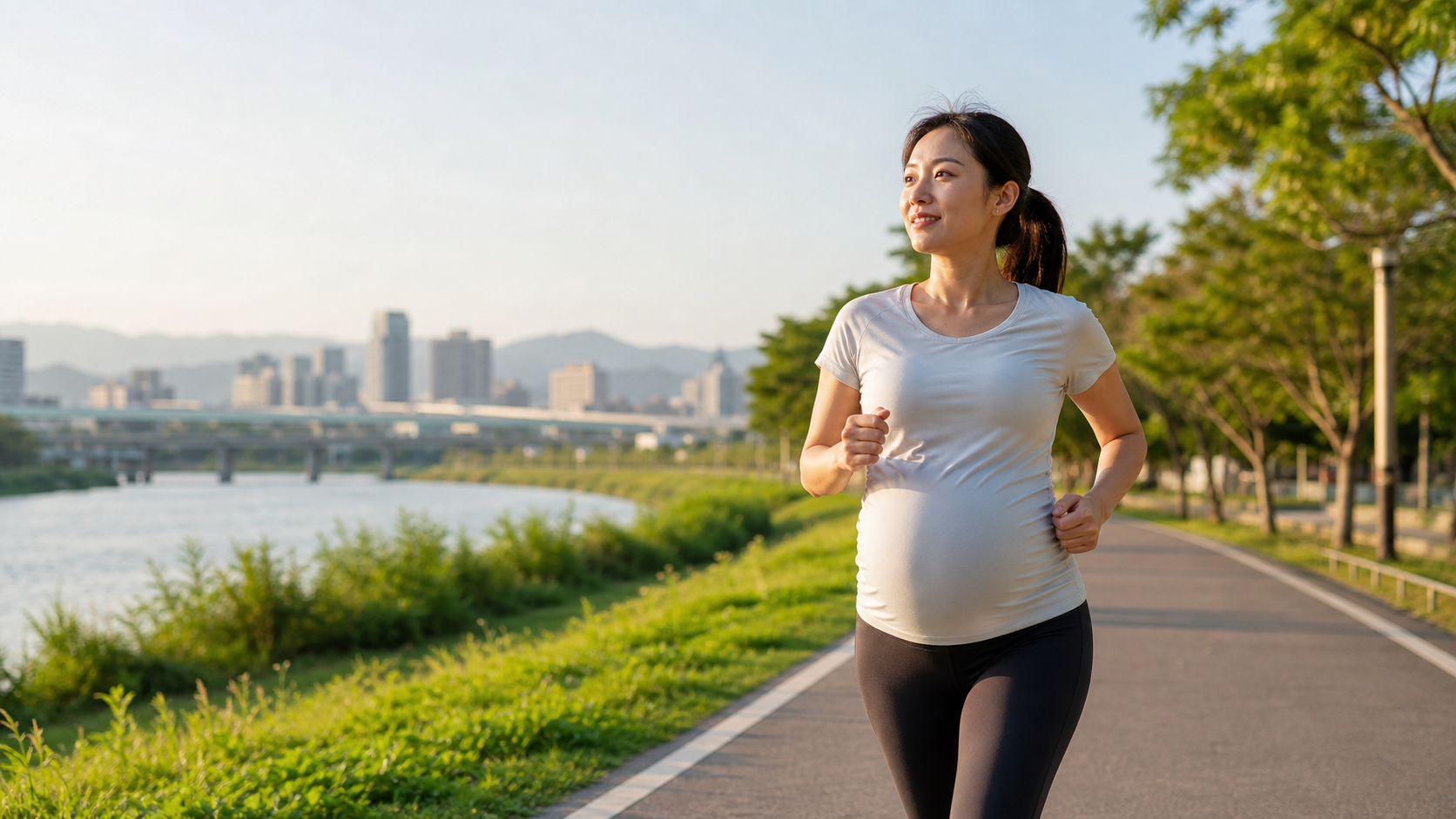
“Can I still run while pregnant?” This is the biggest question on the minds of many running-loving expectant mothers. The answer is: for pregnant women who are healthy and without high-risk pregnancies, continuing to run is not only safe, but also helps control weight gain, improve mood, relieve lower back pain, and some studies even suggest it can shorten labor time.
However, running during pregnancy is not without risk, and adjustments need to be made according to the physiological changes of each trimester. Both Taiwan’s Ministry of Health and Welfare and the American College of Obstetricians and Gynecologists (ACOG) recommend that pregnant women without contraindications engage in at least 150 minutes of moderate-intensity aerobic exercise per week, and running is one excellent option.
Prerequisites for Running During Pregnancy
Before deciding to continue running, the following conditions must first be confirmed:
Physician Clearance (Most Important): Discuss your running plan with your obstetrician to confirm you have none of the following contraindications:
| Absolute Contraindications (Do Not Run) | Relative Contraindications (Require Physician Evaluation) |
|---|---|
| Placenta previa (complete) | Severe anemia |
| Vasa previa | Uncontrolled hypertension |
| Cervical insufficiency or cerclage | Extreme obesity (BMI > 40) |
| Multiple gestation (triplets or more) | Uncontrolled thyroid disease |
| Previous preterm birth with current risk | Severe heart disease |
| Intrauterine growth restriction | Severe lung disease |
First Trimester (Weeks 1–12 of Pregnancy)
Physiological Changes
Morning sickness (nausea, vomiting, fatigue), breast tenderness, frequent urination, and elevated progesterone causing a slightly higher body temperature.
Running Adjustment Recommendations
- If you had an established running routine before pregnancy, you can maintain your previous training volume, but reduce intensity (use the talk test: you should be able to speak in full sentences)
- If nausea or vomiting is severe, switch to walking or wait until symptoms subside before running
- Body temperature is higher, so avoid running in hot, humid environments (in Taiwan’s summer, run before 6 AM or after 6 PM)
- Avoid the very low blood pressure that can occur after suddenly stopping exercise (cool down with a few minutes of walking after your run)
- The risk of miscarriage is higher in the first trimester; stop immediately and seek medical attention if you experience bleeding, abdominal pain, or worsening lower back pain
Psychological Aspect
Many people have not yet announced their pregnancy at this stage, so you may need to adjust to your body’s changes on your own while running. A slower pace is normal—don’t compare yourself to your pre-pregnancy self.
Second Trimester (Weeks 13–28 of Pregnancy)
Physiological Changes
Morning sickness usually subsides and energy returns—this is the stage where many pregnant women feel their best. The uterus gradually expands and the abdomen becomes noticeably prominent. Ligaments relax (due to increased Relaxin hormone secretion), reducing joint stability.
Running Adjustment Recommendations
- Wear a supportive maternity support belt: to reduce the pressure of the uterus’s weight on the pelvic floor
- Switch to wider-toe-box running shoes: your feet may widen during pregnancy due to swelling and ligament relaxation
- Shorten your stride and reduce cadence: your center of gravity has shifted, and your movements are less agile than before pregnancy—slow down your pace
- Limit intensity to an RPE of 6–7 (out of 10): avoid strenuous uphill sprints
- Change supine exercises to side-lying or standing positions: the risk of uterine compression of the inferior vena cava (supine hypotensive syndrome) increases
Safety Precautions
- Avoid contact sports or surfaces with fall risk (mountain trails, muddy paths)
- Carry your phone with you and inform family members or running buddies of your route
Third Trimester (Week 29 to Full Term)
Physiological Changes
The abdomen is significantly enlarged, the center of gravity shifts forward, and pelvic floor pressure increases greatly. Pelvic pain and lower abdominal discomfort (Braxton Hicks contractions) are common. Shortness of breath worsens (due to the diaphragm being pushed upward).
Running Adjustment Recommendations
- Many pregnant women naturally transition to brisk walking at this stage—this is completely appropriate, and there is no need to force yourself to keep running
- If you continue running, keep the intensity within a “can easily speak” range
- Every 30 minutes, check for the following warning signs requiring immediate cessation:
- Vaginal bleeding or fluid leakage
- Regular uterine contractions
- Chest pain, dizziness, or severe headache
- Unilateral calf swelling and pain (could be deep vein thrombosis)
- Noticeably decreased fetal movement
Running Intensity Guidelines by Trimester
| Trimester | Recommended Maximum Heart Rate | Recommended Pace | Manageable Distance (Per Session) |
|---|---|---|---|
| First Trimester | 70–80% of pre-pregnancy max heart rate | 30–60 seconds/km slower than pre-pregnancy | Same as pre-pregnancy, adjust based on how you feel |
| Second Trimester | 65–75% of pre-pregnancy max heart rate | 60–90 seconds/km slower than pre-pregnancy | Recommended no more than 10K per session |
| Third Trimester | 60–70% of pre-pregnancy max heart rate | Primarily a mix of walking/jogging | Recommended within 5K per session |
Practical Tips
- Go by feel, don’t obsess over pace: Your heart rate is naturally elevated during pregnancy, making it unsuitable as an intensity indicator. Use RPE (Rating of Perceived Exertion) instead
- Hydrate more aggressively: Blood volume increases by 50% during pregnancy, and combined with sweat from running, you need approximately 20–30% more fluid than before pregnancy
- Combine with pelvic floor exercises (Kegels): The increased intra-abdominal pressure from running requires strong pelvic floor muscles for support—practice Kegel exercises daily
- Wear appropriate sports bras: Your breasts enlarge during pregnancy and require high-support sports bras
- Inform your prenatal care physician about your running: Let your doctor assess the appropriateness of exercise at each prenatal visit
Conclusion
Running during pregnancy is feasible, but “listening to your body” is the most important principle. Every pregnant woman’s situation is different—pre-pregnancy fitness levels and how smoothly the pregnancy progresses both affect the feasibility of running during pregnancy. There’s no need to compare yourself to your pre-pregnancy self, nor to other pregnant women—as long as you have your physician’s clearance, let running be a source of joy and self-care during your pregnancy. That is enough.
Related Reading
- The Complete Guide to Running During Pregnancy: When to Run, How to Run, and When to Stop
- Road Running During Pregnancy: When You Can Continue and When You Should Stop
- Exercise During Pregnancy and Postpartum Return: A Complete Guide for Endurance Athletes
- Exercise and Pregnancy: A Safety Guide for Exercising While Pregnant—A Comprehensive Analysis from Coach and Sports Science Perspectives
2018 田中馬拉松 全程健跑 VR 360 環景錄影 體驗現場狂野加油氣氛! Insta 360
7 年前
靠單車減肥35公斤 心得分享與整理
7 年前
一日北高前的高裝檢 | 北高 360 | 挑戰11小時的裝備 | 一日雙塔 | 補給
6 年前
CT 喇低賽) 武嶺牽車 才是王道 西進牽車四小時內秘訣 攝手位置 如何判斷 防抽筋小秘訣
7 年前
詳測) 小米 電動打氣筒 公路車胎要充多久? 值得買嗎? 米家充氣寶 小心燙手!
7 年前
2020 前十五名 台灣車友還在用的車錶? 同場加映武嶺四小時內的車友都用哪些車錶,以及車錶靈異經驗分享 北高居然騎了960公里!? | 車錶送修分享 | 公路車 | CT Yeh
5 年前
摔車後補裝備: 好市多新款單車安全帽& Specialized Romin 北高整路屁股都不痛的坐墊 | 一千元居然有MIPS | CT Yeh | 公路車
4 年前
單車 一日北高 ( 雙城 ) 肥宅雙人瘋狂行 紀錄片 REACTO
10 年前