Iron Supplementation for Female Runners: Identifying Exercise-Induced Anemia and Dietary Strategies
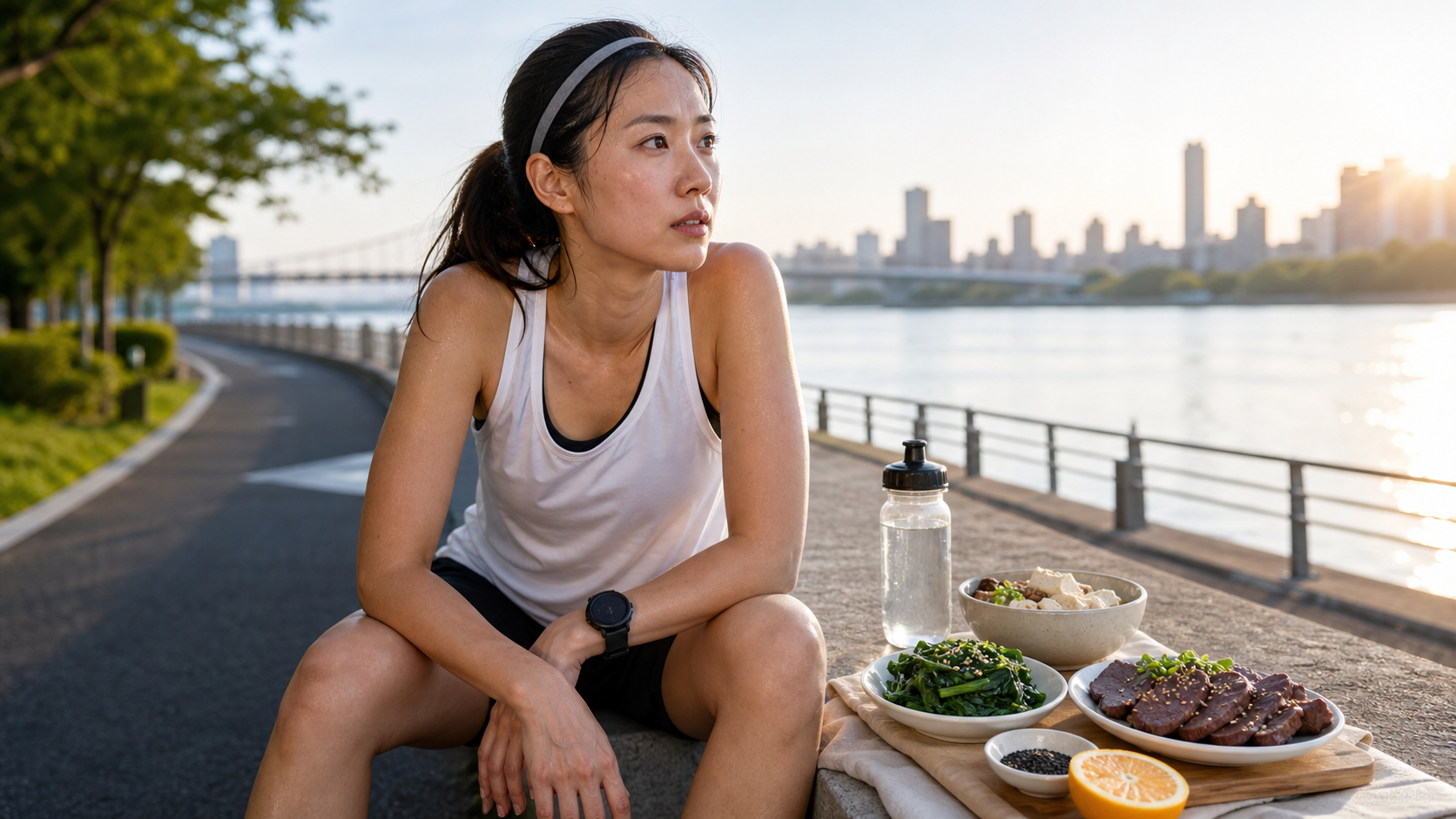
Introduction
Have you ever experienced this: training without slacking off, getting enough sleep, eating a balanced diet, yet your pace remains stagnant, and you constantly feel fatigued and out of breath? This could very well be an “iron deficiency” at play.
Iron is the core component of hemoglobin in red blood cells, which is responsible for transporting oxygen from the lungs to muscles throughout the body. Once iron is deficient, oxygen-carrying capacity declines, directly impairing aerobic metabolic efficiency during running. No matter how strong your cardiovascular system is, your muscles simply “lack oxygen” and can’t run fast.
Female runners, due to monthly menstrual blood loss, combined with “foot strike hemolysis” caused by long-distance running (repeated foot impact rupturing red blood cells) and gastrointestinal bleeding, are among the highest-risk groups for iron deficiency anemia.
Exercise-Induced Anemia vs. Dilutional Pseudo-Anemia
There are two types of “anemia” in runners that need to be distinguished:
| Type | Mechanism | Harmful? | Management |
|---|---|---|---|
| Dilutional Pseudo-Anemia (Sports Anemia) | Long-term aerobic training increases plasma volume, diluting the blood, making hemoglobin concentration appear low | Harmless; actually a normal training adaptation | No treatment needed |
| Iron Deficiency Anemia | Insufficient iron impairs hemoglobin synthesis, truly reducing oxygen-carrying capacity | Harmful; affects athletic performance and health | Iron supplementation required |
The key differentiator lies in serum ferritin: if hemoglobin is low but ferritin is normal or high, it is mostly pseudo-anemia; if ferritin is also low (< 30 ng/mL, with athletes recommended to maintain > 50 ng/mL), it is true iron deficiency.
The Three Stages of Iron Deficiency
- Iron Depletion: Serum ferritin declines, but hemoglobin remains normal. Running feels barely manageable, with occasional fatigue.
- Iron-Deficient Erythropoiesis: Ferritin continues to drop, and red blood cells begin to shrink and decrease in number. You noticeably feel “weak” while running, with elevated heart rate.
- Iron Deficiency Anemia: Hemoglobin drops below normal levels (females < 12 g/dL). Severe fatigue, dizziness, pale skin, and heart palpitations.
How to Identify Warning Signs of Iron Deficiency
The following combination of symptoms should raise suspicion of iron deficiency and warrant a blood test:
- Pace regressing by more than 1–2 minutes/km despite unchanged training volume
- Abnormally elevated heart rate during running (heart rate 10 bpm or more above usual at the same pace)
- Persistent fatigue that doesn’t fully resolve even after rest
- Frequent dizziness and difficulty concentrating
- Brittle nails and excessive hair loss
- Recurrent mouth ulcers
- Craving ice (pica, a specific symptom of iron deficiency)
Recommended regular blood tests: Complete Blood Count (CBC) + Serum Ferritin + Transferrin Saturation (TSAT). Female runners are advised to get checked every six months to a year.
Iron Supplementation Strategies in the Taiwanese Diet
Two Forms of Iron
| Iron Type | Sources | Absorption Rate | Notes |
|---|---|---|---|
| Heme Iron | Red meat (beef, pork, lamb), chicken liver, pork liver, blood products (pig’s blood cake, duck blood) | 15–35% | High absorption rate, unaffected by other foods |
| Non-Heme Iron | Dark leafy vegetables (spinach, red leaf spinach), legumes, whole grains, tofu | 2–20% | Significantly influenced by enhancers and inhibitors |
High-Iron Taiwanese Foods List
- Pork liver (~22 mg iron per 100g): 1–2 times per week, but avoid excess (too much vitamin A)
- Duck blood (~31 mg iron per 100g): A great choice for spicy hot pot and ginger duck hot pot
- Beef (~3 mg iron per 100g): Beef shank and beef brisket are quality options
- Hard clams / clams (~4 mg iron per 100g): The iron king of Taiwanese seafood
- Red amaranth (~12 mg iron per 100g): Non-heme iron; pair with vitamin C to increase absorption
- Red leaf spinach (~10 mg iron per 100g): A traditional Taiwanese blood-nourishing ingredient
- Firm tofu (~3 mg iron per 100g): An iron source for vegetarians
Factors That Enhance and Inhibit Iron Absorption
Enhancers:
- Vitamin C (drinking a glass of orange juice or guava after meals can increase non-heme iron absorption by 3–6 times)
- Animal protein (the “meat factor” promotes iron absorption)
- Organic acids (vinegar, lemon juice)
Inhibitors:
- Tea (tannins): Avoid tea within 1 hour after an iron-rich meal
- Coffee: Avoid coffee within 30 minutes after a meal
- Calcium supplements: Iron and calcium compete for absorption; space iron and calcium supplementation at least 2 hours apart
- Phytates (found in whole grains and legumes): Soaking and sprouting can reduce phytate content
Use of Iron Supplements
If dietary intake is insufficient, iron supplements may be considered, but note the following:
- Use under a physician’s guidance: Excess iron is toxic; more is not necessarily better
- Ferrous Sulfate: The most common form, with good absorption, but may cause gastrointestinal discomfort
- Ferrous Gluconate: Better gastrointestinal tolerance
- Timing: Absorption is best on an empty stomach, but it can be taken with a small amount of food to reduce stomach upset
- Black stools after taking iron: This is normal, resulting from the excretion of excess iron
Practical Recommendations
- Runners with heavy menstrual flow should be especially proactive about iron supplementation: If your period is heavy (using more than 25 sanitary pads per cycle), blood loss is greater and iron needs are higher
- Vegetarian female runners are a high-risk group: If you eat no meat at all, you need to be more proactive about getting iron from legumes and dark leafy vegetables, paired with vitamin C
- Iron absorption is less effective within 1 hour after running: Exercise raises hepcidin levels, temporarily suppressing iron absorption; it’s recommended to supplement iron before running or 1–2 hours after running
- Check ferritin levels every six months: Especially during high-volume training periods in the race preparation phase
Conclusion
Iron is the trace element most easily overlooked yet most impactful for female runners. Many Taiwanese female runners have been running in the “iron deficiency gray zone” for years, with stagnant performance and no identifiable cause. A simple blood test, combined with conscious dietary adjustments, can often break through pace plateaus and make running feel light again. Treat iron supplementation as a daily habit as important as hydration—your next race result may just be rewritten.
Related Reading
- Anemia Risk in Female Runners: Iron Requirements and Dietary Supplementation Strategies
- Iron Deficiency and Exercise-Induced Anemia in Female Runners: You May Not Know You’re Iron-Deficient
- Identifying and Managing Runner’s Anemia: Iron Management for Female Runners
- Iron Supplementation for Road Runners: Dietary Strategies for Anemia Prevention in Female Runners
福隆鐵人團練隨拍
8 年前
靠單車減肥35公斤 心得分享與整理
7 年前
CT暗黑廚房) 車友必備 宇宙無敵鮮蚵湯 幫助訓練恢復 天然食補 好市多 超肥鮮蚵 破PR
7 年前
西進武嶺 免費訓練分析服務 Intervals | 練不夠還是練過頭?你哪一種類型選手?AI模型告訴你! | 備戰神器 | 公路車 訓練 | CT Yeh
4 年前
Never Stop 西進武嶺 前後雙機 完整全程錄影 訓練台 實境
8 年前
單車 一日北高 ( 雙城 ) 肥宅雙人瘋狂行 紀錄片 REACTO
10 年前
爬陡坡被爆胎的車友跑步超車 #cycling #里佳部落
9 個月前
下次拍照前要查清楚啦🤣 #cycling
7 個月前