Introduction
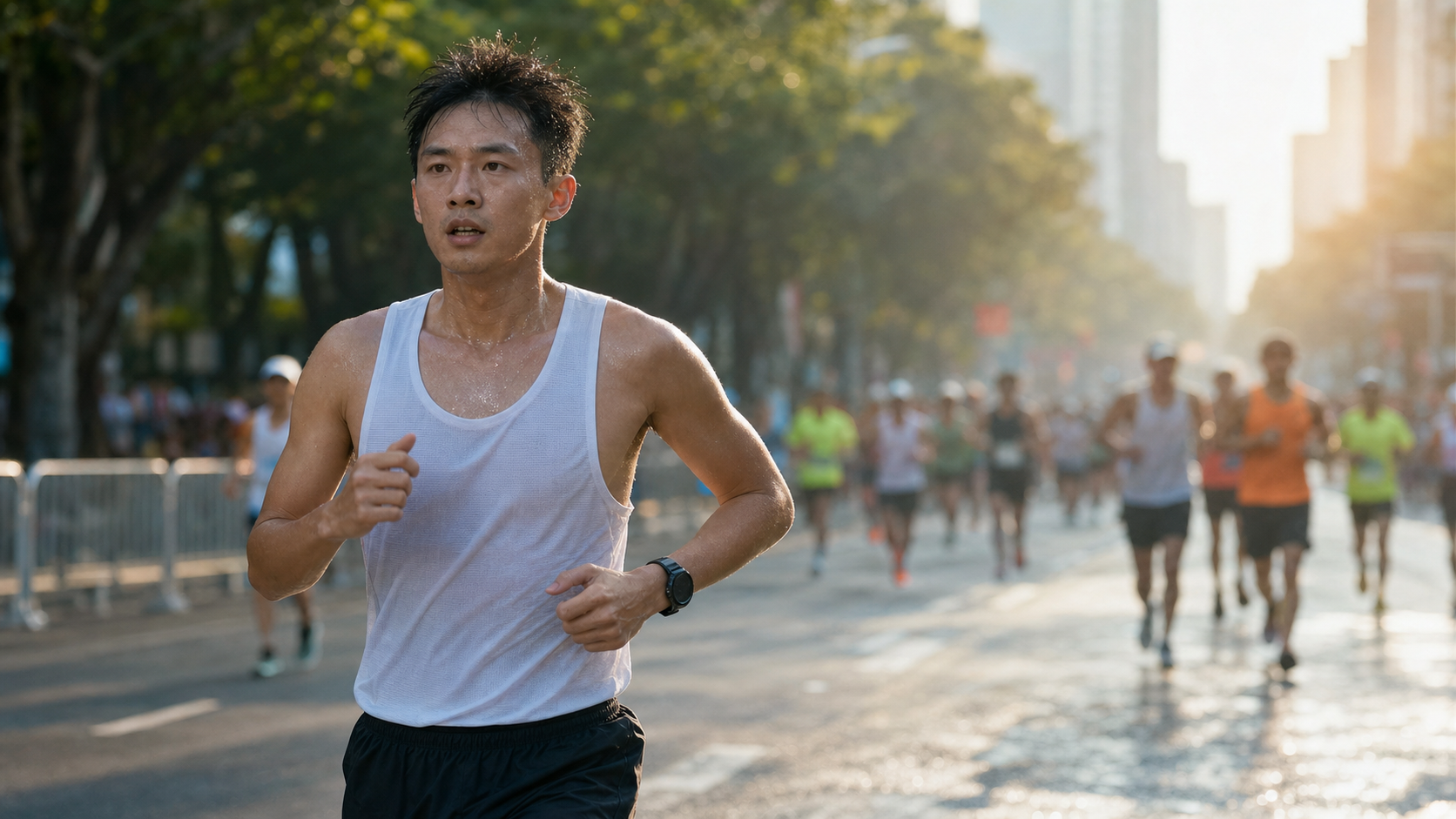
Temperature is one of the most underestimated external variables in marathon performance. Research shows that when temperatures rise from 10°C to 20°C, finish times increase by an average of 2–4%; racing in heat above 25°C can degrade performance by 5–8% or even more. For runners targeting a Sub-3 finish, high temperatures can create a gap of over 10 minutes. Understanding how weather affects marathon physiology and adjusting pacing strategy accordingly is essential knowledge for racing in Taiwan’s subtropical climate.
Optimal Weather Conditions for Marathons
According to sports physiology research (Ely et al., 2007; Roberts, 2010) and historical performance analysis from major world marathons, the ideal marathon racing conditions are as follows:
| Environmental Factor | Optimal Range | Description |
|---|---|---|
| Temperature | 8–12°C | The optimal zone balancing heat dissipation and muscle temperature |
| Relative Humidity | 40–60% | Highest sweat evaporation efficiency |
| Wind Speed | 0–5 m/s | Light tailwind aids cooling; strong wind increases resistance |
| Dew Point | <10°C | The higher the dew point, the harder it is for sweat to evaporate |
Taiwan’s marathon season is mainly concentrated from October to March of the following year. The Taipei Marathon in December typically sees temperatures closest to the ideal range, but during warm winters, there remains a risk of elevated temperatures.
The Physiological Impact of Heat on the Body
Approximately 75–80% of the heat generated from running must be dissipated through the skin, with the remainder being mechanical kinetic energy. In hot environments, the body’s cooling mechanisms face the following stresses:
- Cardiac Output Redistribution: In high heat, blood must simultaneously supply working muscles (oxygen delivery) and the skin (cooling), placing a significantly greater burden on the heart
- Impaired Sweat Evaporation: When relative humidity exceeds 70%, sweat struggles to evaporate, and cooling efficiency drops sharply
- Reduced Plasma Volume: Dehydration leads to decreased plasma volume, causing heart rate to rise while delivery efficiency declines
- Elevated Core Temperature: When core temperature exceeds 39°C, performance noticeably declines; above 40°C, there is a risk of heat exhaustion
Pace Compensation Formula
In the face of high temperatures, runners must proactively adjust their target pace rather than stubbornly sticking to the original plan. Below are common methods for estimating heat compensation:
Pace adjustment recommendations based on temperature (using a Sub-3 runner with a target pace of 4:16/km as the baseline):
| Race Temperature | Pace Adjustment | Expected Impact on Finish Time |
|---|---|---|
| 8–12°C | No adjustment needed | Normal performance |
| 13–16°C | 5–10 sec/km slower | +3–7 minutes |
| 17–20°C | 10–18 sec/km slower | +7–13 minutes |
| 21–24°C | 18–30 sec/km slower | +13–21 minutes |
| Above 25°C | Prioritize finishing, abandon PB | Adjust based on conditions |
These figures are for reference only; individual tolerance to heat varies significantly. Runners who train long-term in tropical environments (heat-adapted) may perform better than these numbers suggest.
Execution Strategies for Hot Marathons
Conservative Strategy for the First Half
In high heat, the “feels easy” sensation during the first 10 kilometers is deceptive—the body hasn’t fully warmed up yet, making it easy to run too fast. It’s recommended to run the first 10 kilometers 5 sec/km slower than the temperature-compensated pace as a “heat preparation buffer.”
Cooling Aids
- Pouring water: At every aid station, pour water over your head, neck, and inner wrists. This not only lowers skin temperature but also provides a psychological cooling effect
- Ice: If aid stations provide ice, place it in your cap or hold it against the carotid artery
- Pre-cooling: 30 minutes before the race, drink cold water (4°C) or hold an ice cup to lower pre-race core temperature
Hydration Plan
- Consume 500–700 mL of fluid 2 hours before the race
- Take 150–200 mL at every aid station (approximately every 2.5 km)
- Don’t wait until you feel thirsty to drink—in high heat, the thirst response lags behind actual needs
- Avoid excessive fluid intake (risk of hyponatremia); electrolyte replenishment is equally important
Taiwan’s Unique Climate Considerations
Taiwan’s autumn marathons (October–November) sometimes face “hot and humid” weather, with high dew points (18–22°C). Even when the temperature seems reasonable (20–22°C), sweat can barely evaporate, making the perceived heat stress far greater than at races in northern regions with the same temperature. In such conditions, “rate of perceived exertion” is a more important benchmark than pace numbers.
Practical Recommendations
- Track the weather one week before the race: If temperatures exceed expectations, adjust your pacing plan in advance—don’t hold onto the wishful mindset of “maybe I’ll still have time at the end”
- Carry a handheld bottle or soft flask beyond aid stations: In hot races, this ensures you can hydrate even between aid stations
- Recognize the symptoms of heat exhaustion: Dizziness, nausea, and dry skin with cessation of sweating are danger signals—slow down immediately and seek medical assistance
- Pre-race heat acclimatization training: If race-day temperatures are expected to be high, do several “deliberate easy runs in the midday heat” during the 2 weeks before the race to help your body adapt to hot conditions
- Accept that adjusting your pace is not failure: Stubbornly adhering to your original pace plan in high heat will only lead to a more severe late-race collapse; proactively adjusting is what smart runners do
Conclusion
Weather is the most uncontrollable variable in a marathon, but how you respond to it is entirely within your control. Understanding temperature’s impact on physiology, mastering pace compensation methods, and preparing on-course cooling strategies are the keys to delivering a performance you can be proud of—regardless of the weather—in Taiwan’s ever-changing climate.
Related Reading
- Temperature-Based Pace Adjustment: Recommended Pace Slowdown for Every 5°C Increase
- Weather Strategies for Road Races: Adjusting for Rain, Heat, and Strong Winds
- Compensating for Slower Running in Heat: Pace Adjustment Strategies for Taiwan Summer Training
- Race-Day Weather Mental Strategies: Mindset Adjustments for Heat and Rain
西進武嶺 免費訓練分析服務 Intervals | 練不夠還是練過頭?你哪一種類型選手?AI模型告訴你! | 備戰神器 | 公路車 訓練 | CT Yeh
4 年前
#公路車 #Vo2Max #最大攝氧量 測驗 體驗 | 心肺測試
6 年前
風櫃嘴時間 預測西進武嶺時間?13000名車友統計數據分析告訴你 !
5 年前
一日北高/長距離團騎 常見問題補充篇 / 組團或跟團的眉角 / 壯車友容易被瘦車友慢性拉爆 / 原來屁股痛可能是這個原因...? / 風場配速法 / 公路車 / CT Yeh
2 年前
武嶺配速表最佳使用方式 #bike
1 年前
Live) 備戰2019彰化經典百K 賽前攻略 (已完賽請看新影片
7 年前
西進武嶺 自製新版AI配速表產生器 x 賽前攻略 抱佛腳! 沒有功率計也可以產生配速表嗎?有什麼其他眉角賽前要注意的呢? | 西進武嶺 / 東進武嶺 KOM 攻略 | 公路車 | CT Yeh
4 年前
#公路車 #Fitting 靠人工智慧APP 幫你調整單車
6 年前