Introduction
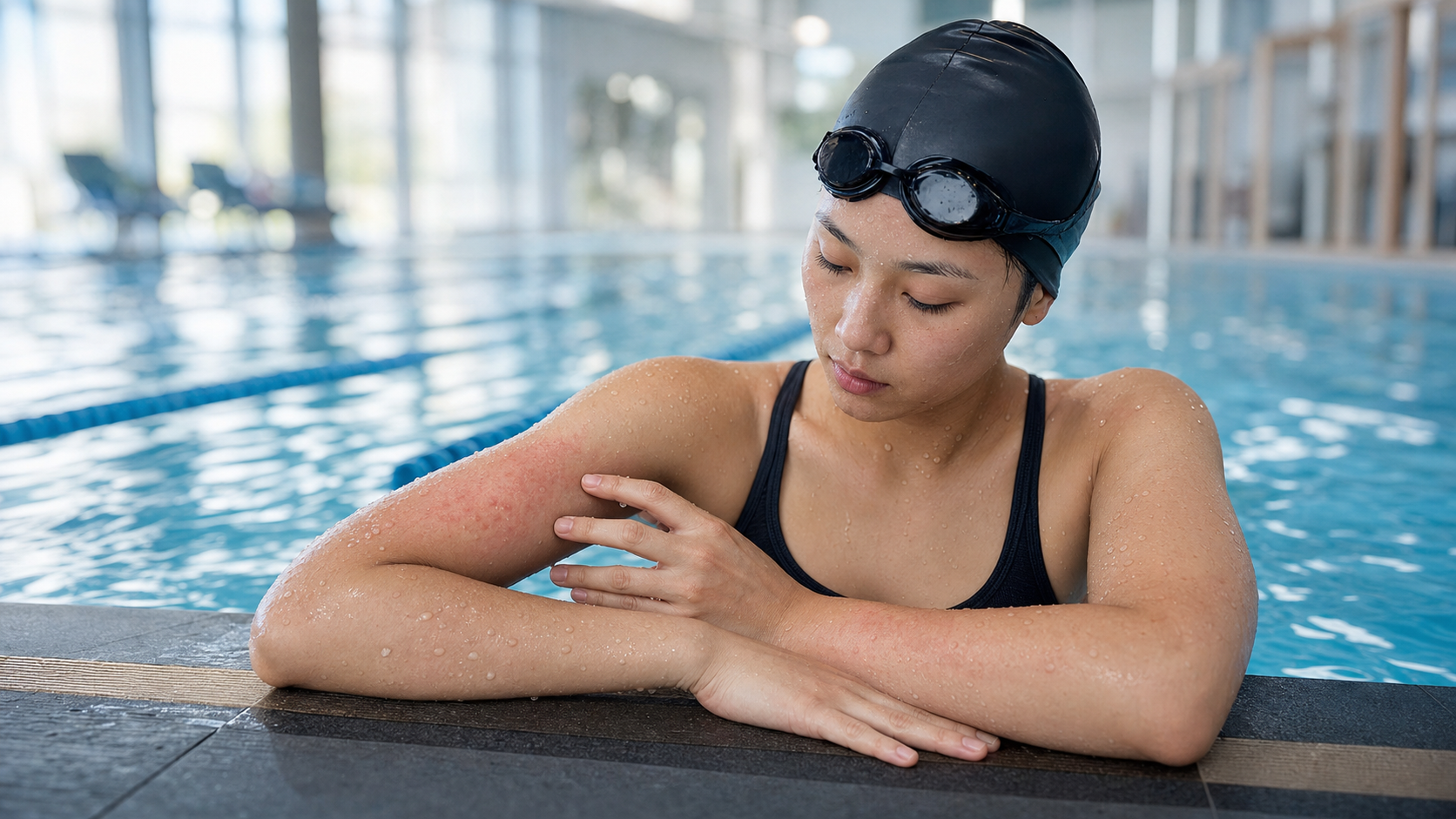
Tight, dry, flaking skin after a swim – sometimes even red, itchy rashes – is a common frustration for regular swimmers. The chlorine-based disinfectants in pool water (mainly sodium hypochlorite) are essential for keeping the water clean, but they also irritate the skin’s natural protective barrier to varying degrees. For most people, this irritation is mild and preventable. But for swimmers with atopic dermatitis (eczema), psoriasis, or sensitive skin, pool chlorine can trigger more serious skin reactions. Understanding what causes these problems and how to care for your skin lets swimmers enjoy the sport while protecting their skin health.
How Pool Chlorine Affects the Skin
The Mechanism Behind Barrier Damage
Healthy skin’s outermost layer is built from corneocytes, natural moisturizing factor (NMF), and sebum, together forming a “brick-and-mortar” barrier structure. Pool water breaks down this barrier in several ways:
- Lipid-dissolving cleansing effect: Chlorinated water dissolves the sebum (natural moisture layer) on the skin’s surface, similar to the effect of over-using cleansing products.
- Protein denaturation: Hypochlorous acid can chemically react with proteins in the skin, damaging the junction proteins between corneocytes.
- Secondary irritation from chloramine compounds: Chlorine combines with sweat, urea, and ammonia on swimmers’ bodies to form chloramines, which are more irritating to mucous membranes and skin than chlorine alone.
- pH effects: Pool water is typically maintained at pH 7.2-7.8. While close to neutral, this is still more alkaline than skin’s normal acidic pH (4.5-5.5), which weakens the skin’s microbial defenses.
Common Categories of Skin Problems
| Problem Type | Main Features | Common Sites | Risk Factors |
|---|---|---|---|
| Irritant contact dermatitis | Redness, dryness, tightness, no obvious papules | Whole body, especially limbs | High training frequency, naturally dry skin |
| Allergic contact dermatitis | Itchy red rash, blisters | Areas outside swimwear coverage, face | Specific allergy to chlorine or sunscreen |
| Pool folliculitis | Follicular papules or pustules (centered on red, swollen follicles) | Buttocks, back of thighs, underarms | Poor pool hygiene, Pseudomonas infection |
| Worsening atopic dermatitis | Increased itching and spreading rash at existing eczema sites | Inner elbows, backs of knees | History of eczema, naturally weak skin barrier |
| Swimmer’s Itch | Stinging sensation followed by hive-like papules | Exposed areas not covered by swimwear | Infection by avian schistosome cercariae in natural bodies of water |
Pool Folliculitis
Pool folliculitis (Hot Tub Folliculitis) is most commonly caused by Pseudomonas aeruginosa, a bacterium that proliferates in pools and hot tubs (spas) with insufficient chlorine disinfection, entering hair follicles and causing infection.
- Symptoms: Appears 1-3 days after exposure to water, red papules or pustules centered on hair follicles, may be mildly itchy or painful
- Treatment: Mild cases resolve naturally within 7-10 days; widespread lesions or immunocompromised individuals may need oral antibiotics
- Prevention: Choose pools with properly managed chlorine levels; shower and change clothes promptly after swimming; avoid wearing wet swimwear poolside for extended periods
Skin Care Strategies
Protection Before Swimming
- Apply a waterproof protective skin oil: Applying a thin layer of petroleum jelly or a ceramide-rich moisturizer to exposed skin can act as a physical barrier against chlorinated water. This is especially suitable for swimmers with a history of eczema.
- Shower before entering the water: Rinsing your body before entering the pool lets your skin and hair absorb fresh water first, which reduces how much pool water gets absorbed (once skin is saturated with fresh water, it absorbs proportionally less chlorinated water).
- Choose full-coverage swimwear: Long-sleeved or sun-protective swimwear that covers more skin effectively reduces the area exposed to chlorinated water, suitable for long training sessions or those with sensitive skin.
Skin Care Routine After Swimming
- Rinse immediately: After swimming, rinse your whole body with lukewarm fresh water (not overly hot water, which further strips oils) for at least 2 minutes to ensure chlorine residue is washed away.
- Gentle cleansing: Use a gentle body wash with a pH close to skin’s natural acidity (pH 4.5-5.5), avoiding alkaline soap-based products (check the product label or ask a pharmacist for advice).
- Moisturize immediately after drying: Apply moisturizing lotion while skin is still slightly damp to lock in residual moisture. Products containing hyaluronic acid, ceramides, or urea (5-10%) work best.
- Extra attention to specific areas: Between the toes, underarms, and groin folds are prone to fungal growth in damp environments, so dry thoroughly and consider using antifungal powder.
Managing Swimming for Those with Atopic Dermatitis
Swimmers with atopic dermatitis (eczema) aren’t necessarily forbidden from swimming, but they need a more careful skin care plan:
- Prioritize saltwater pools or newer UV-disinfection pools (which reduce chlorine use)
- Use medical-grade moisturizers recommended by a dermatologist before and after swimming (such as creams containing 20% urea or lipid barrier repair ingredients)
- Pause swimming during acute flare-ups (redness and oozing)
- If eczema keeps worsening despite regular swimming, see a doctor to evaluate whether you have a true chlorine allergy (patch testing can be performed)
Practical Tips
- Observe pool water quality: A well-maintained pool should be clear with no strong, pungent chlorine/chloramine smell. A strong pungent smell actually indicates “insufficient disinfection, high organic contamination, and elevated chloramine levels” – not “too much disinfectant,” which is a common misconception.
- Replace swim caps and goggle gaskets regularly to prevent mold and bacteria from building up on rubber materials.
- If skin problems don’t improve after 2 weeks, or if extensive pustules appear, see a doctor – don’t use unverified home remedies or steroid creams on your own.
- Adequate water intake (over 2,000 mL daily) helps maintain the skin’s water-retention capacity from within, and is the cheapest foundation for skin care.
Conclusion
While swimming’s effects on skin are real, most problems can be effectively prevented through proper pre- and post-swim skin care routines, choosing a suitable swimming environment, and basic skin hygiene habits. Treat skin care as part of your swimming gear, so your skin and your sport can coexist peacefully over the long term – letting you keep enjoying the health benefits swimming brings.
Related Reading
- Swimming and Skin Protection: How Chlorinated Water Affects Skin and Care Recommendations
- Chlorine Allergy: A Complete Guide to Swimmer’s Dermatitis and Eye Protection
- Post-Swim Skin Care: How Chlorine Affects and Protects Skin
- Swimming and Skin Conditions: Care Plans for Chlorine Dermatitis and Dryness
碟煞公路車 銑面器 !? 原來銑完差這麼多! 降低蹭碟機率! | TIME 公路車 保養小記錄 | CT Yeh
3 年前
洗單車神器 吹水機! 實際洗車用用看 暴力洗鍊條大法 | 公路車 | CT Yeh
4 年前
水金九不厭五分 10度寒流冷到不願停!feat. 卡卡 / 公路車 / CT Yeh
6 個月前
洗完單車整隻手黑的解決妙招🤣 #bike
1 年前
3D 列印車褲墊 / 舒適改善? / 無痕 x 分區壓縮 / ATK & Decider系列 / JE22黑科技 / #公路車 #CTYEH
11 個月前
自助洗車場 洗單車 50元有找 清鍊條大法 居然還有小小兵
7 年前
一起升級!海鷗盃LSD團練...JJSC Zone2招待 騎到手抖 / 公路車 / CT Yeh
1 天前
一日北高常見問題大集合 | 攻略 | 路線 | 訓練 | 補給 | 自行車 單車 | 一日雙城 | 雙塔 | TWB北高360 | 屁股痛
6 年前