Introduction
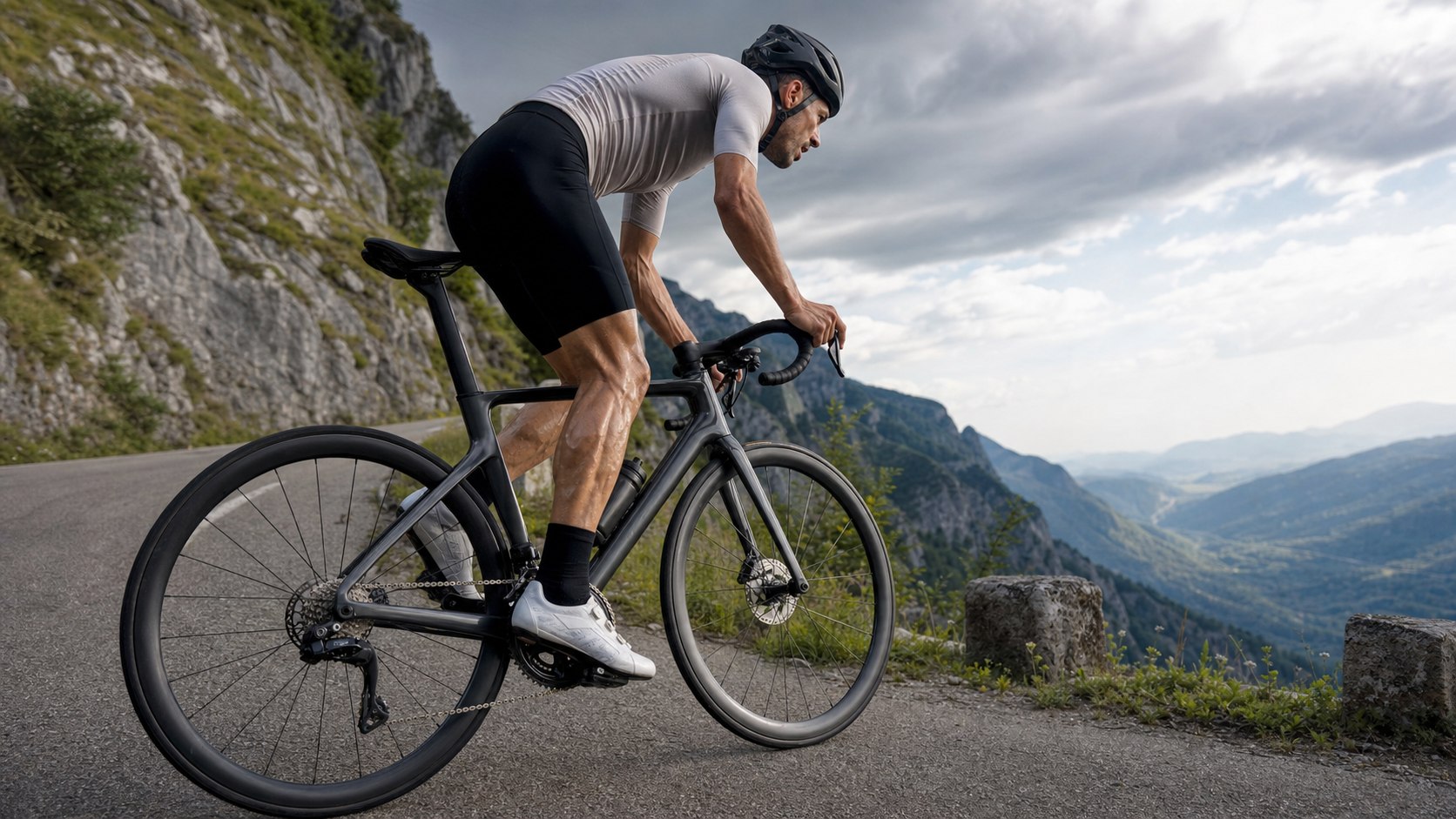
You may have noticed that top climbers sometimes use a bigger gear than you’d expect when tackling steep slopes, grinding their way upward at a relatively low cadence (55–70rpm). This isn’t because they can’t shift into an easier gear—it’s a deliberate muscular endurance training mode. In contrast to high-cadence, low-gear aerobic training, low-cadence, big-gear riding directly challenges the maximum contraction strength and sustained tolerance of the leg muscles. It’s a specialized training method for improving pedal torque and mountain climbing performance.
What is Muscular Endurance Training
Definition and Goals
In cycling, muscular endurance training typically refers to maintaining relatively high power (70–85% FTP) at a low cadence (50–70rpm), also known as “Big Gear Intervals” or “Strength Endurance” training. Its main benefits include:
- Increased maximum pedal torque: Greater force output per pedal stroke
- Enhanced muscle recruitment efficiency: More motor units work together, improving peak force
- Improved neuromuscular connection: Low cadence forces the brain to “think about every pedal stroke,” increasing pedaling technique awareness
- Increased force output from slow-twitch muscle fibers: Traditionally considered weak, but training can enhance their force contribution
- Simulating the muscular stress of long climbs: The long climbs on Taiwan’s mountain roads often force you to drop your cadence; adapting to this feeling in advance is beneficial
Comparison with High-Intensity Training
| Training Type | Cadence | Power Target | Primary Stimulus | Suitable Terrain Simulation |
|---|---|---|---|---|
| Muscular Endurance (Big Gear) | 50–70rpm | 70–85% FTP | Muscle strength/torque | Steep slopes, mountain climbs |
| HIIT (30/15) | 90–110rpm | 120%+ FTP | VO2max, W’ | Sprints, surge attacks |
| Sweet Spot SST | 85–95rpm | 88–93% FTP | Aerobic threshold | Sustained climbing on moderate grades |
| Threshold Training | 90–100rpm | 95–105% FTP | Lactate clearance | Time trials, steep race climbs |
Designing a Muscular Endurance Workout Plan
Basic Workout: Big Gear Intervals on a Slope
Best performed on a steady 3–6% grade (Taipei: Tianmu Water Pipeline Road, Zhuzihu Road; Taichung: Dadu Mountain; Southern Taiwan: hills near Chengcing Lake)
- Warm-up: 15–20 minutes of easy aerobic riding at normal cadence (85–95rpm)
- Main set: 4–6 reps × 6–8 minutes @ 75–82% FTP, cadence controlled at 55–65rpm
- Recovery between reps: 3–4 minutes easy spinning (you can raise cadence to recover)
- Cool-down: 10–15 minutes of easy pedaling
Advanced version (20-minute long effort):
- After a 15-minute warm-up, go straight into 1×20 minutes @ 70–78% FTP, strictly controlling cadence at 60rpm
- The latter part may be very painful, but this sustained stress is most effective for muscular endurance adaptation
Trainer Workout (Alternative for Flat Environments)
On a trainer, you can use ERG mode to set a target power while manually shifting into a big gear to force a low cadence:
- Choose a 52×14 or similar big gear combination
- Set the power target at 75–80% FTP
- Maintain a cadence of 60–65rpm, feeling the obvious pedaling resistance
Note: In ERG mode, don’t shift into too big a gear, as the trainer’s magnetic resistance control may become unstable.
Periodization and Precautions
When to Incorporate Muscular Endurance Training
Muscular endurance training places significant stress on the knee joints and quadriceps tendons, so it’s not recommended to suddenly add it during fatigue periods or high-volume training phases. Suggested timing:
- Early base period (off-season): Once per week to let the body adapt to muscular stress
- Build period: 1–2 times per week, alternating with HIIT workouts, never on the same day
- Pre-race period: Reduce or stop completely to avoid muscle damage interfering with race readiness
Knee Joint Protection
- Pain on the outside or front of the knee is the most common overuse injury; stop big-gear training immediately if pain occurs
- Saddle height must be correct: A saddle that’s too low significantly increases patellar stress under low-cadence, big-gear conditions
- Don’t do big-gear training with fatigued legs; muscle protection mechanisms are reduced under fatigue, increasing injury risk
- Start with short intervals (4-minute reps) and gradually increase, giving your body 4–6 weeks to adapt
Combining Muscular Endurance with Strength Training
Some research shows that 1–2 sessions of leg strength training per week (squats, leg presses, single-leg deadlifts) can significantly strengthen the neuromuscular connection, indirectly improving pedal torque on the bike—a more comprehensive approach than big-gear training alone. During the off-season, consider pairing big-gear training with weight training:
- Don’t do big-gear riding on weight training days (muscle overload on the same day)
- Schedule aerobic or sweet spot work 2 days after weight training (to promote muscle blood flow and recovery)
- Schedule big-gear intervals 3 days after weight training (muscle adaptation is complete by then)
Practical Tips
- Film your pedaling: Low cadence makes it easier to spot pedaling imperfections (dead spots, one-sided force application); use a coach or Trainer Road’s pedaling efficiency metrics for feedback
- Start with short bursts: Riders completely unaccustomed to low cadence should first try 5×2 minutes of big-gear work to feel how their body responds before increasing duration
- Don’t skip hip flexor stretching: The hip flexors typically feel tight after big-gear, low-cadence training; do 5–10 minutes of stretching after every session
- Taiwan’s mountain roads are naturally suited: Long climbing routes like Yangmingshan, Lala Mountain, and Smangus are themselves the best muscular endurance training grounds—no special planning needed
Conclusion
Muscular endurance training is the bridge connecting “aerobic foundation” and “climbing strength.” It’s not as thrilling as HIIT, but it’s more important than you might think—especially for Taiwanese riders. Facing mountain routes with thousands of meters of elevation gain, leg muscle strength and endurance often hit their limits before cardiovascular capacity does. By systematically incorporating big-gear, low-cadence workouts into your training plan, you’ll feel that solid sense of “legs with power” the next time you climb Hehuan Mountain or Wuling.
Related Reading
- The Cyclist’s Guide to Building Muscle: Developing Functional Muscle in Endurance Training
- Small Gear High Cadence vs Big Gear Low Cadence: The Science of Choosing Climbing Cadence
- Mountain Gear Strategy: Gear Shifting Techniques and Ratio Selection for Different Grades
- Cadence Strategy for Climbing: Choosing Between High and Low Cadence in the Mountains
#公路車 #Fitting 靠人工智慧APP 幫你調整單車
6 年前
鉅齒紋輪組!? ControlTech MEG-T50 EVO 碳纖維幅條輪組/ 功率對比實驗 / 公路車 / CT Yeh
2 年前
西進武嶺 免費訓練分析服務 Intervals | 練不夠還是練過頭?你哪一種類型選手?AI模型告訴你! | 備戰神器 | 公路車 訓練 | CT Yeh
4 年前
單車AI教練!全新 ChatGPT4o 幫你分析訓練成果!排武嶺課表,分析騎車姿勢! 太神了! / 公路車 / CT Yeh / feat. 緯緯
2 年前
靠單車減肥35公斤 心得分享與整理
7 年前
碟煞公路車 銑面器 !? 原來銑完差這麼多! 降低蹭碟機率! | TIME 公路車 保養小記錄 | CT Yeh
3 年前
一日北高常見問題大集合 | 攻略 | 路線 | 訓練 | 補給 | 自行車 單車 | 一日雙城 | 雙塔 | TWB北高360 | 屁股痛
6 年前
滑雪新手們慘摔學習全紀錄(請開字幕),滑雪好好玩 | Snowboard + Ski | 岩原 スキー場 | 滑雪APP使用 | GoPro Max
6 年前