Introduction
“Bonking”—one of the most feared words for long-distance cyclists. When muscle glycogen runs out, the body switches to inefficient fat-burning mode, speed drops sharply, legs feel heavy, and brain fog makes decision-making impossible. However, bonking can be almost entirely prevented with the right fueling strategy. This article breaks down the science of energy during long rides and provides a fueling schedule you can put into action immediately.
The Energy Expenditure Principles of Long Rides
When riding, the human body primarily uses two fuels: muscle glycogen (carbohydrates) and fat. The higher the intensity, the greater the reliance on glycogen. A typical rider’s glycogen stores can sustain about 90–120 minutes of moderate-to-high intensity exercise; beyond that, without replenishment, the body enters “power-saving mode.”
Below are approximate hourly calorie expenditures at different intensities:
| Riding Intensity | Speed Reference | Hourly Calorie Expenditure | Recommended Hourly Carb Intake |
|---|---|---|---|
| Easy (Zone 1) | 20–25 km/h | 400–500 kcal | 30–40g |
| Moderate (Zone 2) | 26–32 km/h | 500–700 kcal | 40–60g |
| Harder (Zone 3) | 33–38 km/h | 700–900 kcal | 60–80g |
| High Intensity (Zone 4+) | 38+ km/h | 900–1200 kcal | 80–90g |
Note: These figures are affected by body weight, terrain, and temperature, and are for reference only. For long rides primarily in Zone 2, aim for 40–60g of carbs per hour.
Putting the Fueling Schedule into Practice
Before Departure (2 Hours Prior)
Pre-ride nutrition is the “fuel loading” for the entire ride, with the goal of maximizing muscle glycogen stores at the start:
- 2 hours before: A full carbohydrate meal (oatmeal, whole wheat toast with peanut butter, white rice), roughly 80–120g of carbs
- 30 minutes before: A banana or a rice ball for a quick 30–40g of carbs
- Before rolling out: Drink 400–500ml of water (to avoid early-ride dehydration)
During the Ride (Hourly Fueling Plan)
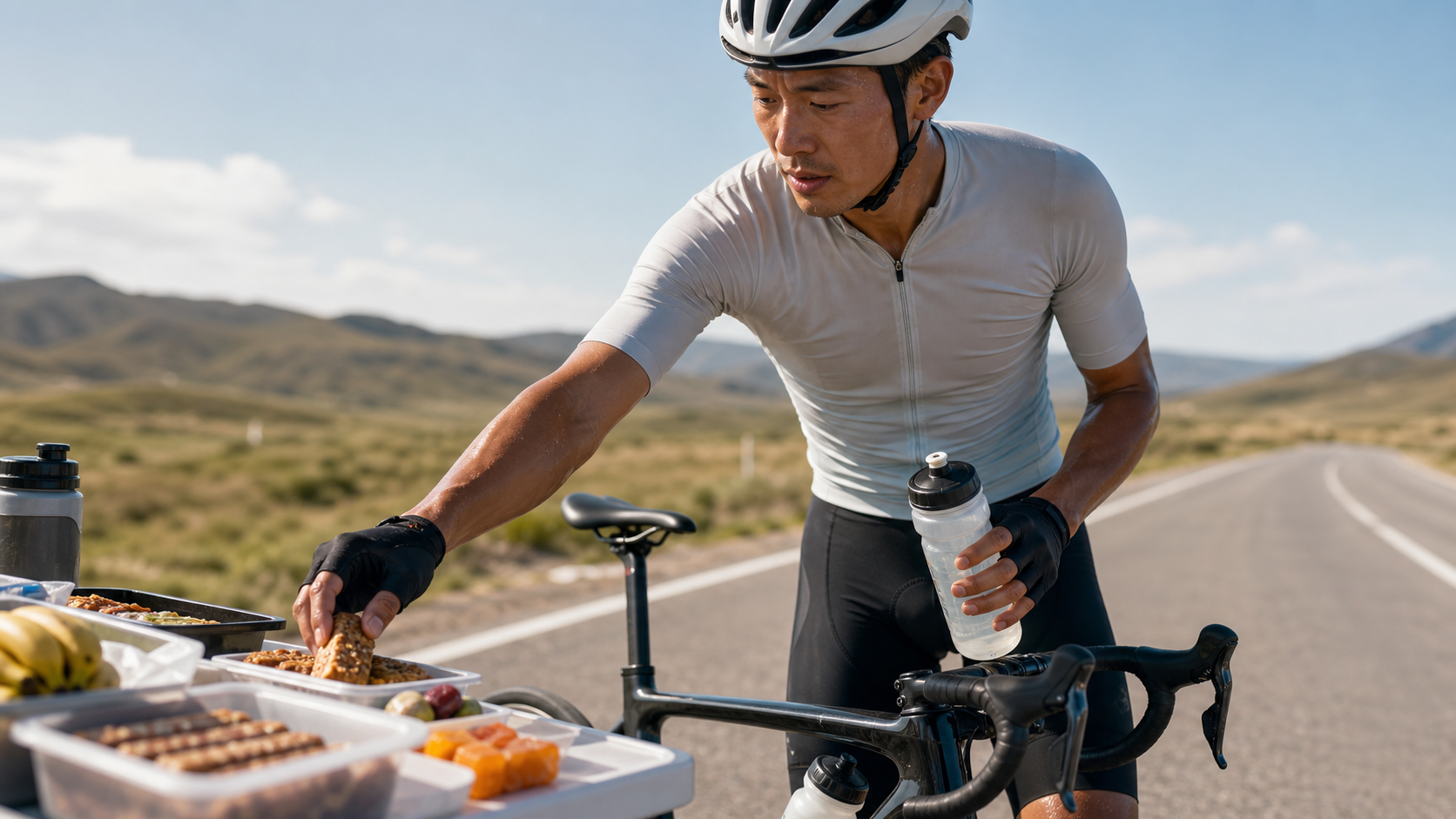
The most important principle: Don’t wait until you’re hungry to refuel. By the time hunger sets in, glycogen has already dropped to dangerous levels. Use time as the trigger, not hunger.
Instead of consuming a large amount of food all at once every hour, refuel every 20–30 minutes to maintain stable blood sugar:
- Every 20–25 minutes: One energy gel (1 packet, 22–25g carbs) or half a banana
- Every 40–50 minutes: Solid food (rice ball, energy bar, salted mochi)
- Hourly target: 40–60g carbs + 500–750ml fluid
Aid Station Selection Strategy
If convenience stores or aid stations are along the route, prioritize the following foods:
- Top priority: Rice balls (high in carbs, easy to digest), bananas, sports drinks
- Second choice: Small bread rolls, onigiri, soda crackers
- Avoid: High-fat foods (fried chicken, fries), excess fiber (slows digestion)
- Emergency backup: Carry 3–4 energy gels on you; don’t rely on aid stations
The Importance of Electrolytes
During long rides, electrolyte loss (sodium, potassium, magnesium) is just as important as carbs. In Taiwan’s summer, riding can cause more than 1 gram of sodium loss per hour; if you only replace water, hyponatremia can occur. Recommendations:
- Replenish with electrolyte drinks or salt tablets every 1–1.5 hours
- Sports drinks (such as Pocari Sweat) are better suited for long distances than plain water
- If sweating heavily, carry salt tablets (each tablet roughly 200–400mg sodium)
Practical Tips
- Set a fueling reminder on your bike computer every 25 minutes and stick to it
- Calculate your total fueling needs for the entire ride in advance and carry enough food on the bike
- If you lose your appetite after 100km, force yourself to take in liquid carbs (juice, sports drinks)
- Caffeine (caffeine capsules or caffeinated energy gels) can be used after 120–150km to delay fatigue
- Carb loading the night before the event (rice, pasta) is equally important
Conclusion
Energy fueling strategy is a skill that requires practice. Repeatedly test how different foods feel during training rides to find what your body tolerates best. When your fueling plan is dialed in, the second half of a long ride becomes something to enjoy rather than endure—this is the key difference that separates beginners from seasoned riders.
Related Reading
- The Complete Guide to Cycling Fueling Strategy: Energy and Hydration Management for Long Rides
- Carbohydrate Strategy for Long-Distance Riding: Hourly Intake and Digestion
- Fueling Strategy for Long-Distance Rides: How Many Carbohydrates Per Hour?
- Energy Fueling Plan for Long-Distance Riding: The Science of Hourly Intake
一日北高前的高裝檢 | 北高 360 | 挑戰11小時的裝備 | 一日雙塔 | 補給
6 年前
西進武嶺 免費訓練分析服務 Intervals | 練不夠還是練過頭?你哪一種類型選手?AI模型告訴你! | 備戰神器 | 公路車 訓練 | CT Yeh
4 年前
單車 一日北高 ( 雙城 ) 肥宅雙人瘋狂行 紀錄片 REACTO
10 年前
CT暗黑廚房) 車友必備 宇宙無敵鮮蚵湯 幫助訓練恢復 天然食補 好市多 超肥鮮蚵 破PR
7 年前
靠單車減肥35公斤 心得分享與整理
7 年前
[教學] Dashware 教學 如何製作有 速度 功率 心律的 騎車影片 Guages Video
8 年前
一日北高/長距離團騎 常見問題補充篇 / 組團或跟團的眉角 / 壯車友容易被瘦車友慢性拉爆 / 原來屁股痛可能是這個原因...? / 風場配速法 / 公路車 / CT Yeh
2 年前
#公路車 #西進武嶺 配速配瓦實驗 坡度分析 四小時內攻略 建大盃 NeverStop #西進武嶺攻略
6 年前