Introduction
The hunger you feel after swimming is a real physiological response, not a failure of willpower. Mild heat loss caused by water temperature, the energy demand of large muscle groups working throughout the body, and the fact that appetite-suppressing hormones (such as GLP-1) are released less strongly in water — all of these make you especially hungry once you get out of the pool. The question isn’t “whether to eat,” but “what to eat and when to eat it.” Getting your post-swim nutrition right doesn’t just prevent overeating — it also speeds up muscle recovery and helps maintain metabolic efficiency.
The Golden Window for Post-Swim Refueling
After exercise, your muscles’ ability to absorb nutrients rises significantly, and this “golden window” is most pronounced within about 30–60 minutes after finishing a swim. Getting the right amount of carbohydrate and protein during this period effectively:
- Replenishes muscle glycogen (the main energy source used during swimming)
- Supplies amino acids to support muscle protein synthesis
- Lowers cortisol (the stress hormone), reducing muscle breakdown
- Stabilizes blood sugar, preventing hunger-driven binge eating
Macronutrient Ratios for Post-Swim Meals
| Goal | Carbohydrate | Protein | Fat | Notes |
|---|---|---|---|---|
| Muscle gain | Medium to high | High | Low to medium | 0.3–0.4g protein per kg body weight |
| Fat loss | Low to medium | Medium to high | Low | Control total calories, prioritize protein |
| Endurance maintenance | High | Medium | Low | Glycogen replenishment is most important |
| General health | Medium | Medium | Medium | Balance is key, no need to over-calculate |
For a typical adult after 45–60 minutes of swimming, a good refueling target is roughly 200–350 calories, with a carbohydrate-to-protein ratio of about 3:1 (for muscle gain) to 2:1 (general use).
Post-Swim Food Recommendations Easy to Find in Taiwan
Portable, ready-to-eat by the pool:
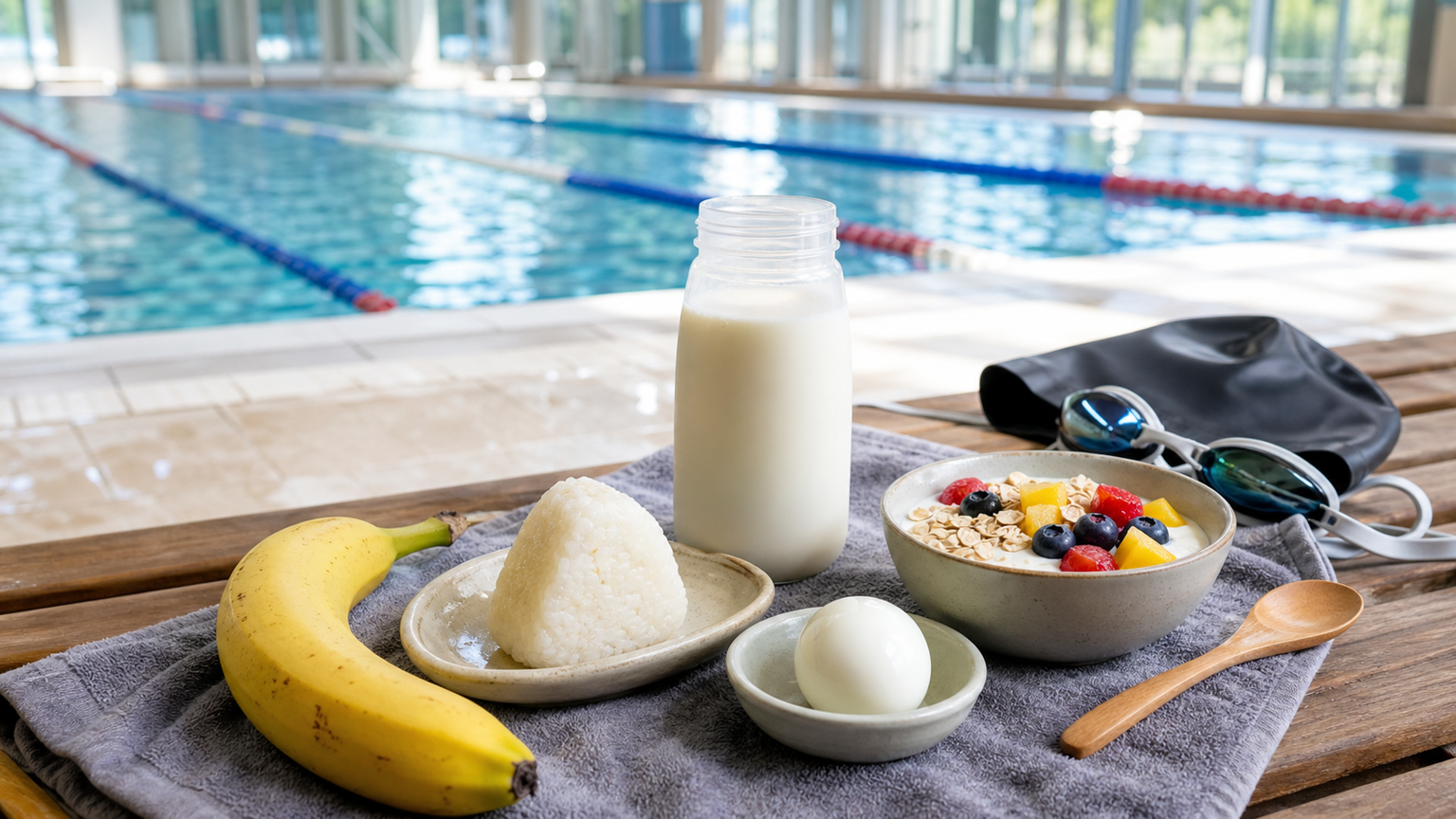
- Hard-boiled egg + banana: A perfect carb + protein combination, easy to grab at any Taiwanese convenience store and easy to carry.
- Unsweetened soy milk + rice ball (onigiri): Plant-based protein paired with quality carbs, great for those who prefer to avoid animal protein.
- Plain yogurt + oats + fruit: Contains whey protein and slow-release carbs — currently one of the most highly rated combinations in sports nutrition.
- Low-fat chocolate milk: Studies show its natural carb-to-protein ratio closely matches the ideal sports recovery drink standard. It does contain sugar, but as a post-swim recovery choice it’s entirely reasonable.
Full meals to eat once you get home:
- Sweet potato + chicken breast + vegetables: The most common fitness meal in Taiwan — easy to find ingredients, simple to cook.
- Brown rice + tofu + stir-fried greens: A great choice for vegetarians; combining legumes and grains provides a complete amino acid profile.
- Salmon rice bowl: Salmon contains omega-3 fatty acids, which can help ease the mild muscle inflammation that follows a swim.
Post-Swim Eating Habits to Avoid
- Drinking large amounts of ice water or cold drinks right away: Blood flow to the digestive system is relatively reduced after swimming, and cold drinks can trigger stomach cramps. Room-temperature or warm water is a better choice.
- Sugary drinks (bubble tea and similar): A surprisingly large number of people in Taiwan grab a sugary drink right after swimming. Not only does this cancel out part of the calories burned, but high sugar intake also interferes with insulin sensitivity, which is bad for long-term metabolic health. If you really want a drink, choose an unsweetened or lightly sweetened tea.
- Deep-fried, high-fat foods: Fat slows gastric emptying, which delays the absorption of protein and carbohydrates.
- Waiting too long before eating: Going more than 2 hours after swimming without eating can cause blood sugar to drop too low, leading to loss of portion control later.
Pre-Swim Nutrition Matters Too
While post-swim nutrition is important, your pre-swim eating strategy also affects performance and appetite management:
- 1.5–2 hours before swimming: A moderate, low-fat meal (such as toast + a hard-boiled egg) is a good choice
- 30–60 minutes before swimming: Only a small amount of easily digestible carbs (such as half a banana or a small handful of raisins)
- Within 30 minutes of swimming: Avoid solid food to prevent stomach discomfort while swimming
Practical Tips
- Prepare your post-swim food in advance and bring it to the pool, so you don’t need to make any decisions once you get out of the water — just grab it and eat. “Environment design” beats “willpower control.”
- Rehydrate first after swimming (at least 400–600 ml of water), and wait until you genuinely feel hungry (usually 15–20 minutes after swimming) before eating, to avoid overeating right after you finish.
- Post-swim hunger levels vary a lot from person to person, depending on water temperature, swim intensity, and individual metabolism. Pay attention to your own patterns to find the amount that keeps you satisfied without overeating, while still supporting effective recovery.
Conclusion
Swimming and nutrition are interconnected systems, not opposing forces. Understanding the physiology behind post-swim hunger and preparing the right food in advance lets every swim deliver its full physiological benefit. Eating the right things, at the right time, is what truly turns your swimming effort into lasting health capital.
Related Reading
- Post-Swim Recovery Nutrition: The Golden 30-Minute Refueling Principle
- Post-Swim Recovery Nutrition: Protein and Carb Refueling in the Golden 30 Minutes
- Nutrition Strategy for Competitive Swimmers: Timing Sugar Intake for Water Training
- Recovery Meals After Swim Training: The Best Protein and Carbohydrate Combinations
CT暗黑廚房) 車友必備 宇宙無敵鮮蚵湯 幫助訓練恢復 天然食補 好市多 超肥鮮蚵 破PR
7 年前
靠單車減肥35公斤 心得分享與整理
7 年前
4K 東眼山 x 水蜜桃冰沙 百人單車約騎! 操完再吃冰 多爽快
7 年前
live) 超越北高 之一日北高12小時 策略
7 年前
單車 一日北高 ( 雙城 ) 肥宅雙人瘋狂行 紀錄片 REACTO
10 年前
一日北高前的高裝檢 | 北高 360 | 挑戰11小時的裝備 | 一日雙塔 | 補給
6 年前
GoPro Hero 10 畫質好但 他是個吃電怪物 過熱只是小CASE 單車錄影實測 ! 耗電 災情 過熱實測 購買前請三思 OSMO Action 2了 !? | CT Yeh
4 年前
水金九不厭五分 10度寒流冷到不願停!feat. 卡卡 / 公路車 / CT Yeh
6 個月前