Introduction
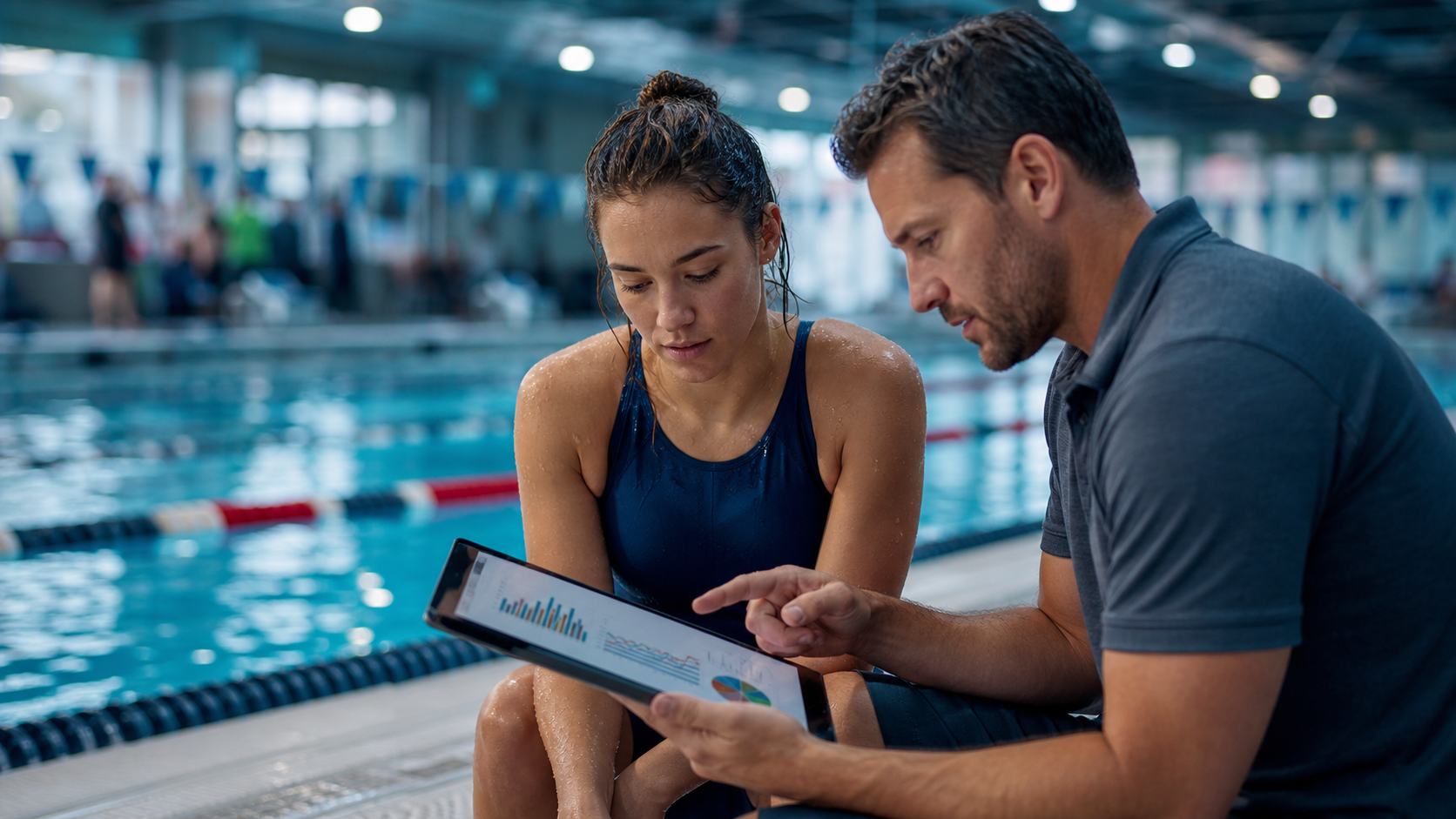
After a race ends, how do you evaluate your performance? “I swam terribly” or “I felt okay today”—these vague, emotionally charged self-assessments do almost nothing for your improvement. What elite swimmers and coaches do is systematic post-race analysis: using data and objective observation, without being swayed by the emotions of the moment, to precisely extract actionable areas for improvement from every race.
This article will introduce how to build an effective post-race analysis framework, allowing you to gain maximum learning value from every race, regardless of whether the result was good or bad.
Emotional Evaluation vs. Objective Evaluation
| Evaluation Type | Typical Statement | Problem |
|---|---|---|
| Emotional Evaluation | “I swam terribly, the whole race was mistakes” | Summarizes details with overall emotion, overlooks strengths |
| Emotional Evaluation | “Not bad, not bad, the placing is acceptable” | Rationalizes with the result, avoids problem analysis |
| Objective Evaluation | “My reaction time off the blocks was 0.1 seconds slower than target, but I held my pace in the second half, and my turn technique improved” | Specific, comprehensive, actionable |
The problem with emotional evaluation is that it cannot distinguish between “what was done well” and “what needs improvement,” and therefore cannot guide the focus of your next training block.
Four Dimensions of Post-Race Analysis
An effective post-race analysis should cover the following four aspects:
1. Technical Execution Analysis
- Start: reaction time, entry angle, initial speed and distance gained
- Stroke efficiency: stroke rate per minute, stroke length, swimming efficiency index
- Turns: wall touch accuracy, rotation speed, push-off distance from the wall
- Final sprint: wall touch technique at the finish, speed maintenance over the last 10 to 15 meters
2. Tactical Execution Analysis
- Pace execution: difference between split times and the planned pace
- Segment strategy: whether the early part was too aggressive or too conservative, energy reserves in the latter part
- Responding to opponents: whether you executed your own plan rather than being dictated by your opponents’ speed
3. Psychological State Analysis
- Correlation between pre-race anxiety level (1-10) and final performance
- Whether negative self-talk, loss of focus, or other issues occurred during the race
- Whether pre-race routines were successfully executed and achieved the intended psychological stability
4. Preparation Factor Analysis
- Sleep, nutrition, and hydration status in the 24 to 48 hours before the race
- Whether the warm-up was sufficient and whether feel for the water was good
- Whether arrival time at the venue and mental preparation time were adequate
A Concrete Process for Implementing Post-Race Analysis
Step 1: Emotional Cooldown Period (within 30 minutes after the race)
Complete necessary post-race routines (cool-down, rehydration, talking with teammates). Do not analyze during this time; let your emotions settle naturally.
Step 2: Initial Notes (1 to 2 hours after the race)
While your memory is still fresh, use your phone or a notebook to record:
- 3 things you did well
- 2 things that need improvement
- 1 strategic adjustment you want to try next time
Step 3: In-Depth Analysis (1 to 3 days after the race)
Conduct a comprehensive analysis using video replay (if available), split timing data, and coach observations.
Step 4: Action Plan (within 1 week after the analysis)
Translate the conclusions of your analysis into concrete adjustments for the following week’s training.
Tips for Applying Video Analysis
If you have video footage of your race, here are ways to improve the quality of your analysis:
- Watch it once to feel the overall rhythm; don’t rush to criticize
- On the second viewing, focus only on start and turn technique
- On the third viewing, compare it against footage of a race you felt you swam best
- Avoid repeatedly watching mistake segments (this can reinforce negative memories); note them down and immediately move on to corrective planning
Practical Advice
- Prepare a standardized post-race analysis form: Design a form covering the four dimensions above, fill it out after every race, and accumulate data that can be compared over time
- Distinguish between “result analysis” and “performance analysis”: Results depend on the entire field of opponents; performance is only compared against your own standards
- Involve your coach in the analysis process: Avoid falling alone into the bias of excessive self-criticism or excessive self-protection
- Build a race database: Accumulating race analysis data over the long term can reveal cross-season improvement trends and long-term problem patterns
Conclusion
Objective post-race analysis is the bridge that turns competitive experience into learning. It is not about being harsh on yourself, but about being like a caring analyst—honestly pointing out problems while fairly recording progress. Once you build this habit, every race—win or lose—will become raw material for your competitive growth, rather than just a number that makes you happy or upset.
Related Reading
- Post-Race Analysis for Swimmers: Finding Next Training Directions from Race Data
- Swimming Post-Race Performance Analysis: A Systematic Method for Identifying Technical Errors via Video Replay
- Swimming Post-Race Analysis: Breaking Down the Technical Factors Behind Personal Bests
- Recovering from Failure in Swimming: Psychological Rebuilding Strategies After Losing a Race
崇越盃武嶺冠軍高手 賽前JJSC 群峰會精華!對應大數據分析,會有落差嗎?/ feat. JJSC中部公路車約騎 /公路車 / CT Yeh
2 年前
西進武嶺 免費訓練分析服務 Intervals | 練不夠還是練過頭?你哪一種類型選手?AI模型告訴你! | 備戰神器 | 公路車 訓練 | CT Yeh
4 年前
西進武嶺 自製新版AI配速表產生器 x 賽前攻略 抱佛腳! 沒有功率計也可以產生配速表嗎?有什麼其他眉角賽前要注意的呢? | 西進武嶺 / 東進武嶺 KOM 攻略 | 公路車 | CT Yeh
4 年前
live) 超越北高 之一日北高12小時 策略
7 年前
單車AI教練!全新 ChatGPT4o 幫你分析訓練成果!排武嶺課表,分析騎車姿勢! 太神了! / 公路車 / CT Yeh / feat. 緯緯
2 年前
[教學] Premiere 影片 手震 修正 教學 防抖 單眼 影像 GoPro 穩定 Video Stabilization
8 年前
戰略) Zwift Race 如何咬在第一集團 如何評估自己要開多少推力 (請開1.5倍速看)
7 年前
戀戀197 競賽組 | 50頁投影片心得報告 | 賽後檢討 攻略 #公路車
6 年前