Wan Jin Shi Marathon Guide: Handling Elevation and Weather Variables on the Coastal Scenic Route
Introduction
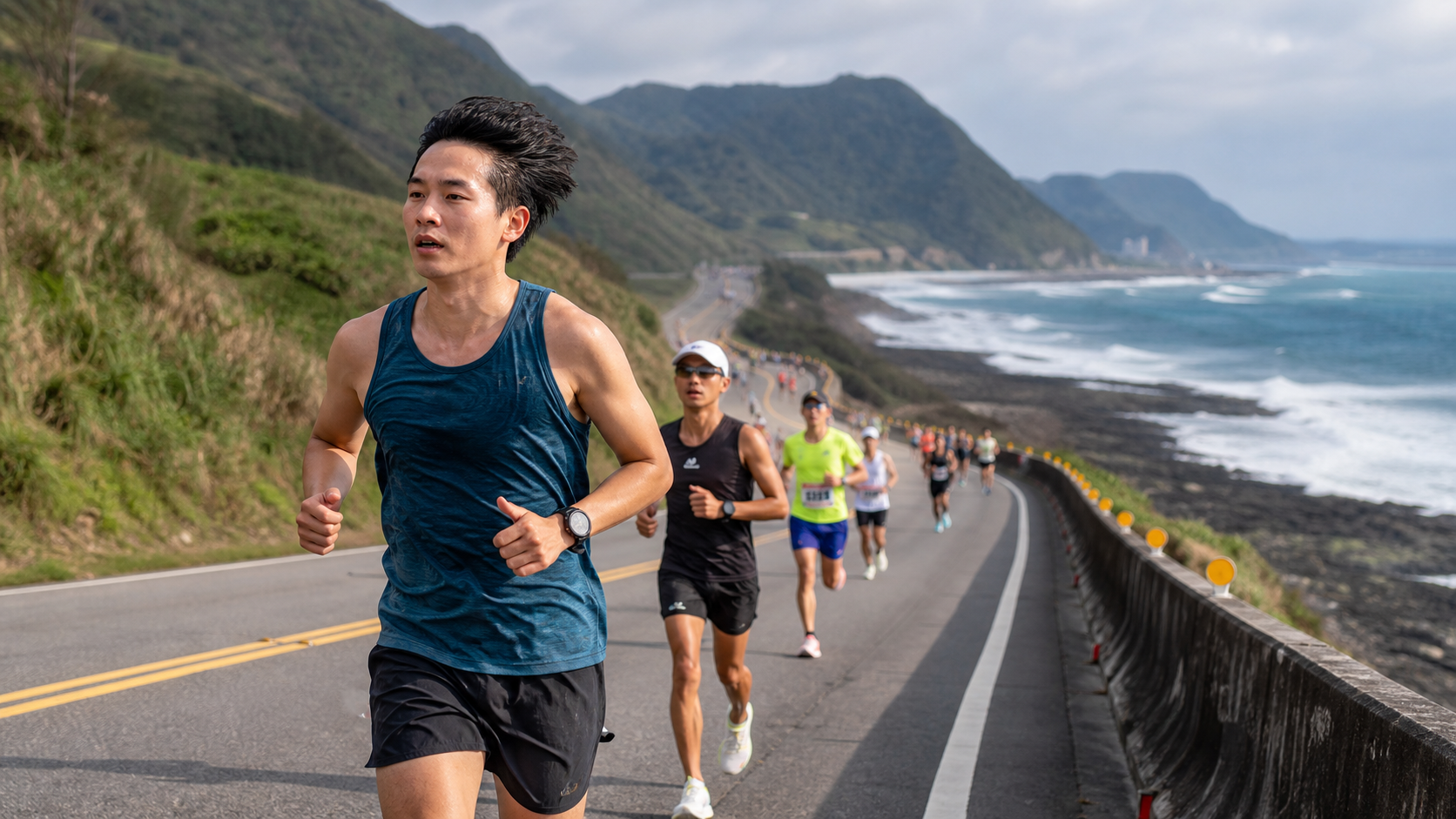
The Wan-Jin-Shih Marathon, renowned as the “Most Beautiful Marathon,” unfolds along the North Coast highway from Shimen to Jinshan in New Taipei City. The sound of waves crashing against rocks and the vast expanse of the Pacific Ocean make this race an annual pilgrimage for road-running enthusiasts in Taiwan. However, behind the scenic beauty lie continuous rolling hills and rapidly changing coastal weather, posing considerable challenges to runners’ technique and mental fortitude.
Course Elevation Analysis
The Wan-Jin-Shih Marathon features a cumulative elevation gain of approximately 400–500 meters, placing it at a moderate difficulty level among Taiwan’s urban marathons. The climbs are concentrated in several distinct sections:
Major Climbing Sections
| Distance | Section Name | Elevation Characteristics | Coping Strategy |
|---|---|---|---|
| 8–12 km | Shimen Wind Power Area | Gentle uphill, 4 km long | Maintain steady heart rate, shorten stride |
| 18–22 km | Near Laomei Green Reef | Rolling hills, multiple short climbs | Use downhill momentum, ease up on uphills |
| 28–32 km | Outskirts of Jinshan City | Largest single climb | Refuel early, keep heart rate below max |
| 36–40 km | Return to flat section | Sustained downhill | Increased ankle load, control pace |
For the undulating course, the “Equal Effort Pacing” strategy is recommended: keep your heart rate steady on uphills, allowing pace to slow slightly; avoid excessive sprinting on downhills to preserve leg strength for the later stages.
Weather Variables and Countermeasures
The Wan-Jin-Shih Marathon is typically held in March, when northern Taiwan’s climate is highly changeable. Runners may encounter:
Northeast Monsoon: The northeast monsoon is strong along the North Coast in late winter and early spring, especially on the “wind gap” section near Shimen. When running into a headwind, slightly shorten your stride, reduce your upper body’s wind-exposed area, and lean forward with your head slightly lowered to maintain forward momentum.
Sudden Rain: Spring frontal activity is frequent, and the race sometimes takes place in light rain. Wet roads combined with occasional moss on the coastal highway mean extra caution is needed on downhill sections to avoid slipping.
Strong Gusts of Sea Wind: Coastal bridges and elevated sections are prone to strong crosswinds. When running side by side with others, pay attention to wind direction and adjust your position to avoid being blown off balance.
Weather preparation recommendations:
- Wear a lightweight windproof outer layer with a half-zip design for easy heat release.
- Bring gloves and ear warmers as backup, deciding whether to wear them based on the temperature at the start.
- Choose shoes with adequate traction, avoiding overly thin carbon-plated racing shoes that may lose grip on wet, slippery slopes.
Aid Stations and On-Course Services
The Wan-Jin-Shih Marathon has well-established aid stations. In addition to standard water stations and sports drinks, some stations offer local specialty foods such as Jinshan sweet potatoes, providing runners with extra psychological encouragement. Key aid points include:
- 15 km: The last full aid station before the halfway point—make sure you have enough energy before the climbs.
- 25 km: The most important aid station of the race—stock up on an extra salt tablet and energy gel.
- 32 km: Before the descent following the largest climb—replenish fluids to prepare for using gravity on the downhill section.
Practical Tips
- Pre-race hill training: Incorporate one hill-running session per week in the 8 weeks before the race to help your thighs and calves adapt to the muscular demands of ascending and descending.
- Use compression calf sleeves: Long, undulating courses easily fatigue the quadriceps; compression calf sleeves help reduce muscle vibration damage.
- Enjoy the scenery without getting distracted: There are many photo spots along the course. Plan 1–2 must-take photo locations in advance and focus on running the rest of the time.
- Save energy for after 30 km: The beautiful scenery in the first half can easily make you overexcited and run too fast—the real test of Wan-Jin-Shih begins after the 30 km mark.
- Take advantage of the massage area after finishing: Massage volunteers are usually available near the finish line. Getting lower-limb massage immediately after the race helps speed up recovery.
Conclusion
The Wan-Jin-Shih Marathon is a race that demands technique, endurance, and adaptability in equal measure. The rolling hills and coastal weather are not obstacles but rather elements that make this race all the more memorable. As long as you familiarize yourself with the elevation profile in advance and prepare for the weather conditions, you will run a truly unforgettable marathon in the Pacific sea breeze.
Related Reading
- Wan-Jin-Shih Marathon Guide: Pacing and Refueling on the Rolling Coastal Hills
- Wan-Jin-Shih Marathon: Complete Guide to North Coast Scenery and Wind Speed Challenges
- Wan-Jin-Shih Marathon Guide: Wind Direction Strategy and Aid Station Distribution on the Coastal Course
- Wan-Jin-Shih Marathon: Complete Guide to Pace Adjustment and Aid Station Distribution in Coastal Strong Winds
大武山後門26%歡樂陡坡!JJSC南台灣單車行Day2 / 被颱風追著跑 / 公路車 / CT Yeh
2 年前
半日 小台灣 極限單車路線挑戰實錄
7 年前
4K單車實境) 舊陽金P字道 第1P 仰德大道至小油坑 誤跟武嶺神人們 被拉爆爽飛天 Taiwan Cycling Climb Route Recommend
7 年前
水金九不厭五分 10度寒流冷到不願停!feat. 卡卡 / 公路車 / CT Yeh
6 個月前
台北闊瀨陡坡 騎旅 / 日本單車雜誌編輯車友臨時加入!/ 髮香才是最強的 / feat. 北迴歸線小隊 / 公路車 CT Yeh
6 個月前
單車 梅山36灣 坡度介紹 路段介紹 空拍 (相關遊記影片,請參考說明或我的頻道喔,歡迎訂閱)
6 年前
大武山20%魔王陡坡【JJSC南台灣遊騎Day2】!屁股真的要裂開了...凡士林抹滿也沒用?神秘金教堂還有超便宜夜市
3 個月前
司馬庫斯 | 單車員工旅遊 | 比武嶺還接近上帝的路 | 2021 全面實況 路況解析 | 空拍 櫻花炸開超濃密 | 財伯觀光果園 | CT Yeh
5 年前