The Body Language of Swimming: How an Upright Posture and Confident Demeanor Affect Competitive Performance
Introduction
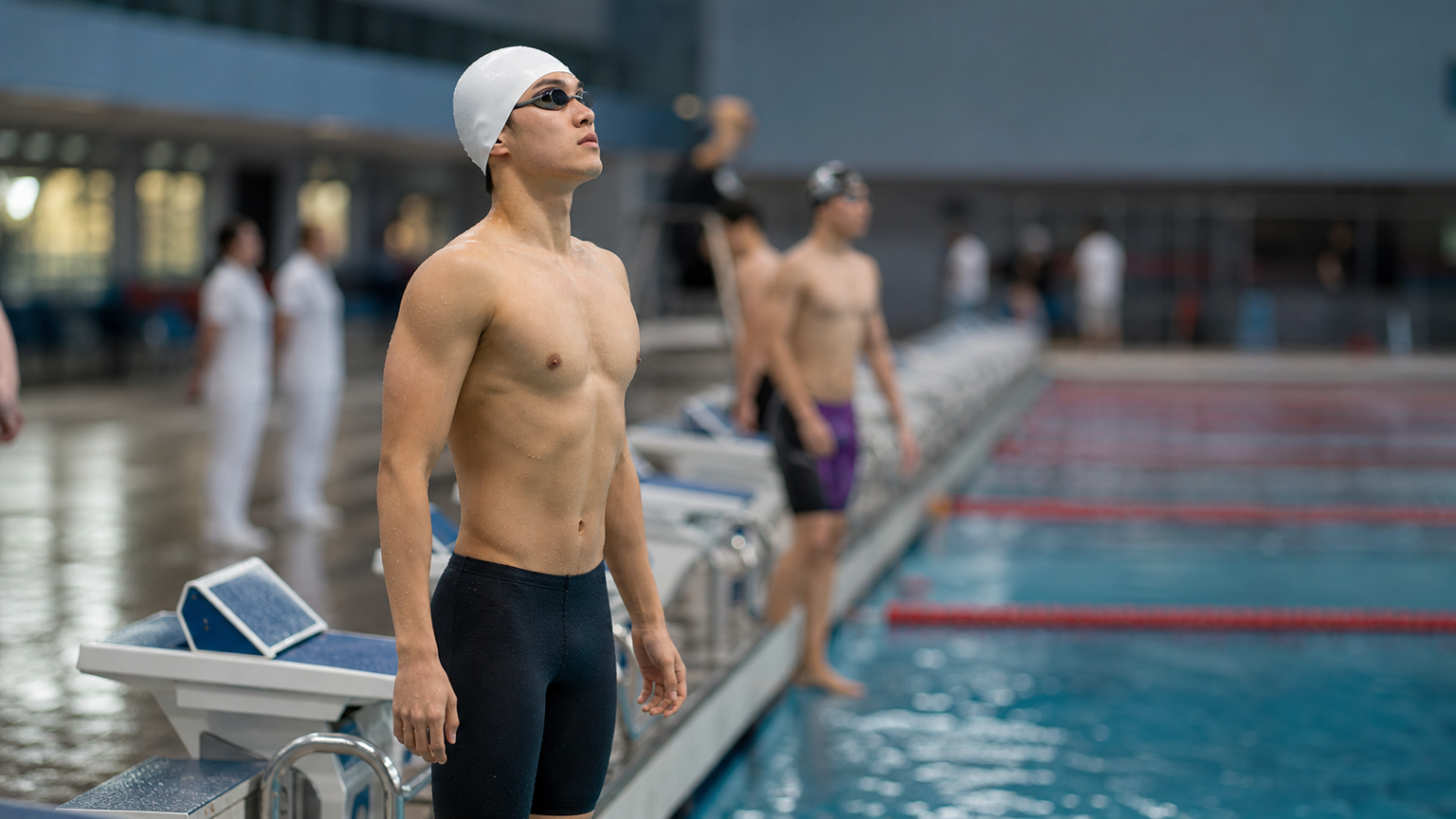
Before a race, the way you walk to the starting block—whether you’re hunched over with your shoulders rolled inward, hurrying along, or standing tall with a steady stride—isn’t just a matter of appearance; it’s a difference in brain chemistry. Social psychologist Amy Cuddy’s research revealed the phenomenon of “body language influencing mental state,” and sports psychology research has further confirmed that deliberately adopting confident body language can genuinely alter an athlete’s emotional state, self-efficacy, and ultimately, performance on race day.
This article explores the specific role of body language in competitive swimming and how to build a competitive edge in every race through conscious posture management.
The Neural Mechanisms Behind Body Language’s Effect on the Mind
The mind-body connection isn’t just top-down (thoughts influencing the body); there’s also a bottom-up pathway (body posture influencing thoughts and emotions).
| Body Posture | Psychological Effect | Competitive Significance |
|---|---|---|
| Head up, eyes looking forward | Increases self-efficacy, reduces fear | More stable attention on the starting block |
| Shoulders back, chest open | Increases sense of control, boosts positive emotions | Reduces the subjective intensity of pre-race anxiety |
| Slow, steady stride | Sends a “I’m not rushed” signal of calm | Lowers excessive sympathetic nervous system arousal |
| Head down, shoulders slumped | Increases feelings of vulnerability, triggers defensive psychology | Deepens pre-race uncertainty and anxiety |
| Quick, erratic movements | Amplifies tension signals, accelerates heart rate | Creates a self-reinforcing cycle of pre-race anxiety |
Key Moments for Body Language in Swimming Competition
1. Entering the Competition Venue
The moment you step into the venue, your body begins sending signals to your brain. Deliberately use the “slow three-step method”: make each step 20% slower than your normal pace, feeling the solid connection of your feet on the ground. Psychologically, this action is equivalent to declaring, “I’ve arrived, and I own this space.”
2. During Warm-Up
Warm-up isn’t just physical preparation; it’s also a mental preparation process. During your swim warm-up, pay special attention to:
- Each time you push off the wall, feel the power transmitting from the soles of your feet (reinforcing a sense of strength)
- During easy swimming, let your body fully extend in the water, feeling the speed that comes from a streamlined position
- Avoid self-critical gestures during warm-up that signal “I’m not feeling good today” (shaking your head, sighing)
3. While Waiting to Step Up
The marshalling area is where body language most easily breaks down. Many athletes naturally curl up, look down at their phones, or glance around at competitors while waiting. Suggested alternatives:
- When standing, use the “T-stance”: feet shoulder-width apart, weight evenly distributed
- When sitting against a wall, keep your back in contact with the wall—don’t slouch or hunch
- Place your hands on your thighs rather than crossing your arms (crossed arms are psychologically associated with a defensive posture)
4. Walking to the Starting Block
The few dozen steps from the marshalling area to the starting block are a golden opportunity to establish your competitive state. Recommendations:
- Keep your head up, eyes fixed on your lane ahead (not on the ground)
- Maintain a steady, moderate pace (don’t rush up, and don’t shuffle)
- Keep your shoulders relaxed but open, avoiding a shrug (shrugging is a classic body language sign of tension)
The Contagion Effect of Body Language
Body language doesn’t just affect yourself—it also affects your teammates and opponents. In a relay, the way you walk to the exchange zone and the look you give your teammate directly influence the next swimmer’s mental state. Confident body language is infectious, and a deflated posture is equally contagious. This is why managing body language as a relay team needs to be cultivated as part of team culture.
Practical Recommendations
- Build body language awareness from training onward: Don’t wait until race day to “perform” confidence—make it a daily habit
- Establish a body language signal with your coach: If your coach notices you slipping into a low posture, they can use an agreed-upon cue to remind you to adjust
- Watch your race footage after competition, paying attention to pre-race body language: You can spot habitual postural retreat under pressure
- Create a “Confident Posture Reminder Card”: Put a visual cue or phrase on your swim bag or phone wallpaper to glance at before entering the venue
Conclusion
Your body is your first piece of equipment. Before you even dive into the water, it’s already influencing your competitive state. Standing tall isn’t a performance for your opponents—it’s a signal you send to your own brain: “I’m here, I’m ready, and I belong in this race.” Every conscious, confident posture is an investment you actively make in your own competitive performance.
Related Reading
- Mental Preparation for Swimming Races: Breathing and Focus Techniques Before the Start
- Psychological Race Preparation for Swimmers: Pre-Race Anxiety Management and Imagery Training in Practice
- Managing Pre-Race Nerves in Swimming: Analyzing Pre-Race Anxiety from a Sports Psychology Perspective
- Self-Talk Strategies for Swimming: Applying Positive Inner Language in Difficult Race Segments
西進武嶺 自製新版AI配速表產生器 x 賽前攻略 抱佛腳! 沒有功率計也可以產生配速表嗎?有什麼其他眉角賽前要注意的呢? | 西進武嶺 / 東進武嶺 KOM 攻略 | 公路車 | CT Yeh
4 年前
西進武嶺 免費訓練分析服務 Intervals | 練不夠還是練過頭?你哪一種類型選手?AI模型告訴你! | 備戰神器 | 公路車 訓練 | CT Yeh
4 年前
崇越盃武嶺冠軍高手 賽前JJSC 群峰會精華!對應大數據分析,會有落差嗎?/ feat. JJSC中部公路車約騎 /公路車 / CT Yeh
2 年前
FTL 與 SYB 車隊專訪 西進武嶺 實用攻略分享! 2小時 如何練?!你不知道的眉角!新手準備武嶺必看 EP1 | 實力派女車友 | 精華版 | 公路車 | CTYeh
4 年前
戰略) Zwift Race 如何咬在第一集團 如何評估自己要開多少推力 (請開1.5倍速看)
7 年前
[教學] Premiere 影片 手震 修正 教學 防抖 單眼 影像 GoPro 穩定 Video Stabilization
8 年前
單車AI教練!全新 ChatGPT4o 幫你分析訓練成果!排武嶺課表,分析騎車姿勢! 太神了! / 公路車 / CT Yeh / feat. 緯緯
2 年前
CT Talk) 數據面窺看 武嶺大神們 平時的備戰 共通點 (娛樂性質XD)
7 年前