The Final Sprint in Road Running: Energy Conservation and Acceleration Strategies for the Last Kilometer
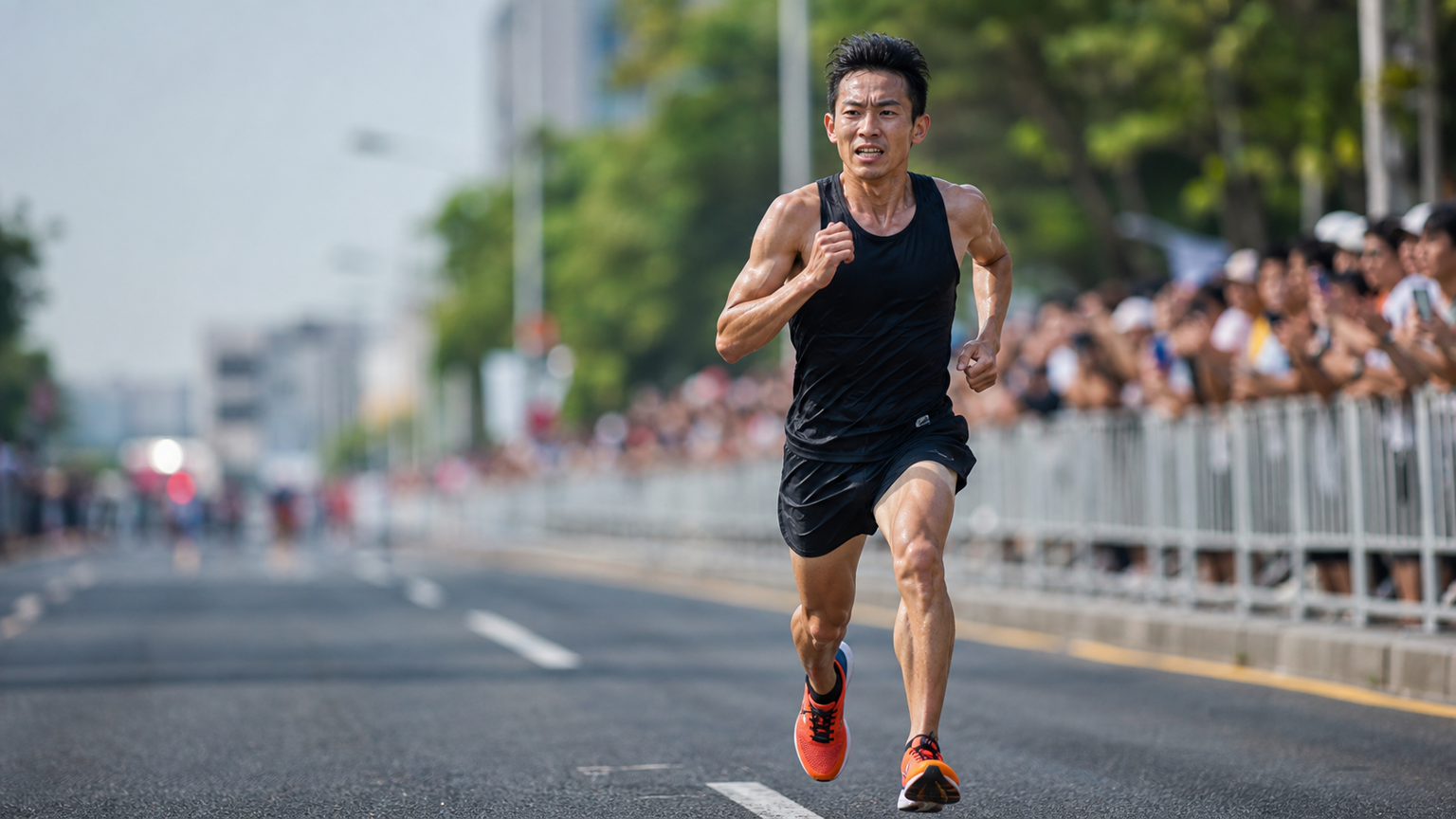
Introduction
There’s a famous saying in marathons: “The first half is a race of physical strength, the second half is a race of willpower, and the last kilometer is a race of strategy.” The moment you cross the finish line is one of the most memorable experiences for any runner. However, those who can truly “sprint” in the final kilometer are often the ones who carefully planned their energy distribution over the preceding 41 kilometers.
Why Most People Can’t Truly Sprint
According to running data analysis, most amateur marathon runners exhibit a “Positive Split” pattern—slower in the second half than the first—with pace slowing as they approach the finish line. The last kilometer can even be 30–60 seconds/km slower than the overall average.
The reasons are:
- Starting too fast: The first 5 kilometers are run too quickly, driven by the crowd and excitement, depleting energy needed for the later stages.
- Insufficient fueling: Delayed energy gel intake after the 30 km mark leads to genuine hypoglycemia.
- Accumulated muscle fatigue: Eccentric fatigue in the quadriceps builds up in the later stages—this isn’t a matter of willpower but a physiological limit.
Energy Conservation Strategy (0–41 km)
To truly accelerate in the final kilometer, you must strictly adhere to an energy conservation strategy in the earlier stages:
Pace Recommendations by Segment
| Segment | Pace Recommendation (relative to target pace) | Key Execution Points |
|---|---|---|
| 0–10 km | 3–5 sec/km slower | Resist the crowd and excitement; force yourself to slow down |
| 10–21 km | Target pace ±5 sec | Settle into a stable rhythm, prioritizing smooth breathing |
| 21–30 km | Target pace ±5 sec | The most critical stretch before 30 km; maintain stability |
| 30–38 km | Allow 5–10 sec/km slower | The wall zone; holding pace without fading counts as success |
| 38–41 km | Gradually return to target pace | Feel your legs responding; begin preparing to accelerate |
| 41–42.2 km | 10–20 sec/km faster than target pace | Sprint! |
Technique and Mindset for the Final Kilometer
When entering the final kilometer, runners usually see the “1 km to go” sign—this is the moment to tap into the last fuel reserves.
Physiological Acceleration Mechanisms
- Nervous system activation: Seeing the finish line or hearing the crowd’s cheers triggers an adrenaline surge that can temporarily suppress fatigue. This is a real physiological response, not an illusion.
- Final muscle reserves: If you ran conservatively in the earlier stages, your quadriceps and calves still retain 5–10% of contractile capacity—this is the physiological foundation for sprinting.
- Anaerobic energy system: In the last kilometer, you can briefly rely on anaerobic metabolism (phosphocreatine and lactate systems) without worrying about long-term energy depletion.
Sprint Technique Essentials
- Look ahead: Don’t look down at the road or your watch. Keep your gaze fixed toward the finish line—this helps with forward lean and a longer stride.
- Let your arms drive your legs: Increase the amplitude and speed of your arm swing. The rhythm of your upper body drives lower-body acceleration—this is a fundamental principle of running biomechanics.
- Cadence first: Increase your cadence first (5–10 more steps per minute), then gradually lengthen your stride. Avoid large bounding steps that waste energy.
- Don’t hold your breath: Maintain rhythmic breathing during the sprint. Holding your breath will only exhaust your cardiovascular system faster.
Common Mistakes Before the Finish Line
- Starting to sprint at 38 km: Sprinting too early causes your pace to collapse in the final 2 kilometers, costing you time instead. The sprint trigger point should be after you see the finish line (usually 400–600 meters out).
- Stopping immediately after crossing the finish line: Abruptly stopping impedes venous blood return and can cause fainting. Continue jogging 100–200 meters past the finish line before gradually slowing down.
- Forgetting to check the finish clock: Many runners get caught up in the emotion of finishing and forget to look at the official clock. If you want to remember your exact time, set your watch’s finish button in advance.
Practical Advice
- Practice accelerating at the end in training: Deliberately speed up in the last 1–2 kilometers of every long run to train your neural patterns for accelerating under fatigue.
- Choose a “finish-line psychological anchor”: Before race day, decide on a song or an image (like a family member’s face) as a mental trigger for the final sprint.
- Make the finish a ritual: If you want a finish-line photo, raise your arms and smile—leave this moment looking your best.
- Record your split paces: After the race, review your 5 km splits to analyze the difference between your first and second half, using this as a basis for improving your strategy in the next race.
Conclusion
The final kilometer sprint is the culmination of 16–20 weeks of training and the reward for 41 kilometers of careful pacing. When you cross that timing line—whether breaking a PB or finishing your first marathon—the feeling of burning your last ounce of energy in that moment is an achievement that words can hardly describe. Save that last breath of strength, and ignite it at the right moment.
Related Reading
- Acceleration Strategies for the Final 5 km: Managing Energy Reserves for a Positive Split Finish
- Road Race Starting Strategies: How Pacing in the First 10% of the Distance Affects Finish Time
- Negative Splitting in Marathons: Why Running the Second Half Faster Than the First Is the Right Strategy
- Marathon Race Tactics: Pace Management from the Start to the Final 10K
戰略) Zwift Race 如何咬在第一集團 如何評估自己要開多少推力 (請開1.5倍速看)
7 年前
Live) 備戰2019彰化經典百K 賽前攻略 (已完賽請看新影片
7 年前
CT 喇低賽) 武嶺牽車 才是王道 西進牽車四小時內秘訣 攝手位置 如何判斷 防抽筋小秘訣
7 年前
FTL 與 SYB 車隊專訪 西進武嶺 實用攻略分享! 2小時 如何練?!你不知道的眉角!新手準備武嶺必看 EP1 | 實力派女車友 | 精華版 | 公路車 | CTYeh
4 年前
西進武嶺 免費訓練分析服務 Intervals | 練不夠還是練過頭?你哪一種類型選手?AI模型告訴你! | 備戰神器 | 公路車 訓練 | CT Yeh
4 年前
2019 柯P 超越北高 第一集團實錄 (11小時實錄請參考另一部影片) 一日雙城 一日北高 NeverStop Taiwan Long Distance Cycling Challenge
7 年前
西進武嶺 自製新版AI配速表產生器 x 賽前攻略 抱佛腳! 沒有功率計也可以產生配速表嗎?有什麼其他眉角賽前要注意的呢? | 西進武嶺 / 東進武嶺 KOM 攻略 | 公路車 | CT Yeh
4 年前
一日北高/長距離團騎 常見問題補充篇 / 組團或跟團的眉角 / 壯車友容易被瘦車友慢性拉爆 / 原來屁股痛可能是這個原因...? / 風場配速法 / 公路車 / CT Yeh
2 年前