Preventing Heat Illness in Cycling: Risks of Heatstroke and Heat Exhaustion During Taiwan Summer Rides
Introduction
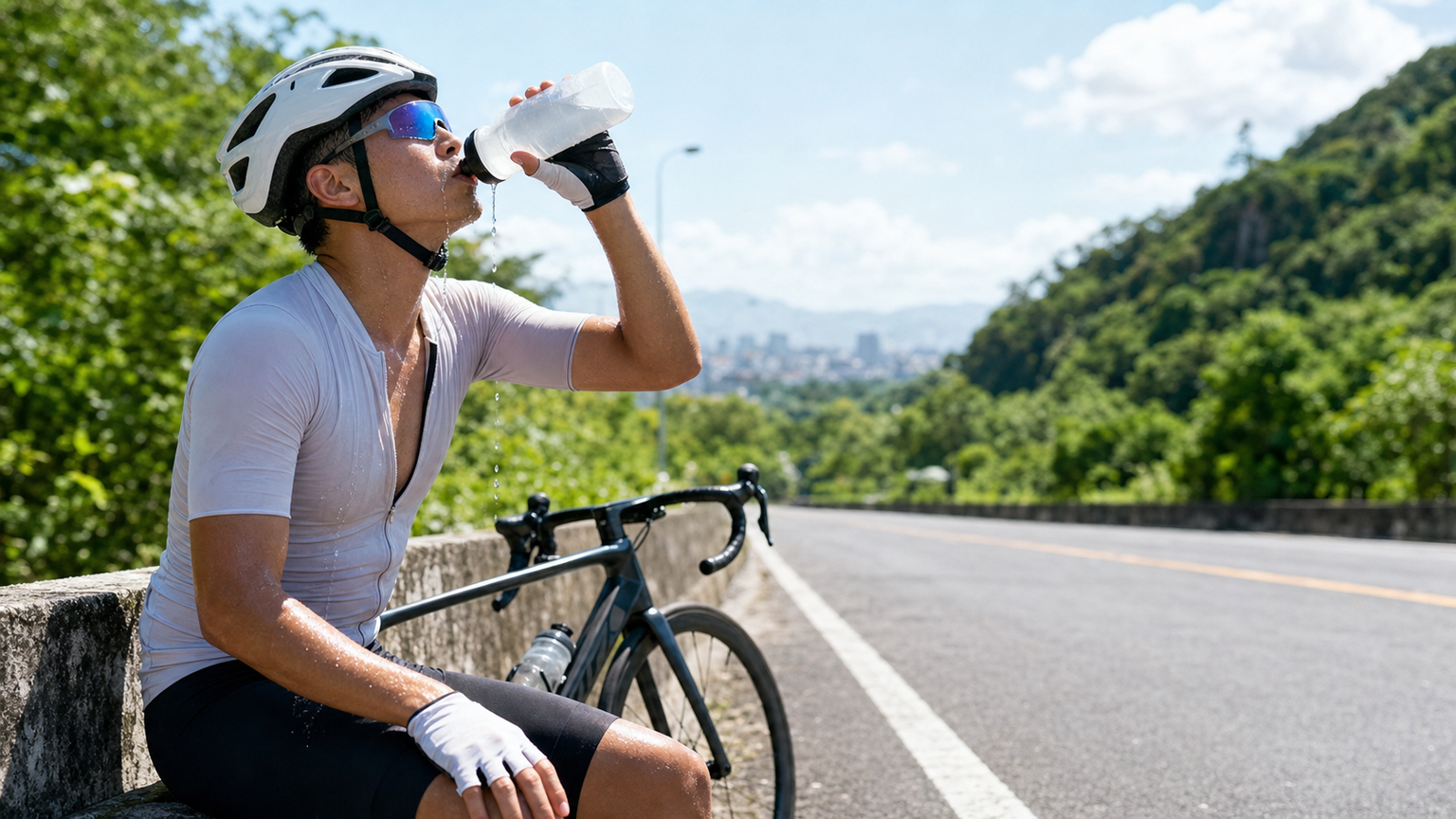
The combination of high temperatures and high humidity during Taiwan’s summer (June to September) poses severe heat-related challenges for outdoor cyclists. With temperatures of 35°C and relative humidity above 80%, the perceived temperature can exceed 40°C, severely suppressing the body’s ability to dissipate heat. Every year in Taiwan, cyclists are rushed to the hospital due to heat injuries, with amateur riders participating in summer events accounting for the highest proportion of cases.
Classification and Recognition of Heat Injuries
Heat injury is a continuous pathological process, ranging from mild to severe:
| Type | Main Symptoms | Body Temperature | Mental State | Urgency |
|---|---|---|---|---|
| Heat Fatigue | Fatigue, weakness, dizziness | Normal or slightly elevated | Alert | Stop exercising and hydrate |
| Heat Exhaustion | Profuse sweating, pale and clammy skin, rapid heartbeat, nausea | 37–40°C | Alert but weak | Immediate cooling and electrolyte replacement needed |
| Heat Stroke | Dry and hot skin, confusion, loss of consciousness | Above 40°C | Confused or comatose | Immediate emergency medical care |
Key distinguishing point: During heat stroke, the skin is often dry and hot (sweat gland failure), whereas during heat exhaustion there is usually still profuse sweating. If a riding companion suddenly stops sweating and becomes confused, treat it as an emergency warning sign of heat stroke.
Heat Environment Risks of Summer Riding in Taiwan
Factors affecting the risk of heat injury include:
- Temperature and humidity: High humidity reduces the efficiency of evaporative cooling through sweat, making it the primary reason for the elevated heat injury risk in Taiwan’s summer
- Wind speed: Low wind speed environments (such as urban roads, basin terrain) make heat dissipation more difficult
- Solar radiation: Direct sun exposure increases radiant heat absorption, and ground radiation from asphalt surfaces is also a heat source
- Personal factors: Sleep deprivation, alcohol consumption the previous day, high-salt diets, and certain medications (diuretics, antihistamines) all reduce heat tolerance
- Training status: Riders who have not undergone heat acclimatization training face higher risk during sudden hot weather
Scientific Hydration and Electrolyte Strategies
Calculating Fluid Intake
In high-temperature environments, cyclists can lose 1–2 liters of sweat per hour. Hydration strategy:
- Before departure: Drink 500 ml of water 2 hours before riding, then another 250 ml 30 minutes before departure
- During riding: Replenish approximately 150–250 ml every 15–20 minutes; do not wait until thirsty to drink (by the time you feel thirsty, you are already mildly dehydrated)
- After riding: Replenish based on body weight difference—1.5 liters for every 1 kg of weight lost
The Importance of Electrolytes
Prolonged sweating loses not only water but also electrolytes such as sodium, potassium, and magnesium. Drinking large amounts of plain water alone can cause hyponatremia, leading to headaches, weakness, and even convulsions:
- For rides exceeding 90 minutes, it is recommended to consume sports drinks containing electrolytes or take electrolyte capsules
- Commercial electrolyte salt tablets or capsules (such as Nuun, SaltStick) are available at most bicycle shops in Taiwan
- You can make your own electrolyte drink: 1 liter of water + 1/4 teaspoon of table salt + a small amount of lemon juice + honey or sugar
Cooling Strategies and Summer Riding Techniques
- Pre-cooling: Waiting indoors or in a shaded area before departure, drinking cold beverages, or placing a cold towel on the neck can delay the rise in core temperature
- Cooling neck towel: Wrapping a wet cooling towel around the neck during a ride is a simple and effective cooling method
- Adjust riding times: In summer, ride in the early morning (before 8 AM) or evening (after 5 PM) to avoid peak temperature hours
- Jersey selection: Choose light-colored jerseys with good breathability and reflective design to reduce heat absorption
On-Site Response to Heat Exhaustion
If you notice a fellow rider exhibiting symptoms of heat exhaustion (heavy sweating, pale complexion, rapid heartbeat, alert but weak):
- Stop riding immediately and find a shaded area
- Have the affected person lie flat with legs slightly elevated to promote blood return
- Apply wet towels to the neck, armpits, groin, and other areas with major blood vessels
- Have them sip electrolyte-containing beverages in small amounts
- If symptoms do not improve within 15–30 minutes, or if confusion develops, call 119 immediately
Practical Recommendations
- Inform fellow riders of your riding plan and expected return time; managing heat injury alone is far more dangerous
- If you had insufficient sleep the previous night or have cold symptoms, cancel or shorten your long summer ride plans
- When planning routes, note the spacing between supply points; convenience stores are densely distributed along some sections of Taiwan’s western plains, serving as natural resupply stations
Conclusion
Heat injury is preventable. The key lies in respecting the reality of Taiwan’s hot and humid summer environment and making adequate preparations for hydration, salt replenishment, and cooling. Enjoying the thrill of summer riding while safely completing every challenge is the true wisdom of a cyclist.
Related Reading
- Taiwan Summer Cycling Heat Injury Prevention: A Complete Emergency Guide from Heat Stroke to Heat Cramps
- Heat Exhaustion Prevention While Cycling: Body Temperature Regulation and Hydration Strategies for Summer Rides
- Summer Heat Injuries in Taiwan: Emergency Management for Runner Heat Stroke and Heat Exhaustion
- The Summer Survival Guide for Taiwan Cyclists: Riding Strategies in Extreme Heat
5 ℃ 櫻花之旅 / 75萬單車直接雨中洗車.../ 平菁街 / 北迴歸小隊 / 公路車 / CT Yeh
5 個月前
靠單車減肥35公斤 心得分享與整理
7 年前
單車 一日北高 ( 雙城 ) 肥宅雙人瘋狂行 紀錄片 REACTO
10 年前
2023自行車展!與環台賽選手一同表演賽 / 全自動AI Fitting?/ TIME新車發表/神秘充電桌等 精華分享 VLOG | CT Yeh | 公路車
3 年前
CT暗黑廚房) 車友必備 宇宙無敵鮮蚵湯 幫助訓練恢復 天然食補 好市多 超肥鮮蚵 破PR
7 年前
2025 自行車錶排行榜 兩萬車友大數據 / Garmin Bryton 排名會大洗牌嗎? / 全新的碼表前身分析 /公路車 / CT Yeh
1 年前
水金九不厭五分 10度寒流冷到不願停!feat. 卡卡 / 公路車 / CT Yeh
6 個月前
高雄綠園道鐵路自行車道 / 外地人能輕鬆駕馭 還是整路崩潰? / 2025 全線開通 春節實地探索一次!(附GPS連結)/ 公路車 / CT Yeh
1 年前