Introduction
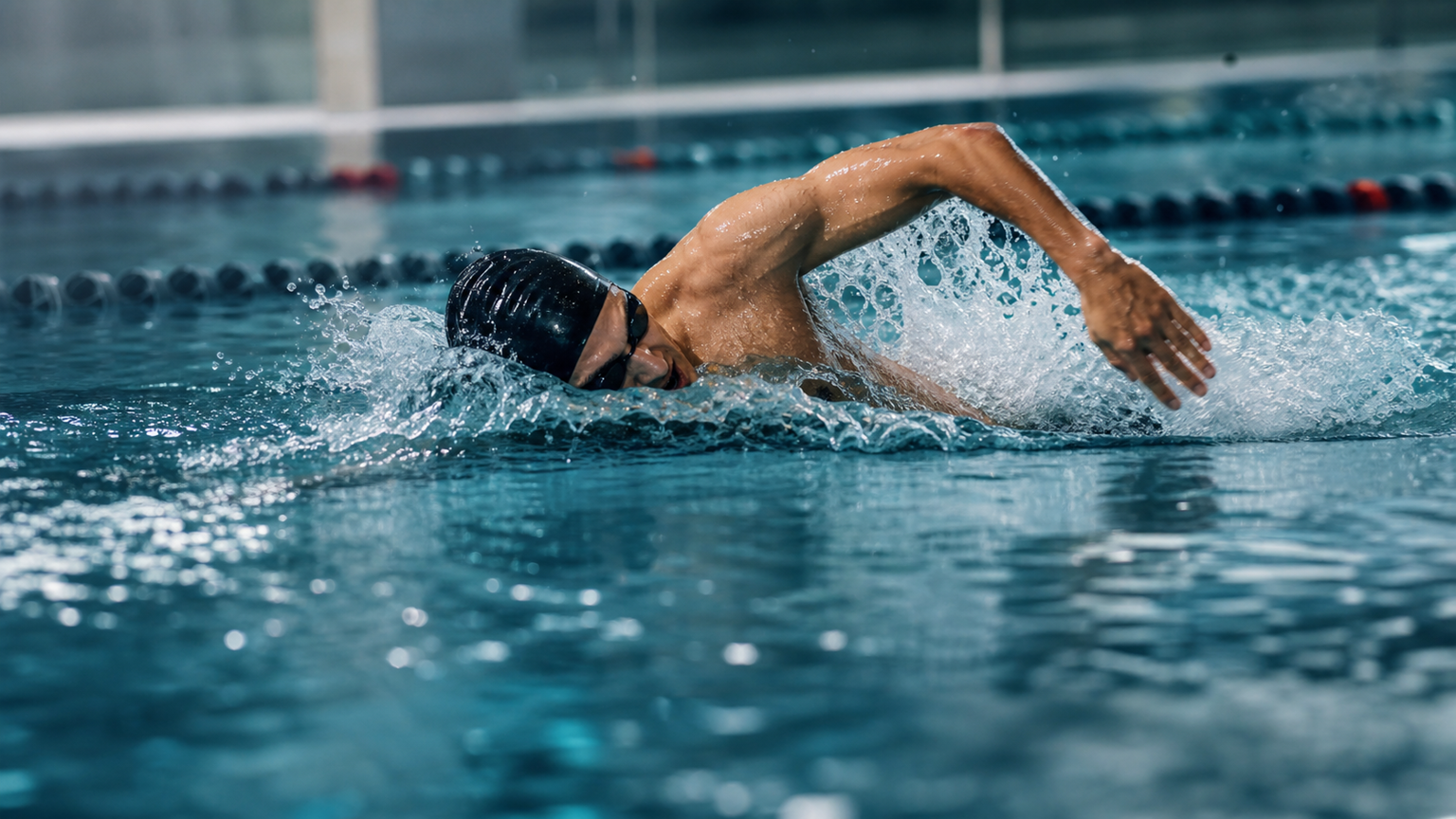
Many swimmers focus their training on endurance but devote little time to true speed training. However, maximum speed—the fastest pace achievable in a short, all-out sprint—is the ceiling for all pacing. The higher your maximum speed, the greater the room for improvement in race pace across all distances.
Speed training is not simply sprinting whenever you feel like it; it requires periodized design so that the neuromuscular system receives high-quality speed stimuli in a fully recovered state.
The Physiological Basis of Speed Training
Short-distance swimming (15 to 50 meters) primarily relies on the phosphocreatine system (ATP-PC system), which is characterized by:
- Extremely rapid energy release, lasting only 10 to 15 seconds
- Recovery requiring 3 to 5 minutes (full recovery)
- Speed dropping quickly between sprint sets if rest is insufficient
This means that rest intervals between sets in speed training must be long enough—typically 5 to 10 times the sprint duration. If a 25-meter sprint takes 15 seconds, rest between sets should be at least 75 to 150 seconds.
Four Stages of Speed Training Development
| Stage | Weeks | Sprint Distance | Rest Between Sets | Goal |
|---|---|---|---|---|
| Neural Activation Phase | Weeks 1–2 | 12.5m (half pool) | 90 seconds | Establish the feel of all-out sprinting |
| Speed Building Phase | Weeks 3–5 | 25m | 2–3 minutes | Stable output of maximum speed |
| Speed Endurance Phase | Weeks 6–8 | 50m | 3–4 minutes | Maintain speed while fatigued |
| Integration Phase | Weeks 9–10 | 25m + 50m mixed | 2–4 minutes | Integrate speed feel with race pacing |
Workout Design for Each Phase
Neural Activation Phase (Weeks 1–2)
The goal is to reawaken the muscles’ maximum contraction capacity. Many recreational swimmers are accustomed to swimming at low-to-moderate intensity and need a period of “relearning how to swim at full speed.”
Sample workout:
- Warm-up: 600m (including 3 gradually accelerating swims of 25m each)
- Main set: 8 × 12.5m all-out sprints, stopping after swimming half the pool at maximum speed from each start, with 90 seconds rest between sets
- Cool-down: 400m easy swim
Speed Building Phase (Weeks 3–5)
The focus is on developing true maximum speed (Vmax). Each 25m repeat should be the fastest pace you can achieve that day.
Sample workout:
- Warm-up: 600m
- Activation: 4 × 12.5m (at 85–90% intensity), 60 seconds rest between sets
- Main set: 8–10 × 25m all-out sprints, 2–3 minutes rest between sets (use a timer and record each repeat’s time)
- Cool-down: 400m
Training indicator: The final repeat’s time should not exceed the first repeat’s time by more than 5%. If speed drops by more than 5%, it means too many repeats or insufficient rest.
Speed Endurance Phase (Weeks 6–8)
Extend maximum speed to the 50-meter distance, training the body to maintain fast swimming even as speed slightly declines.
Sample workout:
- Warm-up: 600m
- Main set: 6 × 50m (swum at 95% of target race pace), 3–4 minutes rest between sets
- Additional set: 4 × 25m all-out sprints, 2 minutes rest between sets (to maintain the feel of maximum speed)
- Cool-down: 400m
Technical Key Points in Speed Training
Technique at full speed often differs from slow swimming and requires special attention:
Balance between stroke rate and stroke length
As speed increases, stroke rate (strokes per minute) typically rises, but stroke length (distance traveled per stroke) should not drop significantly. If stroke rate is high but stroke length is short, it means force is not being effectively converted into propulsion.
Start acceleration technique
Many recreational swimmers waste a great deal of speed at the start of a race. Practicing a streamlined position after pushing off the wall, keeping the body tight for 2–3 seconds before beginning to pull, can significantly improve start performance.
Turn efficiency
The flip turn has a major impact on short-distance speed. If you are still using an open turn, learning the flip turn is the highest-return investment in speed.
The Position of Speed Training in the Overall Program
Speed training places high demands on the nervous system, so scheduling requires attention:
- Speed training should be scheduled “after the most fatiguing day, when fully recovered” within the training cycle
- Do not exceed 2 speed training sessions per week
- Schedule easy swimming or a rest day after speed training days
- In the week before a competition, do not introduce new speed training; simply maintain the habitual feel of speed
Practical Recommendations
- Timing is the soul of speed training: Speed training without timing is like having no direction—be sure to use a stopwatch or pool timer
- Warm up thoroughly: Adequate warm-up is essential before speed training; sprinting with cold muscles is a shortcut to injury
- Do not force speed work while fatigued: “Sprints” performed in a fatigued state never deliver the true maximum speed stimulus, and the effect is almost zero
- Pool water temperature advice for Taiwan summers: When water temperature is high, the body is more relaxed—an ideal time to practice speed, so take full advantage
- Record your best 25m time monthly: Use it as a long-term tracking indicator for speed development
Conclusion
Speed training is the most neglected component of swimming training among recreational athletes, and it is also the training type with the greatest potential for improvement. Through periodized short-distance sprint set design, allowing the neuromuscular system to receive true maximum speed stimuli in a fully recovered state, your swimming ceiling will be pushed higher time and again.
Related Reading
- Swimming Speed Training: Principles for Designing Short-Distance Sprint Workouts
- Swimming Speed Combination Training: Weekly Arrangement of Short Sprints and Long-Distance Work
- Swimming Sprint Training: Methods for Developing Speed with 10×50m All-Out Sprints
- Swimming Maximum Speed Training: Neural Activation with 10–25m All-Out Sprints
西進武嶺 免費訓練分析服務 Intervals | 練不夠還是練過頭?你哪一種類型選手?AI模型告訴你! | 備戰神器 | 公路車 訓練 | CT Yeh
4 年前
一起升級!海鷗盃LSD團練...JJSC Zone2招待 騎到手抖 / 公路車 / CT Yeh
1 天前
風櫃嘴 衝刺慢動作回放!
8 年前
Live) 備戰2019彰化經典百K 賽前攻略 (已完賽請看新影片
7 年前
[教學] Dashware 教學 如何製作有 速度 功率 心律的 騎車影片 Guages Video
8 年前
CT暗黑廚房) 車友必備 宇宙無敵鮮蚵湯 幫助訓練恢復 天然食補 好市多 超肥鮮蚵 破PR
7 年前
教學) 如何做出專業 慢動作 影片 Slow Motion 120fps GoPro 7 ActionCam AX700 A99II
7 年前
一日北高/長距離團騎 常見問題補充篇 / 組團或跟團的眉角 / 壯車友容易被瘦車友慢性拉爆 / 原來屁股痛可能是這個原因...? / 風場配速法 / 公路車 / CT Yeh
2 年前