Introduction
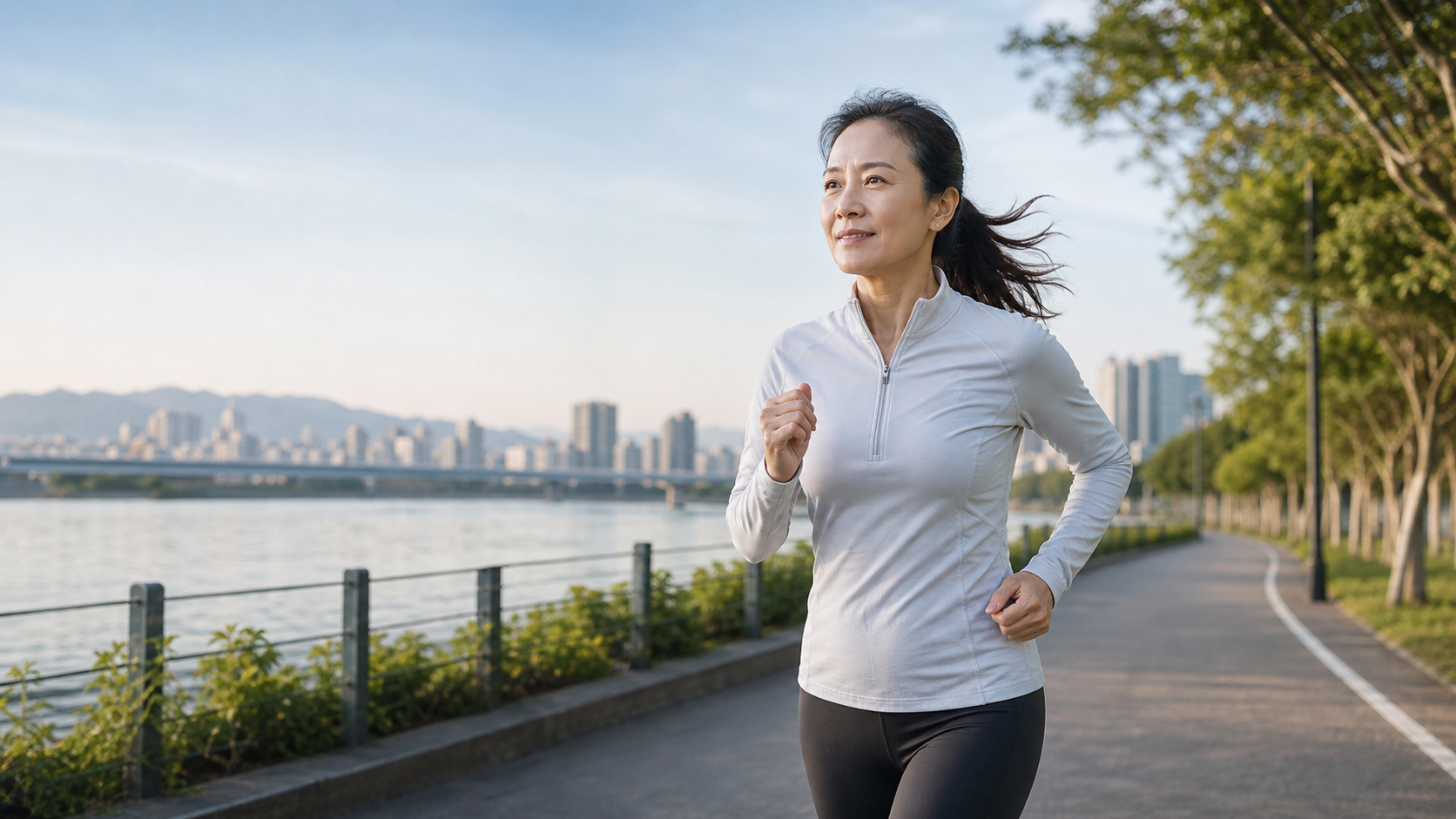
In Taiwan, more and more women in their fifties and sixties are taking up road running—an encouraging trend. However, the physiological changes around menopause (typically occurring between ages 45–55) present female runners with a new set of challenges: declining bone density, accelerated muscle loss, reduced joint flexibility, slower recovery, and poorer sleep quality. The most critical concern is the dual threat of “osteoporosis” and “sarcopenia.”
How Post-Menopausal Body Changes Affect Running
Estrogen plays a key role in bone health—it inhibits the activity of osteoclasts and maintains bone mass. After menopause, estrogen levels plummet, and bone density may decline by 1–2% per year during the first 5–7 years. The femoral neck and spine are the most vulnerable areas.
| Menopausal Change | Impact on Road Running |
|---|---|
| Decreased bone density | Increased risk of stress fractures |
| Lower estrogen levels | Accelerated joint cartilage degeneration, knee discomfort |
| Reduced muscle mass | Decreased running efficiency, higher fall risk |
| Lower basal metabolic rate | More difficult weight management at the same training volume |
| Sleep disturbances | Reduced recovery capacity, higher risk of overtraining |
| Hot flashes, night sweats | Disrupted thermoregulation, harder to run in hot weather |
The Good News About Running for Menopausal Bones
Running is a “weight-bearing exercise” that provides direct mechanical stimulation to the skeleton. The impact force of each footstrike (approximately 1.5–3 times body weight) stimulates osteoblast activity and promotes bone formation. Research shows that menopausal women who run regularly have significantly higher femoral neck bone density than those who are sedentary.
Furthermore, running (especially when combined with resistance training) can:
- Slow the progression of sarcopenia
- Improve balance and reduce fall risk
- Improve sleep quality (reducing hot-flash interference with sleep)
- Maintain a healthy weight, reducing knee joint load
- Improve mood and combat menopausal depression
Training Adjustments for Menopausal Female Runners
Incorporate Resistance Training
Aerobic running alone provides limited bone stimulation. Menopausal women should add 2–3 resistance training sessions per week:
- Squats and lunges: Strengthen the quadriceps and glutes to protect the knee joints
- Deadlifts: Strengthen the lower back and glutes to prevent spinal fractures
- Single-leg balance exercises: Prevent falls
Extend Recovery Time
- Muscle recovery after menopause is approximately 20–30% slower than in younger years
- Allow at least 48–72 hours between high-intensity sessions
- Schedule one easy recovery week per month (reduce mileage by 50%)
Manage Impact
- Avoid sudden large increases in mileage (increase by no more than 10% per week)
- Wear well-cushioned running shoes and replace them regularly (every 500–800 km)
- Incorporate low-impact aerobic activities such as swimming and cycling to distribute skeletal stress
Dietary Priorities for Menopausal Runners
- Calcium: Recommended daily intake of 1,200 mg (post-menopause), which can be obtained from low-fat dairy, tofu, dark leafy vegetables, and dried small fish
- Vitamin D: Promotes calcium absorption; recommended daily intake of 800–1,000 IU. Deficiency is common in Taiwan, so supplements may be considered
- Protein: To combat sarcopenia, aim for 1.2–1.6 g per kilogram of body weight daily, distributed across meals
- Avoid bone killers: Excessive caffeine, high-salt diets, and alcohol all accelerate calcium loss
Practical Recommendations
- Schedule a bone density test (dual-energy X-ray absorptiometry, DEXA) to understand your baseline
- If joint pain occurs, prioritize evaluation by a sports medicine specialist rather than pushing through the pain
- Discuss with your gynecologist whether menopausal hormone replacement therapy (HRT) affects running performance and explore personalized options
- Join female running communities—support from peers of similar age helps maintain motivation
- Accept the natural decline in speed and distance, and shift your goal from “chasing personal bests” to “maintaining healthy running”
Conclusion
Menopause is not the end of running—it is a redefinition of why we run. The shift from “running faster” to “running longer and healthier” transforms road running into one of the most powerful health tools for menopausal women. Many female marathon runners over 50 in Taiwan are living proof—strong bones, abundant energy, and radiant smiles, continuing to write their own stories on the track.
Related Reading
- Bone Density in Female Runners: Long-Term Benefits of Regular Road Running on Skeletal Health
- Menopausal Female Runners: Training Wisdom Under Hormonal Changes
- Menopausal Female Runners: The Impact of Hormonal Changes on Running Performance
- Bone Density Benefits of Road Running: Impact Forces and Bone Strengthening
白沙屯媽祖進香在家走!UREVO 坡度自調走步機 / 可連接訓練遊戲APP MyWhoosh / 邊看直播邊走起來 / CT Yeh
11 個月前
摔車後補裝備: 好市多新款單車安全帽& Specialized Romin 北高整路屁股都不痛的坐墊 | 一千元居然有MIPS | CT Yeh | 公路車
4 年前
一日北高常見問題大集合 | 攻略 | 路線 | 訓練 | 補給 | 自行車 單車 | 一日雙城 | 雙塔 | TWB北高360 | 屁股痛
6 年前
2025 自行車錶排行榜 兩萬車友大數據 / Garmin Bryton 排名會大洗牌嗎? / 全新的碼表前身分析 /公路車 / CT Yeh
1 年前
西進武嶺 免費訓練分析服務 Intervals | 練不夠還是練過頭?你哪一種類型選手?AI模型告訴你! | 備戰神器 | 公路車 訓練 | CT Yeh
4 年前
靠單車減肥35公斤 心得分享與整理
7 年前
台北大雁西飛 約騎挑戰 feat. Doris | 公路車 | CT Yeh
3 年前
公路車 BB培林大升級! / 備戰海鷗繞圈賽 Canyon Aerod & TIME 一起改 / MIT大廠 CEMA對鎖式陶瓷培林BB & 導輪 / 公路車 / CT Yeh
2 年前