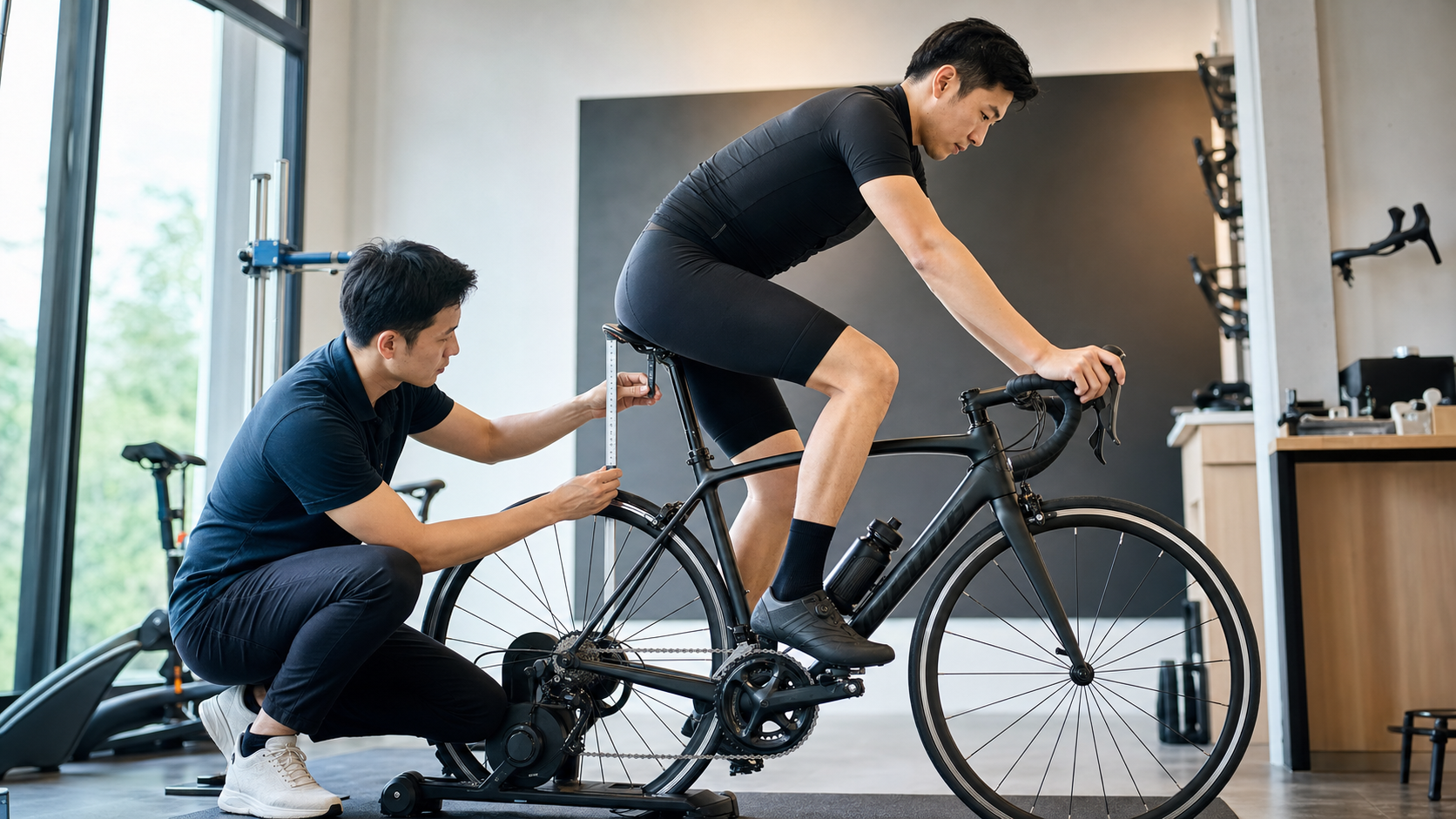
Bike Fit Basics: Why Does Riding Hurt? The Importance of Posture Adjustment
Introduction
“After riding 100 kilometers, the pain on the inside of my knee was so bad I could barely walk.” This is one of the most common complaints in Taiwan’s cycling community. Many riders grit their teeth and keep pedaling, or simply give up riding altogether, without ever considering that the problem might not be their body, but the few millimeters of difference between them and their bike.
Bike Fit is a systematic adjustment process designed to achieve the optimal match between frame geometry, component setup, and the rider’s body structure. It’s not just for elite athletes—anyone who rides more than two hours a week is worth understanding it.
The Five Root Causes of Cycling Pain
1. Incorrect Saddle Height
A saddle set too low keeps the knees constantly bent, forcing the quadriceps to overwork; a saddle set too high causes the pelvis to rock side to side and overextends the hip flexors. Both are major culprits behind knee pain.
2. Handlebar Reach Too Far or Too Close
Leaning too far forward shifts body weight onto the wrists and shoulders, leading to numb hands and sore neck and shoulders; a handlebar that’s too close forces the spine to hunch, and lower back pain follows closely behind.
3. Incorrect Cleat Position
The fore-aft and lateral position of the pedal cleats directly affects the tracking path of the knees. If the cleat rotation angle doesn’t match your natural gait, every pedal stroke damages the knee joint cartilage.
4. Mismatched Frame Size
If the frame’s Stack (vertical height) and Reach (horizontal distance) differ too greatly from your body proportions, no amount of component adjustment will do more than treat the symptoms, not the cause.
5. Functional Physical Limitations
Tight hip flexors, insufficient spinal mobility, weak core muscles—these physical conditions can make even a geometrically correct bike uncomfortable to ride.
What Problems Can Bike Fit Solve?
| Symptom | Common Cause | Bike Fit Intervention |
|---|---|---|
| Front knee pain | Saddle too low | Raise saddle height |
| Back of knee pain | Saddle too high | Lower saddle height |
| Numbness/tingling on outer foot | Cleats too tight or soles too flat | Adjust cleat position or add insoles |
| Stiff neck | Handlebar reach too far | Shorten stem or switch to shorter-reach handlebar |
| Lower back pain | Frame reach too long | Shorten stem, raise spacer height |
| Saddle pressure discomfort | Saddle width doesn’t match sit bone distance | Replace with a saddle matching sit bone width |
The Three Levels of Bike Fit
Level One: Basic Self-Adjustment
Adjust saddle height and handlebar height based on height-proportion formulas—suitable for beginners. Accuracy is limited, but far better than making no adjustments at all.
Level Two: Static Fit
A technician measures the rider’s body parameters (arm span, torso length, sit bone width, flexibility) in a static position, then makes adjustments against the frame geometry. Takes 1–2 hours, costing approximately NT$1,500–3,000.
Level Three: Dynamic Fit (3D Motion Analysis)
The rider pedals on a trainer while the technician tracks joint angles using cameras or infrared sensors, making real-time adjustments and verifying the results. This is currently the most accurate method, costing approximately NT$3,500–8,000, with high-end versions using Retül or Dartfish systems.
Practical Advice: When Should You Get a Bike Fit?
- After purchasing a new bike: Shops often provide “standard settings” that may not match your body proportions
- When pain starts to appear: Early intervention is more cost-effective than enduring pain long-term
- Riding more than 6 hours per week: Accumulated mileage amplifies the damage of any posture deviation
- After significant changes in weight or flexibility: For example, losing more than 5 kg or recovering from surgery
- After replacing components: Changing saddles, handlebars, or shoes may all require recalibration
Conclusion
Cycling pain is not normal, nor is it a test of “you’ll get used to it the more you ride.” Every pedal stroke is a vote from your body—when it frequently sends out pain signals, it means there’s a conflict between the bike and your body worth resolving. The investment in Bike Fit isn’t just about improved comfort; it’s the foundation for injury prevention, pedaling efficiency, and sustaining your passion for cycling long-term. Find a certified fit technician, or learn self-adjustment methods from the follow-up articles in this series—your legs will thank you.
Related Reading
#公路車 #Fitting 靠人工智慧APP 幫你調整單車
6 年前
一日北高常見問題大集合 | 攻略 | 路線 | 訓練 | 補給 | 自行車 單車 | 一日雙城 | 雙塔 | TWB北高360 | 屁股痛
6 年前
靠單車減肥35公斤 心得分享與整理
7 年前
一日北高/長距離團騎 常見問題補充篇 / 組團或跟團的眉角 / 壯車友容易被瘦車友慢性拉爆 / 原來屁股痛可能是這個原因...? / 風場配速法 / 公路車 / CT Yeh
2 年前
單車 一日北高 ( 雙城 ) 肥宅雙人瘋狂行 紀錄片 REACTO
10 年前
CT 喇低賽) 單車 比賽總是沒照片? 攝影師的觀點大公開 姿勢就是力量! 請加速1.25倍收看
7 年前
再一組! 全碳幅條 碟煞/無內胎輪組 開箱! 到底好騎嗎? UNAAS X40 | 公路車 | CT Yeh
4 年前
摔車後補裝備: 好市多新款單車安全帽& Specialized Romin 北高整路屁股都不痛的坐墊 | 一千元居然有MIPS | CT Yeh | 公路車
4 年前