The Relationship Between Running Shoes and Injuries: A Complete Analysis of Over-Supportive Shoes, Minimalist Shoes, and the Latest Shoe Selection Science
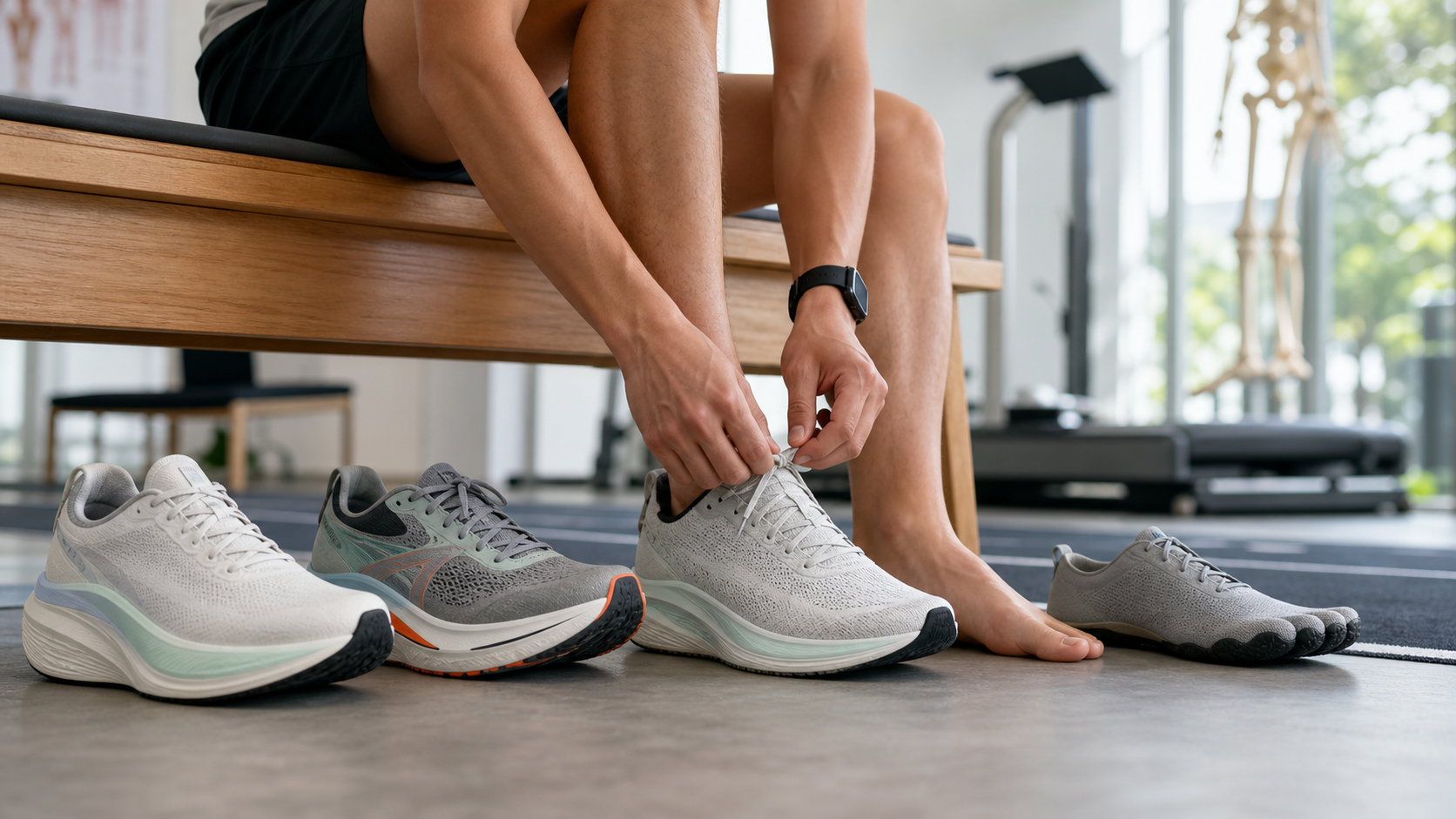
The Century-Long Evolution of Running Shoes
Before the 1970s, running shoes had almost no cushioning. It wasn’t until Nike introduced air-cushioned running shoes that “technological cushioning” became the industry mainstream, with heel-to-toe drop continuously increasing, evolving from 10 mm up to a maximum of 15 mm. The logic of athletic shoe manufacturers was: more cushioning = fewer injuries.
However, a study published in 2009 by Harvard professor Daniel Lieberman changed all of this. He pointed out that barefoot runners naturally adopt a forefoot strike, and their impact forces are actually lower than those of heel-striking runners wearing thick-soled shoes. Subsequently, Christopher McDougall’s bestseller Born to Run sparked a “minimalist shoe revolution.”
Yet, after the minimalist shoe market emerged, the incidence of stress fractures (especially of the metatarsals) rose, revealing the dangers of overcorrection. Today’s sports medicine stance is: shoes themselves don’t cause “injuries”; injuries come from a mismatch between the shoe and the runner, or from transitioning too quickly.
Key Running Shoe Parameters Explained
| Parameter | Definition | Common Range | Clinical Significance |
|---|---|---|---|
| Heel-to-Toe Drop | Difference in thickness between heel and forefoot | 0–15 mm | Affects Achilles tendon load and foot strike pattern |
| Stack Height | Total midsole thickness | 15–45 mm | Affects stability perception and cushioning amount |
| Toe Box Width | Space in the toe area | Narrow/Standard/Wide | Affects natural foot splay |
| Dynamic Control Characteristics | Medial support strength | Neutral/Stability/Control | Suits different arch types |
Arch Type and Shoe Selection
Low Arch (Flat Feet):
- Feet tend toward overpronation
- Recommended: Stability running shoes, providing mild medial support
- Not recommended: Minimalist shoes (aggravate pronation)
Normal Arch:
- The most common foot type among runners
- Recommended: Neutral running shoes
- Not recommended: Overly controlling shoes (overcorrection)
High Arch:
- Feet tend toward supination/underpronation
- Recommended: Neutral or cushioned shoes, no additional support needed
- Note: High-arch runners have a higher risk of stress fractures
Assessment Method: The “wet foot test”—step with a wet foot onto a piece of cardboard and observe the footprint shape. Alternatively, get a gait analysis at a specialty running store.
Potential Problems with Over-Support Shoes
Over-support sounds reasonable in theory, but actual research results are quite complex:
- A 2022 study of 1,000 military recruits in training showed no significant difference in injury rates between those fitted with shoes based on foot type (control/stability/neutral) and those uniformly issued neutral shoes
- High-density medial support may lead to increased lateral pressure (near the 5th metatarsal and lateral malleolus)
- Over-reliance on shoe support may weaken the natural training of the foot’s intrinsic muscles
Current Research on Minimalist Shoes
Benefits and risks of minimalist shoes (Drop 0–4 mm, Stack Height < 20 mm):
Potential Benefits:
- Promotes strengthening of the foot’s intrinsic muscles
- Naturally guides forefoot/midfoot landing
- Improves proprioceptive feedback
Confirmed Risks:
- Transitioning too quickly leads to Achilles tendon overload (from a sudden drop reduction)
- Forefoot striking increases the risk of metatarsal stress fractures
- Requires a gradual adaptation period of 6–12 months; not suitable for sudden, complete transition
When to Replace Running Shoes
Running shoe midsole materials (EVA foam) gradually compress with use, and cushioning declines:
- Recommended replacement mileage: 600–800 km (adjusted based on runner weight and terrain)
- Heavier runners (>80 kg): replace at approximately 600 km
- Lighter runners (<60 kg): can extend to 900 km
- Use training shoes (for daily practice) and racing shoes (carbon-plated speed shoes) separately to extend the lifespan of both
Signs of Aging:
- Visible compression marks or creases on the midsole
- Increased joint fatigue after runs (beyond normal training fatigue)
- Outsole wear on the lateral side exceeding 3–4 mm
Practical Shoe Selection Tips
- Shop for shoes in the afternoon: Feet swell slightly throughout the day, so trying on shoes in the afternoon is more accurate
- Try on shoes with the type of technical socks you run in, of moderate thickness
- Leave about 1 cm of space in front of the big toe (to avoid toe impact after long runs)
- Don’t rely on a single brand: Sizing and fit vary greatly between brands; choose based on feel
- Transition drop gradually: If switching from 10 mm to 4 mm, allow 3–6 months for the transition
Conclusion
There is no standard answer in shoe selection—only the shoe that “fits your current mileage, pace, foot type, and running habits.” Rather than chasing the latest technological materials, regularly assessing your foot’s needs, rotating shoes sensibly, and building foot strength are the fundamental ways to make your running shoes truly work for you.
Related Reading
- Minimalist Shoes vs. Thick-Soled Shoes: The Impact of Different Running Shoe Designs on Running Biomechanics
- Barefoot Training for Running: The Injury Prevention Benefits and Risks of Natural Running
- Minimalist Running Shoes and Barefoot Running: Who They Suit and How to Transition Safely
- Minimalist Shoes vs. Thick-Soled Carbon Plate Shoes: Which Suits You
3D 列印車褲墊 / 舒適改善? / 無痕 x 分區壓縮 / ATK & Decider系列 / JE22黑科技 / #公路車 #CTYEH
11 個月前
#公路車 #Fitting 靠人工智慧APP 幫你調整單車
6 年前
摔車後補裝備: 好市多新款單車安全帽& Specialized Romin 北高整路屁股都不痛的坐墊 | 一千元居然有MIPS | CT Yeh | 公路車
4 年前
再快都跟的上!? 單車跟隨攝影機之王 HOVERAir X1 PROMAX 全面實測 / 唯一!8K畫質&自行車專用模式和跟蹤信標&前後避障 / DJI Neo 可參考/ 公路車 / CT Yeh
1 年前
大家都在開箱的...單車用藍芽對講耳機真的有幫助嗎? SENA BiKom 20 長距離旅遊 & 海鷗繞圈賽 實際體驗心得 / 公路車 / CT Yeh
9 個月前
Unaas X50 全碳纖幅條輪 數據實測對比PK | Lun Hyper 的高階版 | 板輪爬坡也可以很厲害? ! 武嶺2小時大師一起親測! CP值超高 | 公路車 | CT Yeh
4 年前
CT 喇低賽) 單車 比賽總是沒照片? 攝影師的觀點大公開 姿勢就是力量! 請加速1.25倍收看
7 年前
Nepest NOVA 碳條輪組:輕量、空力、舒適一次滿足!/ 公路車 / CT Yeh
7 個月前