The Complete Swimmer's Ear Protection Guide: Otitis Externa Prevention, Ear Drying Techniques, and Earplug Selection
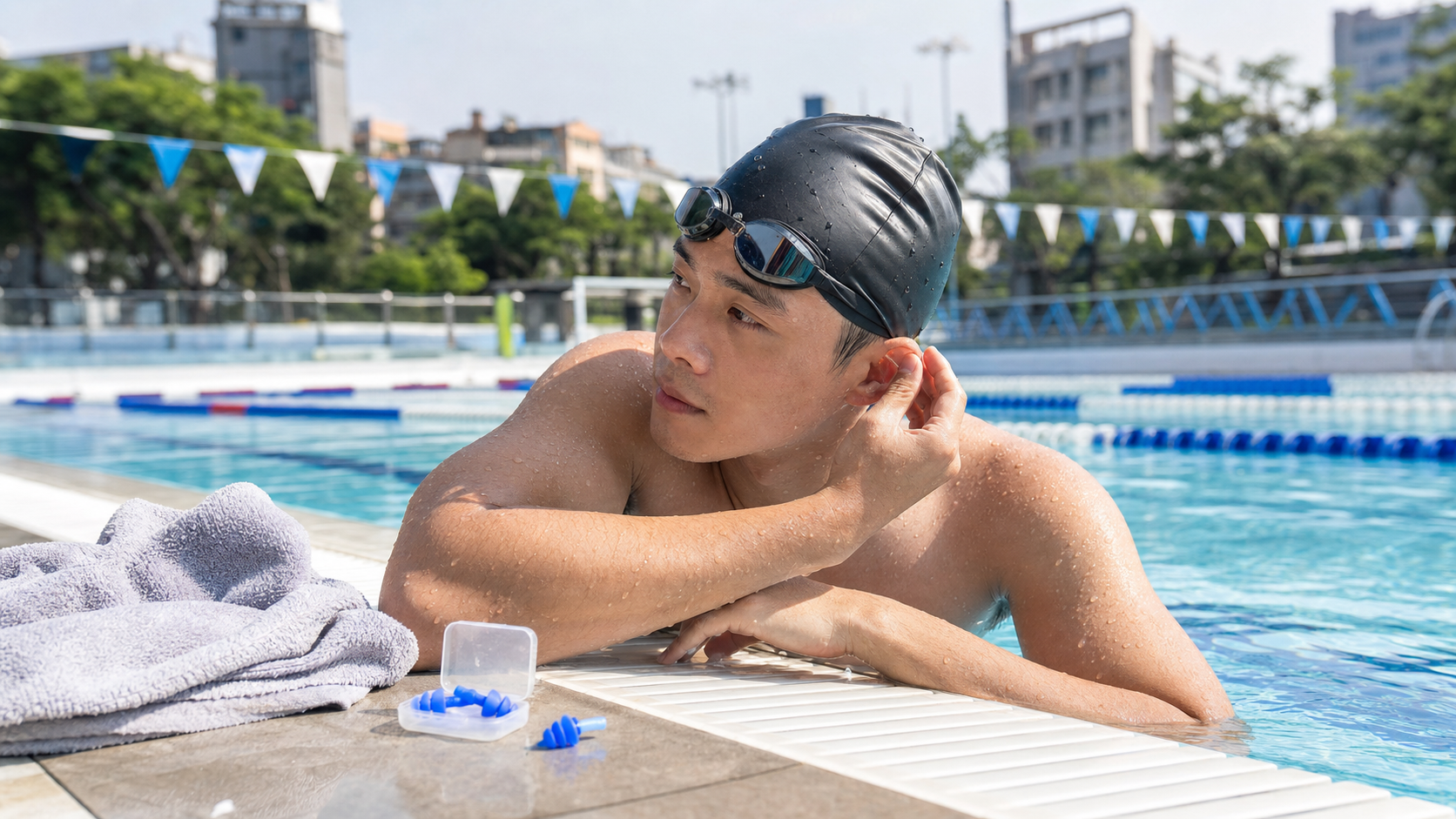
The Complete Swimmer’s Ear Protection Guide: Otitis Externa Prevention, Ear-Drying Techniques, and Earplug Selection Guide
Introduction
“Swimmer’s Ear,” medically known as Acute Otitis Externa, is an inflammatory reaction caused by infection of the skin in the external ear canal. With Taiwan’s hot, humid summers and large swimming population, otitis externa is a common summer visitor to ENT clinics. Research shows that there are approximately 2.4 million outpatient visits for otitis externa in the United States each year, most of which are related to swimming.
What makes swimmer’s ear frightening isn’t just the pain—if a severe infection is not properly managed, it can spread to the cartilage surrounding the ear canal, causing chondritis. However, with proper preventive measures, almost all cases of swimmer’s ear are preventable.
Causes of Swimmer’s Ear: Why Is Water the Root of the Problem?
A healthy ear canal has natural protective mechanisms:
- The ear canal skin is slightly acidic (pH 6–6.5), inhibiting bacterial growth
- Earwax (cerumen) forms a hydrophobic protective layer
- Cilia on the ear canal skin continuously move foreign matter outward
When swimming, water entering the ear canal will:
- Dilute the protective components of earwax, disrupting the acidic environment
- Macerate the ear canal skin, reducing the skin’s barrier function
- Create a moist, warm environment, conducive to the growth of bacteria (especially Pseudomonas aeruginosa) and fungi
Although chlorine in pool water has a sterilizing effect, it also irritates and dries out the ear canal skin, paradoxically damaging the natural barrier.
Symptom Recognition: The Progression from Itching to Severe Pain
| Stage | Symptoms | Recommended Action |
|---|---|---|
| Early (Mild) | Itching in the ear canal, feeling of fullness in the ear, slight discomfort | Self-care, stop swimming |
| Middle (Moderate) | Increasing pain, redness and swelling of the ear canal, pain when lightly pressing the tragus, increased discharge | Seek medical attention |
| Late (Severe) | Severe pain, complete swelling of the ear canal, fever, swollen lymph nodes | Seek immediate medical attention; systemic antibiotics may be needed |
Warning symptoms: If fever, facial swelling, or jaw pain occurs, seek medical attention immediately. These may be signs of malignant otitis externa, which requires particular vigilance in diabetic patients or those with compromised immune systems.
Ear-Drying Techniques: Proper Water Drainage Methods After Swimming
Properly clearing accumulated water from the ear canal after swimming is the most critical step in preventing otitis externa.
Gravity Drainage Method (Most Basic and Safest)
- After exiting the water, tilt your head 45° toward the affected side
- Gently pull the earlobe and shake it to help water flow out
- Hop 3–5 times on the leg on the same side to use inertia to accelerate drainage
- Maintain the position for 30 seconds to allow water to drain naturally
Warm Air Drying Method (Supplementary)
- Use a hair dryer on the lowest heat and lowest fan speed settings
- Hold 30–40 cm from the ear canal
- Blow for 30–60 seconds, avoiding overheating that could damage ear canal skin
- Using cotton swabs to clean inside the ear canal is not recommended, as this may cause skin damage and push water deeper
Alcohol or Acetic Acid Ear Drops (Preventive Use)
ENT physicians often recommend the following for swimmers with a history of otitis externa:
- Alcohol ear drops: Help evaporate moisture while providing a sterilizing effect
- Acetic acid ear drops (2% acetic acid solution): Restore the acidic environment of the ear canal
- Caution: Anyone with a perforated eardrum must absolutely not use any ear drops
Earplug Selection Guide: Finding the Right Protection for You
Earplugs are the most direct and effective way to prevent swimmer’s ear, but improper selection can lead to discomfort or even injury.
| Earplug Type | Material | Waterproofing | Comfort | Suitable For |
|---|---|---|---|---|
| Molded silicone | Soft silicone | Excellent | Good | General swimmers, children |
| Foam type | Memory foam | Good | Good | Recreational swimmers |
| Custom-molded type | Hard silicone/acrylic | Superior | Excellent | Frequent swimmers, those with a history of otitis externa |
| Flanged (winged) type | Soft silicone | Good | Excellent | Long-distance swimming, triathlon |
Purchasing tips:
- Earplugs should not be inserted too deeply into the ear canal; they only need to seal the canal entrance
- When trying them on, perform a swallowing motion; if you feel a stuffy, painful sensation, the size is too large
- Children’s earplugs differ in size from adult earplugs; do not mix them
- Rinse with clean water and dry completely after each use
Complete Post-Swim Ear Care Routine
- Immediately after exiting the water: Perform the gravity drainage method; do not use cotton swabs
- 3–5 minutes later: If a residual moisture sensation remains, use a hair dryer for auxiliary drying
- If you have a history of otitis externa: Instill 3–5 drops of preventive alcohol or acetic acid ear drops
- After every swim: Keep the outer ear canal dry, and avoid sleeping on the affected side at night
- Regular cleaning: Those with excessive earwax can have it cleaned by an ENT physician every 3–6 months; avoid digging deep on your own
Additional Precautions for High-Risk Groups
- Children: Their ear canals are narrower and their immune systems not fully mature, making otitis externa more likely; it is recommended to establish the habit of drying ears after swimming from an early age
- Diabetic patients: Their immune function is weaker; if ear pain occurs, seek medical attention immediately and do not delay
- Those with a history of eardrum perforation: Must inform their physician before swimming to confirm whether swimming is appropriate; use of any ear drops is prohibited
- Hearing aid users: Always remove hearing aids before swimming to avoid water damage to the device and to reduce infection risk
Practical Recommendations
- Choose pools with good water quality management: A pH of 7.2–7.8 and free chlorine of 1–3 ppm are ideal ranges
- Avoid swimming in contaminated waters: Rivers and lakes have higher bacterial loads and are more likely to trigger otitis externa
- Do not use in-ear headphones immediately after swimming: Avoid inserting any foreign objects into the ear canal while it is still moist
- Do not dig in your ears if symptoms appear: Self-cleaning may worsen the damage
- Consider carefully whether to swim during a cold: When you have an upper respiratory infection, the defensive capacity of the ear canal mucosa is reduced, increasing infection risk
Conclusion
Swimmer’s ear may seem like a minor ailment, but it can cause pain severe enough to keep you from sleeping, and in serious cases can even affect your hearing. The good news is that by developing proper post-swim ear-drying habits and using suitable earplugs, it can be almost completely prevented. Make the ear-drying routine as natural a part of your swimming regimen as putting on your swim cap, so that every swim is pure enjoyment rather than a nightmare of ending up in the emergency room the next day.
Related Reading
- Swimming Ear Problems: Prevention of Swimmer’s Ear (Otitis Externa) and Choosing Protective Earplugs
- Ear Canal Infection After Swimming: Prevention of Otitis Externa and Post-Swim Ear Care
- Ear Care After Swimming: Prevention and Management of Swimmer’s Ear (Otitis Externa)
- ENT Problems in Swimming: Prevention and Management of Otitis Externa and Sinusitis
洗單車神器 吹水機! 實際洗車用用看 暴力洗鍊條大法 | 公路車 | CT Yeh
4 年前
水金九不厭五分 10度寒流冷到不願停!feat. 卡卡 / 公路車 / CT Yeh
6 個月前
單車 重低音 藍芽喇叭 音質實測 SoundBot SB525 Real Sound Test
8 年前
[教學] Premiere 影片 手震 修正 教學 防抖 單眼 影像 GoPro 穩定 Video Stabilization
8 年前
3C開箱) SoundBot 老車升級智慧音響 SB360 藍芽 免持 接收器 Aux in 手機 汽車音響 美國聲霸
7 年前
大家都在開箱的...單車用藍芽對講耳機真的有幫助嗎? SENA BiKom 20 長距離旅遊 & 海鷗繞圈賽 實際體驗心得 / 公路車 / CT Yeh
9 個月前
自助洗車場 洗單車 50元有找 清鍊條大法 居然還有小小兵
7 年前
詳測) 小米 電動打氣筒 公路車胎要充多久? 值得買嗎? 米家充氣寶 小心燙手!
7 年前