The Effects of Chlorine on Skin and Eyes: A Complete Post-Swim Care Routine and Product Selection
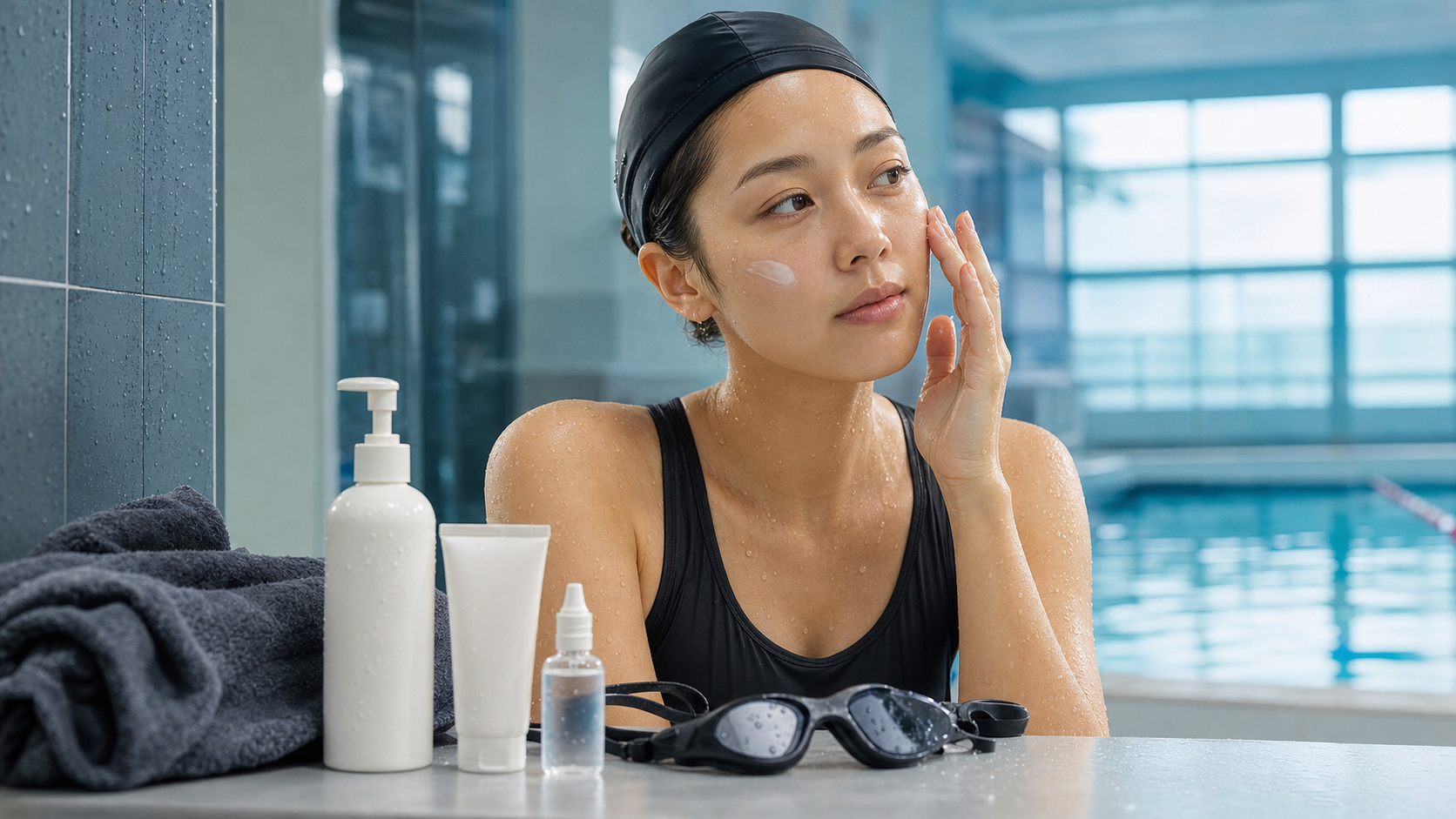
Effects of Chlorine on Skin and Eyes: Complete Post-Swim Care Routine and Product Selection
Introduction
Walking into an indoor pool, that familiar “chlorine smell” is many people’s first memory of swimming. Chlorine (added in the form of sodium hypochlorite) is the most widely used pool disinfectant, effectively killing bacteria, viruses, and algae while protecting swimmers from waterborne diseases. However, long-term frequent exposure to chlorinated pool water can cause chronic irritation to the skin and eyes that should not be overlooked.
For swimmers who swim more than three times a week, understanding the mechanisms of chlorine’s effects and establishing a thorough post-swim care routine is a necessary investment in maintaining skin and eye health.
How Does Chlorine Affect the Skin?
Disrupting the Skin Barrier
The outermost layer of the skin, the stratum corneum, is composed of keratinocytes and natural oils (sebum), forming a barrier against external irritants. Chlorinated water can:
- Dissolve natural sebum: Hypochlorous acid in the water reacts with lipids on the skin’s surface, destroying the protective film
- Alter skin pH: Pool water pH typically ranges from 7.2–7.8; prolonged immersion shifts the naturally acidic skin surface toward neutral, weakening antibacterial defenses
- Dehydrating effect: Chlorinated water accelerates moisture loss from the stratum corneum, leading to dryness and flaking
Common Skin Problems
| Problem | Symptoms | At-Risk Groups |
|---|---|---|
| Chlorine dermatitis | Redness, itching, dryness, and tightness after swimming | All swimmers |
| Contact urticaria | Rash developing within minutes of chlorine exposure | Those sensitive to chlorine |
| Exacerbated atopic dermatitis | Worsening of cracking and itching | Eczema sufferers |
| Folliculitis | Red papules around hair follicles after swimming | Those with lower skin immunity |
| Hair damage | Yellowing of hair color (especially dyed hair), rough texture | Those with dyed or permed hair |
How Does Chlorine Affect the Eyes?
The tear film is a precision system protecting the ocular surface, composed of an aqueous layer, a mucin layer, and a lipid layer. Direct contact of chlorinated water with the eyes can:
- Disrupt tear film stability: The chemical components of chlorine dissolve the lipid layer of the tear film, causing dry eyes
- Irritate the conjunctiva: Leading to conjunctival congestion and increased discharge (commonly known as “red eye”)
- Long-term effects: High-frequency, prolonged exposure may increase the risk of corneal epithelial damage
It is worth noting that what truly irritates the eyes in a pool is actually chloramine—a byproduct of chlorine reacting with organic matter from swimmers (sweat, urine, skincare products)—rather than chlorine itself. This is why crowded pools are more irritating to the eyes.
Pre-Swim Preparation: The First Line of Defense Against Chlorine Damage
Skin Preparation
- Shower before swimming: Allow the skin to absorb clean water, reducing chlorine penetration (moist skin absorbs less pool water)
- Apply protective products: Barrier creams containing petrolatum, shea butter, or silicones can form a hydrophobic protective layer on the skin’s surface
- Pre-protect hair: Apply hair oil or coconut oil to the hair before swimming to reduce chlorine damage to the hair shaft
Eye Preparation
- Wear swim goggles: This is the most effective way to protect the eyes; goggles must have a sufficient seal to prevent water from entering
- Choose anti-fog goggles: Avoid frequent adjustments due to blurred vision, reducing the chance of contaminants contacting the eyes
Complete Post-Swim Care Routine (The 15-Minute Golden Care Window)
Step 1: Shower Immediately (Within 10 Minutes After Swimming)
- Rinse the entire body thoroughly with lukewarm water for 5–7 minutes, focusing on the hair, armpits, and groin area
- Water temperature should not be too hot (above 40°C): Hot water further damages the skin’s lipid barrier
- Use a low-irritation, soap-free body wash: A mildly acidic cleanser with a pH close to the skin is ideal
Step 2: Hair Care
- Use a chlorine-removing shampoo (containing EDTA or vitamin C) to remove residual chlorine
- After rinsing, apply a deep conditioner and leave it on for 3 minutes to replenish moisture and protein
- After swimming, let hair air-dry naturally or blow-dry on low heat to minimize heat damage
Step 3: Skincare
| Skin Type | Recommended Product Type | Key Ingredients |
|---|---|---|
| Dry skin | Rich creams or oils | Shea butter, squalane, ceramides |
| Oily skin | Lightweight lotions | Hyaluronic acid, aloe vera, glycerin |
| Sensitive skin | Fragrance-free, low-irritation creams | Oat extract, centella asiatica, ceramides |
| Atopic dermatitis | Dermocosmetic moisturizers recommended by physicians | Use as directed by a doctor |
- Apply while the skin is still slightly damp (immediately after showering, before the skin is fully towel-dried) for better moisture retention
- Key areas for moisturizing: elbows, knees, ankles, and other areas with thicker stratum corneum
Step 4: Eye Care
- After swimming, rinse the eyes with artificial tears (preservative-free) to replenish the lipid layer of the tear film
- If you wear contact lenses, always wear swim goggles while swimming; remove the contact lenses immediately after swimming and switch to glasses
- If red eyes persist for more than 24 hours, or if yellow discharge appears, seek medical attention to rule out infection
Additional Considerations for Special Groups
- Atopic dermatitis patients: Apply a generous amount of moisturizer immediately (within 3 minutes) after swimming; if the condition is severe, consult a dermatologist about whether to use topical steroid ointments before and after swimming
- Dry eye sufferers: Apply artificial tears once before and once after swimming; strictly wear sealed swim goggles while in the water
- Children: The skin barrier is not fully developed, making moisturizing even more important; choose low-irritation children’s body washes
Practical Tips
- Create a “swim bag care kit”: Keep chlorine-removing shampoo, moisturizing cream, and artificial tears in your bag for immediate use after swimming
- Avoid applying sunscreen near the pool: Chemical ingredients in sunscreens can react with chlorine, potentially generating irritating byproducts
- Regularly assess your skin condition: If the skin remains persistently dry and cracked after moisturizing, consider reducing swimming frequency or switching to a saltwater pool
- Swimming frequency is directly proportional to chlorine damage: For frequent swimmers exceeding five sessions per week, regular dermatological check-ups are recommended
- Saltwater pools: Some pools in Taiwan have switched to electrolytic saltwater systems, which are less irritating to the skin and can be prioritized
Conclusion
Chlorine is indispensable for maintaining safe pool water quality, and there is no need to give up swimming out of fear. The key lies in: protect before swimming, repair after swimming, using a scientific care routine to offset the cumulative damage chlorinated water inflicts on the skin and eyes. A complete post-swim care routine takes only 15 minutes, yet it can greatly enhance long-term swimming comfort and skin health. Make care a part of your swimming life, and let every swim be a gift to your body rather than a burden.
Related Reading
- Swimming and Skin Protection: The Effects of Chlorinated Water on Skin and Skincare Advice
- Post-Swim Skincare: The Effects of Chlorine on Skin and Protection
- Chlorine Water Allergy: A Complete Guide to Swimming Dermatitis and Eye Protection
- Swimming and Dry Skin: A Complete Strategy for Post-Chlorine Care and Sun Protection
洗完單車整隻手黑的解決妙招🤣 #bike
1 年前
碟煞公路車 銑面器 !? 原來銑完差這麼多! 降低蹭碟機率! | TIME 公路車 保養小記錄 | CT Yeh
3 年前
近視雷射三個月後悔嗎?單車族/工程師必看,Smart TransPRK 術後血淚史與後遺症全公開 / CT Yeh
4 個月前
洗單車神器 吹水機! 實際洗車用用看 暴力洗鍊條大法 | 公路車 | CT Yeh
4 年前
CT暗黑廚房) 車友必備 宇宙無敵鮮蚵湯 幫助訓練恢復 天然食補 好市多 超肥鮮蚵 破PR
7 年前
3D 列印車褲墊 / 舒適改善? / 無痕 x 分區壓縮 / ATK & Decider系列 / JE22黑科技 / #公路車 #CTYEH
11 個月前
一日北高常見問題大集合 | 攻略 | 路線 | 訓練 | 補給 | 自行車 單車 | 一日雙城 | 雙塔 | TWB北高360 | 屁股痛
6 年前
2026 輪霸西濱200K 挑戰VLOG / 第一集團 / 首次參加..經驗不足、膀胱不足 /死守6H內 / AI戰鬥力顯示系統 / 公路車 / CT Yeh
4 個月前