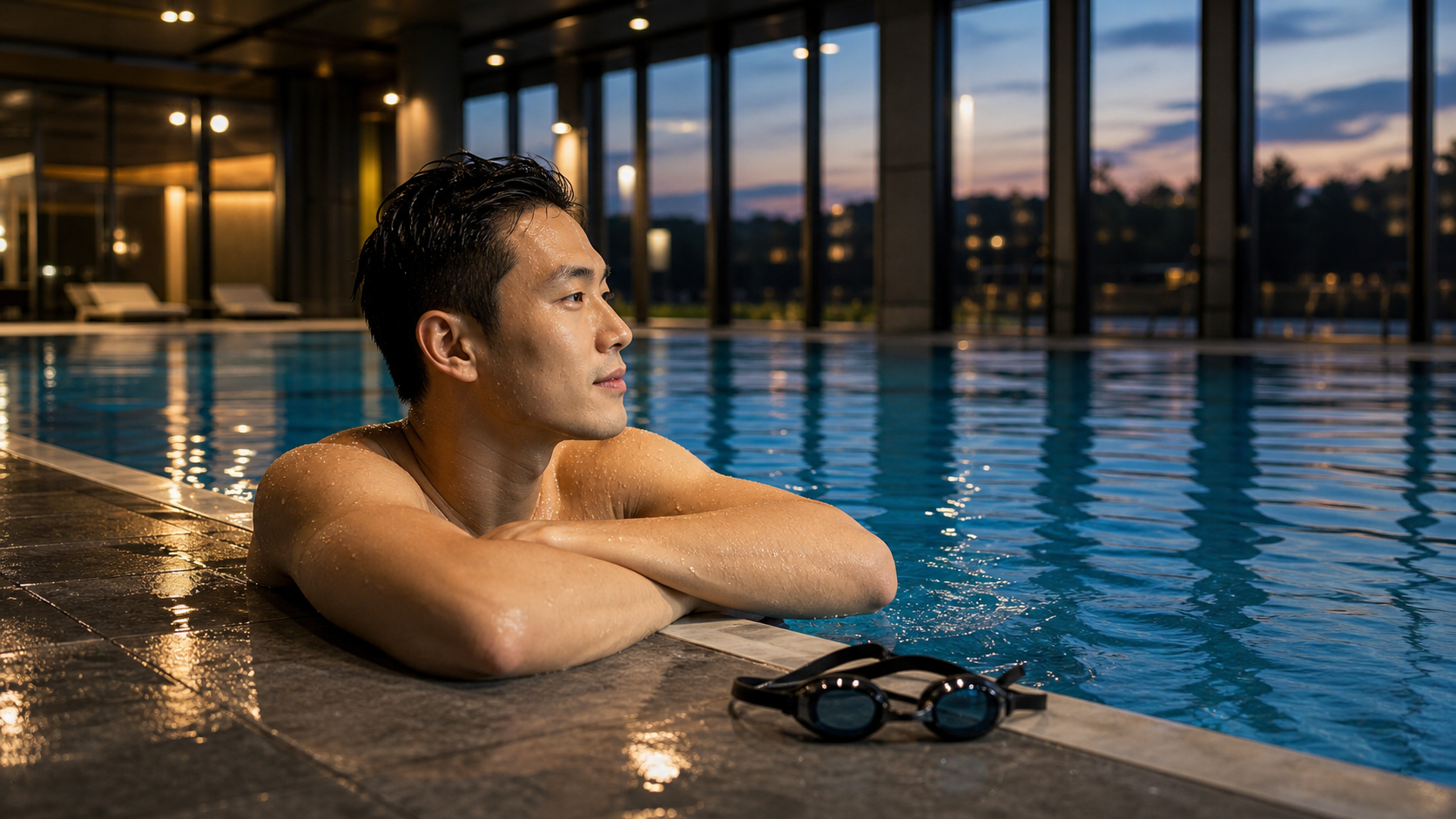
Swimming for Better Sleep: The Science and Practice of Evening Swims
Introduction
According to research from Taiwan’s sleep medicine community, roughly one in five adults in Taiwan suffers from chronic insomnia, one of the highest rates in Asia. Medication can help, but long-term reliance on sleeping pills brings side effects and the risk of tolerance. More and more sleep specialists now recommend “exercise as prescription” as a non-pharmaceutical option for insomnia, and swimming holds a unique place among these options.
Even so, many swimmers wonder: does swimming at night make it harder to fall asleep? This article takes a closer look at the science linking swimming and sleep, along with concrete recommendations for putting it into practice.
The Science Behind Swimming’s Sleep Benefits
Core Body Temperature Rhythm
Sleep onset is closely tied to body temperature. As night falls, a drop in core body temperature is one of the key signals that triggers sleep.
Swimming is distinctive in two ways:
- Water conducts heat far more efficiently than air, so a swim pulls a large amount of heat away from the body.
- After swimming ends, as the body’s temperature recovers, the resulting “rebound cooling effect” on core temperature can actually help speed up sleep onset.
This explains why the one to two hours after a swim tends to be the best window for sleep — the body is riding the natural downward slope of its temperature rhythm at exactly that time.
Adenosine Buildup and Sleep Pressure
Swimming is a moderate-to-vigorous aerobic activity that effectively raises adenosine levels in the body. Adenosine acts as the brain’s “sleep signal molecule” — the higher its concentration, the stronger the drive to sleep, and the easier it becomes to reach deep sleep.
Autonomic Nervous System Regulation
Regular aerobic exercise, including swimming, lowers baseline sympathetic nervous system activity while boosting the dominance of the parasympathetic (vagal) system. This matters greatly for people with insomnia, since chronic insomnia is commonly linked to sympathetic overactivation, or a state of excessive alertness.
Research data: after 8 to 12 weeks of regular swimming, participants showed a significant increase in resting heart rate variability (HRV), an objective marker of stronger parasympathetic activity.
Stress Hormone Regulation
Swimming can effectively lower nighttime cortisol levels. Cortisol is naturally supposed to be high during the day and low at night, but the stresses of modern life often keep nighttime cortisol elevated, interfering with both sleep onset and sleep depth.
Research Evidence on Swimming and Sleep
| Research Focus | Key Finding |
|---|---|
| Overall sleep quality | Regular swimmers score significantly better on the Pittsburgh Sleep Quality Index (PSQI) than non-exercising controls |
| Sleep onset time | Swimmers fall asleep 10–15 minutes faster on average |
| Deep sleep proportion | The proportion of slow-wave sleep (SWS) increases significantly after swim training |
| Sleep in older adults | Insomniacs over 65 who completed 12 weeks of water-based aerobic training showed improvements in both sleep quality and quality of life |
| Daytime sleepiness | Swimmers report lower levels of daytime fatigue and sleepiness |
Notably, the increase in deep sleep (slow-wave sleep) is the most meaningful finding — deep sleep is the primary period for physical repair, memory consolidation, and growth hormone release, and its quality directly affects cognitive function and physical performance the following day.
Busting the Myth: Does Evening Swimming Really Hurt Sleep?
This is the most frequently asked question, and the answer is: it depends on timing and individual differences.
The Relationship Between Swim Timing and Sleep
The traditional advice is “no intense exercise within 3 hours of bedtime,” based on the idea that the rise in body temperature and adrenaline release after exercise disrupts sleep. Recent research has refined this view:
- High-intensity swimming within 1 hour of bedtime: can indeed delay sleep onset, due to elevated body temperature and excessive sympathetic activation
- Moderate-intensity swimming 1–3 hours before bedtime: most people are unaffected, and some even sleep better
- Swimming more than 3 hours before bedtime: has essentially no negative effect on sleep, and is usually beneficial
Individual differences matter: roughly 15–20% of people are “evening chronotypes,” who tolerate evening exercise better and may even prefer the fatigue that follows an evening swim, finding it improves their sleep.
Practical Timing Guidelines
| Bedtime | Ideal Time to Finish Swimming | Latest Recommended Finish Time |
|---|---|---|
| 10:00 PM | Before 7:00 PM | 8:30 PM |
| 11:00 PM | Before 8:00 PM | 9:30 PM |
| 12:00 AM | Before 9:00 PM | 10:30 PM |
A Swimming Prescription for People with Insomnia
For readers dealing with chronic insomnia, here is a research-based “exercise prescription”:
Frequency: at least 3 times per week (4–5 times is ideal)
Intensity: moderate (you can hold a conversation but it feels somewhat effortful), roughly 50–65% of maximum heart rate
Duration: 30–45 minutes per session
Consistency: at least 6–8 weeks to see noticeable improvements in sleep
Best time window: 4–6 PM, which aligns with the natural decline that follows the body’s daily temperature peak
A relaxation routine to follow after swimming:
- Stretch gently for 10 minutes after your swim
- Take a warm shower (around 38°C, not too hot)
- Have a light, low-stimulation snack if you’re hungry
- Avoid bright light sources (phone screens, TV)
- Go to bed 1.5–2 hours after finishing your swim
Water Meditation: The Extra Psychological Relaxation Benefit of Swimming
The monotonous, repetitive motion of swimming — especially easy-effort, long-distance swimming — has an effect similar to “moving meditation”:
- Focusing attention on breathing rhythm and the feel of each stroke disconnects the mind from everyday stressors
- Reduced sensory input (muffled underwater hearing, limited field of vision) produces a relaxation effect similar to sensory deprivation
- The tactile sensation of water — pressure and resistance against the skin — stimulates sensory receptors in a way that feels similar to a massage
Practical Tips
- Build a “swimming → sleep” behavioral link: follow the same pre-sleep routine after every swim to reinforce your brain’s sleep cues
- Avoid highly stimulating activities right after swimming: don’t dive straight into gaming or exciting content after your swim
- Track the relationship between your swim days and sleep quality: log this for 2 consecutive weeks to identify your personal best swim timing
- Pay attention to how you feel afterward: feeling “pleasantly relaxed but not overly wired” after swimming is the ideal state; if you’re still feeling energized more than 2 hours after swimming, consider lowering the intensity or swimming earlier next time
- For more serious sleep problems: exercise is a supportive measure — if you experience severe insomnia (more than 3 nights a week for over 3 months), you should seek care from a sleep medicine specialist
Conclusion
The sleep benefits of swimming don’t come from fatigue alone — they arise from a finely tuned set of physiological mechanisms: the body temperature rhythm, adenosine buildup, autonomic nervous system balance, and stress hormone regulation. Every time you step into the pool, you’re not just training your body — you’re also paving the way for deeper sleep tonight. For people struggling with insomnia, swimming may be exactly the non-pharmaceutical treatment they need; for those who already sleep well, swimming can raise the proportion of deep sleep, making every morning feel a little more awake.
Related Reading
CT暗黑廚房) 車友必備 宇宙無敵鮮蚵湯 幫助訓練恢復 天然食補 好市多 超肥鮮蚵 破PR
7 年前
live) 超越北高 之一日北高12小時 策略
7 年前
[防寒衣體驗] 鐵人魂 三鐵 防寒衣試穿會 於松運 深水游泳池 鯨魚池
8 年前
西進武嶺 免費訓練分析服務 Intervals | 練不夠還是練過頭?你哪一種類型選手?AI模型告訴你! | 備戰神器 | 公路車 訓練 | CT Yeh
4 年前
[教學] Premiere 影片 手震 修正 教學 防抖 單眼 影像 GoPro 穩定 Video Stabilization
8 年前
滑雪新手們慘摔學習全紀錄(請開字幕),滑雪好好玩 | Snowboard + Ski | 岩原 スキー場 | 滑雪APP使用 | GoPro Max
6 年前
一日北高常見問題大集合 | 攻略 | 路線 | 訓練 | 補給 | 自行車 單車 | 一日雙城 | 雙塔 | TWB北高360 | 屁股痛
6 年前
水金九不厭五分 10度寒流冷到不願停!feat. 卡卡 / 公路車 / CT Yeh
6 個月前