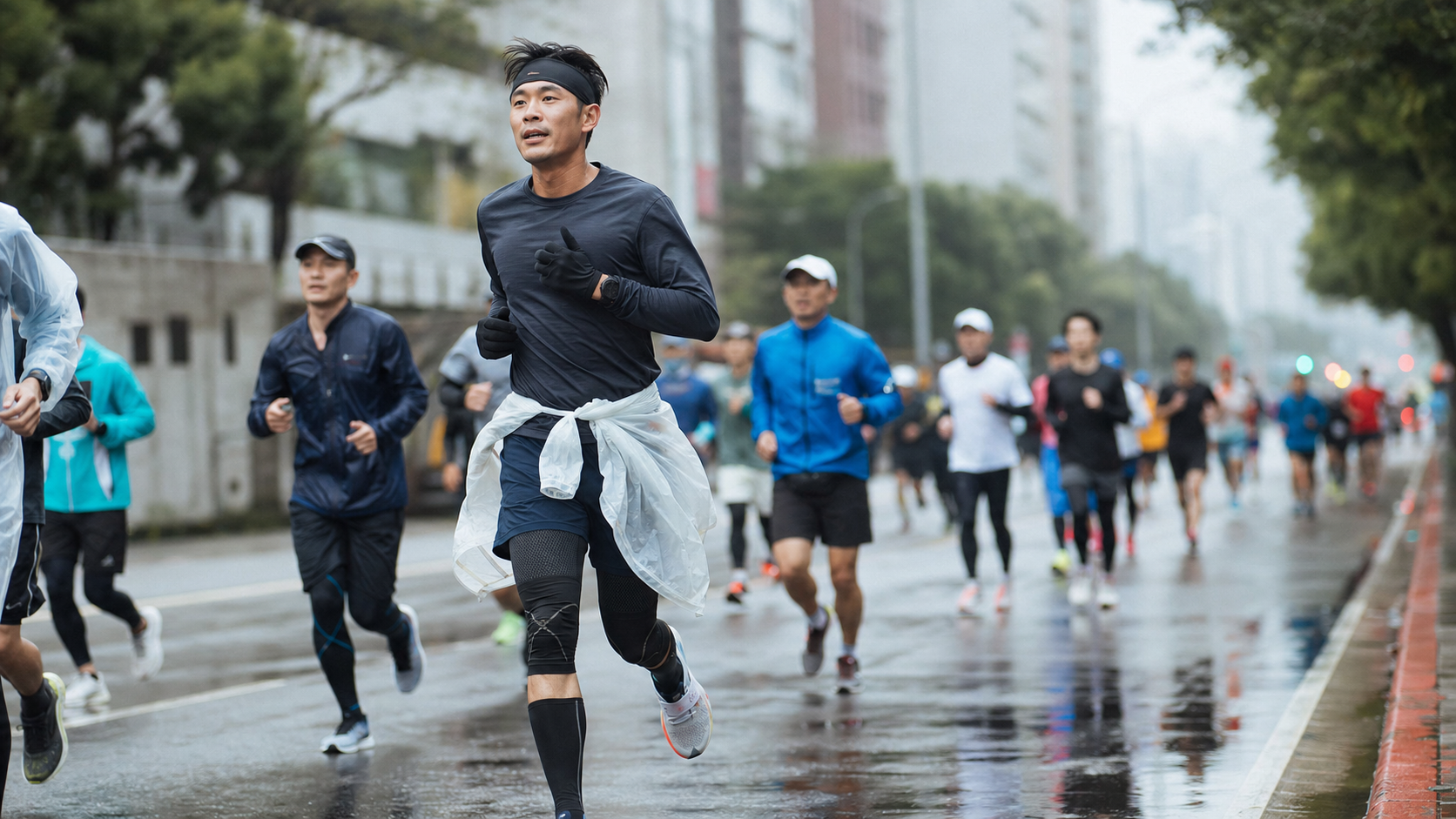
Standard Chartered Taipei Charity Marathon: Winter Marathon Clothing Strategy and Pacing Advice
Introduction
The Standard Chartered Taipei Charity Marathon is held annually in Taipei, with “running for charity” at its core. All entry fees and corporate sponsorship funds are donated to underprivileged groups. Beyond the running itself, this event carries a sense of social responsibility, making every finisher not just a runner, but also part of a charitable act. On Taipei’s winter course, the sweat in the cold carries extra warmth. This article focuses on the logic behind winter marathon clothing choices and pacing advice.
Taipei’s Winter Weather Characteristics
The Standard Chartered Marathon is typically held in January or February, during Taipei’s coldest season. Taipei’s winter characteristics are:
| Weather Condition | Typical Range | Impact on Running |
|---|---|---|
| Temperature | 10–18°C | Comfortable running temperature, slightly cool |
| Humidity | 70–90% | High humidity increases perceived cold |
| Chance of Rain | 30–50% | Rain gear should be prepared |
| Wind Speed | 2–5 m/s | Feels colder than actual temperature |
The biggest clothing challenge in a winter marathon isn’t the cold—it’s the dilemma of “too cold with too little, too hot with too much.” Once your body heats up from running, excess clothing becomes a burden, leading to overheating, excessive sweating, and a drop in body temperature in the later stages.
Clothing Strategy: The Marathon Version of Layering
Core Principle
The clothing logic for a winter marathon is “feel slightly cool at the start, feel just right by 5 km.” If you feel comfortable at the start, you’ll overheat after 10 km.
Recommended Outfits (by Temperature)
Temperature 10–13°C (Cold)
- Base layer: Moisture-wicking long-sleeve technical top
- Outer layer: Thin windbreaker (disposable or tied around the waist)
- Bottom: Compression tights or leggings
- Accessories: Thin cap or headband (to cover ears), lightweight gloves
Temperature 14–18°C (Cool)
- Base layer: Moisture-wicking long-sleeve or short-sleeve technical top
- Outer layer: Optional thin jacket to discard after the start
- Bottom: Compression tights or running shorts with calf sleeves
- Accessories: Lightweight gloves optional
Rainy Conditions
- Waterproof outer layer: Lightweight waterproof jacket (not a rain poncho, to avoid overheating)
- Waterproof shoes: Choose lightweight waterproof running shoes or spare shoes
- Cap: A style with a brim that can shield rain
Key Points for Fabric Selection
- Moisture-wicking: Top priority—wet cotton clothing is the main culprit behind hypothermia in winter
- Windproofing: Effectively reduces perceived cold, but breathability must also be considered
- Lightweight: Reduces carrying weight, especially impactful when energy drops in the later stages
- Avoid cotton: Cotton absorbs sweat, increases weight, and dries slowly—especially unsuitable in winter
Disposable Clothing Strategy
Many runners wear old clothes or cheap thin jackets at the start and shed them 5–10 km into the race, dropping them at clothing collection stations or by the roadside (organizers donate them to charities). This is a highly practical winter marathon strategy:
- Buy cheap thin jackets from secondhand markets or night markets for warmth at the start
- Take them off and discard at the first clothing drop station once you warm up, or hand them to on-site volunteers
- If the temperature drops in the latter half, you can untie a thin jacket strapped around your waist
Pacing Advice
Winter temperatures are conducive to running performance (compared to summer), but the following factors still require attention:
- Muscles are stiffer at the start: Treat the first 5 km as a mandatory warm-up, running 15–20 seconds slower than your target pace
- Cardiopulmonary adaptation takes time: Inhaling cold air may make breathing feel slightly uncomfortable, usually improving after 10 km
- If it rains, the road is slippery: Be especially careful with foot stability at turns and aid station entrances
- Hypothermia risk in the later stages: After 30 km, if sweat has soaked your clothing and wind speed increases, watch out for a drop in body temperature
Mindset Adjustment for a Charity Event
The Standard Chartered Marathon differs from purely competitive races—it encourages runners to participate with an attitude of enjoyment and contribution:
- Along the route, children and seniors from beneficiary organizations cheer you on—a rare source of mental motivation
- Rather than chasing a PB, enjoy Taipei’s winter cityscape at a steady, comfortable pace
- The sense of accomplishment after finishing coexists with the meaning of charity—this is the most unique takeaway of this event
Practical Tips
- Wake up early on race day to check the weather and fine-tune your clothing choices based on actual temperatures
- Ensure your shoes are dry at the start—starting with wet shoes can easily cause blisters in the later stages
- Put your phone in a waterproof pouch so rain won’t affect photo documentation
- Pack a spare small towel in your gear bag for wiping sweat or shielding from wind at aid stations
Conclusion
Every step of the Standard Chartered Taipei Charity Marathon is not just for yourself. Winter clothing strategy keeps you in optimal condition in the cold, while the meaning of charity gives you an extra reason to persevere when fatigued. Dress right, pace right, and you won’t just finish a marathon—you’ll also deliver warmth to a corner of Taiwan.
Related Reading
- Taipei Marathon Route Analysis: Pacing Advice and Weather Factors for Every Key Section
- Fubon Taipei Marathon: In-Depth Analysis of the Urban Marathon Course with the Most PBs Over the Years
- Marathon Weather Strategy: Optimal Temperature and Pacing Adjustments for Hot Races
- Taipei Marathon Complete Guide: Route Analysis and Pacing Strategy
一日北高前的高裝檢 | 北高 360 | 挑戰11小時的裝備 | 一日雙塔 | 補給
6 年前
TBA 北高360 逆風爆熱再送空汙 苦行挑戰賽全記錄 4K沈浸式臨空畫質| 公路車 | CT Yeh
3 年前
水金九不厭五分 10度寒流冷到不願停!feat. 卡卡 / 公路車 / CT Yeh
6 個月前
單車 一日北高 ( 雙城 ) 肥宅雙人瘋狂行 紀錄片 REACTO
10 年前
[防寒衣體驗] 鐵人魂 三鐵 防寒衣試穿會 於松運 深水游泳池 鯨魚池
8 年前
台北大雁西飛 約騎挑戰 feat. Doris | 公路車 | CT Yeh
3 年前
Live) 備戰2019彰化經典百K 賽前攻略 (已完賽請看新影片
7 年前
一日北高/長距離團騎 常見問題補充篇 / 組團或跟團的眉角 / 壯車友容易被瘦車友慢性拉爆 / 原來屁股痛可能是這個原因...? / 風場配速法 / 公路車 / CT Yeh
2 年前