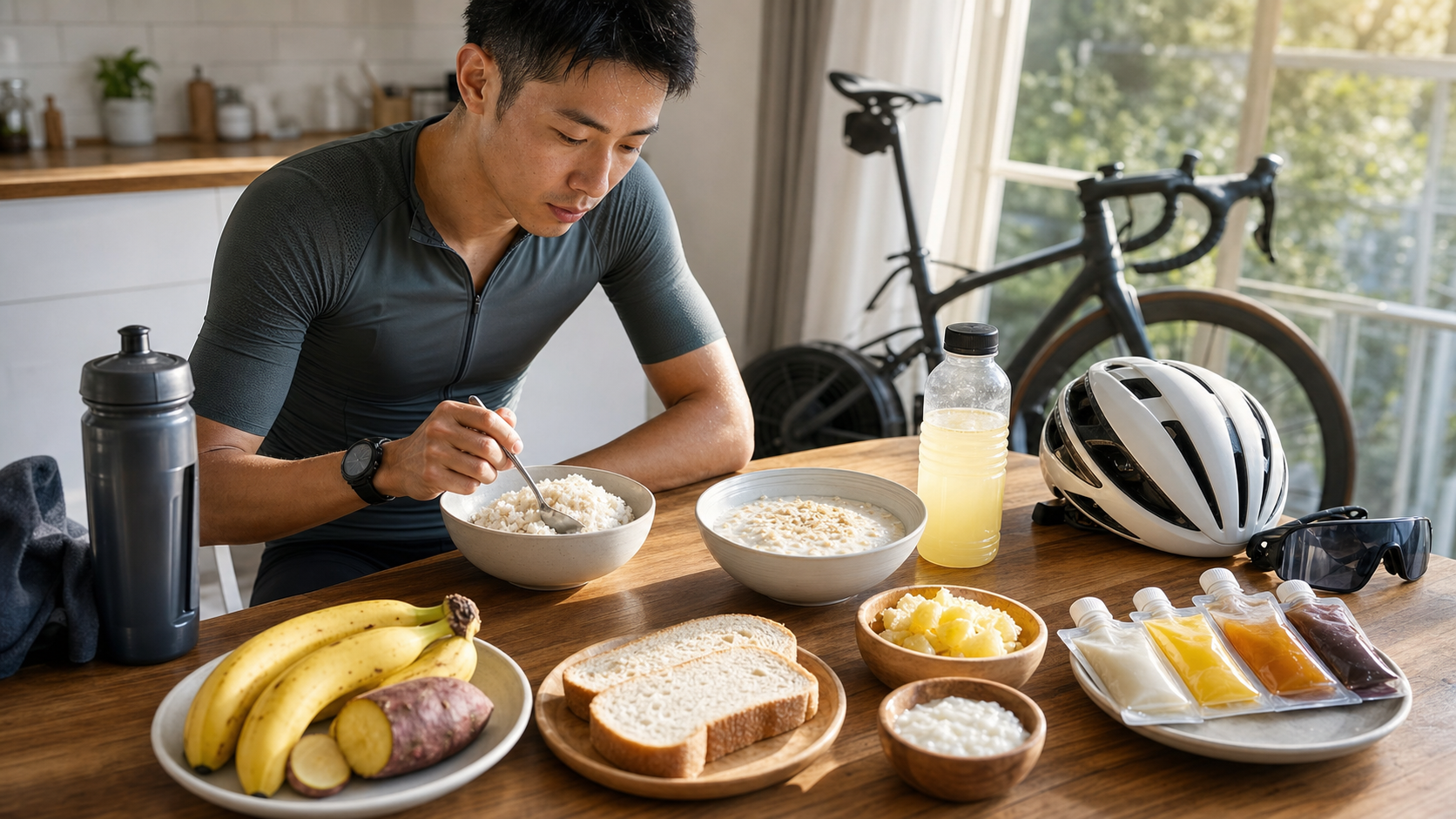
Metabolic Characteristics of the Build Phase
Build Phase training characteristics:
- Increased intensity: More Threshold (Z4) and VO2max (Z5) workouts
- Training volume: Still maintained at 12–18 hours/week
- Energy expenditure: 3,500–4,500 kcal daily
- Metabolic focus: Shifts from fat to carbohydrates (high intensity can only burn sugar)
At this point, carbohydrate intake must increase from the Base Phase’s 5 g/kg to 7–10 g/kg/d.
What Does 8 g/kg/d Mean?
A 70 kg athlete = 560 g carbs/day = 2,240 kcal from carbohydrates
This is equivalent to:
- 3 bowls of white rice (180 g carbs)
- 100 g oatmeal (60 g carbs)
- 3 bananas (75 g carbs)
- 200 g sweet potato (45 g carbs)
- 4 slices of bread (80 g carbs)
- 1 L sports drink (60 g carbs)
- 2 energy gels (50 g carbs)
How Do You Eat This Much?
The key is frequency rather than portion size. Cramming 200 g of carbs into one meal will cause bloating; spreading it across 6–8 meals a day at 70–90 g per meal makes it much easier.
High-Intensity Training Day Example
Workout: 90-minute Threshold ride in the morning + 60-minute Tempo run in the afternoon
Total expenditure: ~2,000 kcal
Total calorie target: 4,200 kcal
06:00 Wake Up
300 ml sports drink (22 g carbs) + 1 banana (25 g carbs)
07:00–08:30 Cycling (Threshold)
Refuel every 20 minutes:
- 3 energy gels (75 g carbs)
- 750 ml sports drink (45 g carbs)
09:00 Breakfast (Post-Workout)
- 80 g oatmeal + 250 ml milk + banana + honey (95 g carbs, 18 g protein)
- 2 eggs (14 g protein)
11:00 Snack
- 2 slices of white toast + peanut butter (40 g carbs, 10 g fat)
- 1 apple (20 g carbs)
12:30 Lunch
- 1.5 bowls of white rice + 150 g chicken breast + vegetables (80 g carbs, 35 g protein)
- Egg drop soup (5 g carbs, 7 g protein)
14:30 Snack (Pre-Workout)
- 1 white rice ball (55 g carbs)
- Black coffee (100 mg caffeine)
15:30–16:30 Running (Tempo)
- 500 ml sports drink (30 g carbs)
- 1 energy gel (25 g carbs)
17:00 Post-Workout Recovery
- 400 ml chocolate milk (50 g carbs, 16 g protein)
- 1 banana (25 g carbs)
19:00 Dinner
- 200 g sweet potato + 150 g salmon + asparagus (50 g carbs, 40 g protein, 15 g fat)
- 1 bowl of white rice (55 g carbs)
21:00 Before Bed
- 200 g Greek yogurt + honey (30 g carbs, 18 g protein)
Daily Totals
| Item | Total |
|---|---|
| Carbs | 600 g (8.5 g/kg) |
| Protein | 148 g (2.1 g/kg) |
| Fat | 80 g |
| Calories | 3,712 kcal + in-workout fueling = ~4,200 kcal |
The Secret to Not Gaining Fat
1. Timing Matters More Than Total
Concentrate carbs in the 4 hours around training (sandwiching the workout), and reduce intake at other times. During this window, the body prioritizes sending carbs to muscle glycogen rather than fat.
2. Choose the Right Carb Types
- Around training: High GI (white rice, sports drinks, bananas, honey)
- Other times: Low-to-moderate GI (oatmeal, brown rice, sweet potato, whole wheat bread)
3. Keep Fat Low
During the Build Phase, fat is recommended to drop to 15–20% of calories. High carbs + low fat = no fat storage.
4. Maintain Protein
25–35 g of protein per meal to prevent muscle loss.
High-Intensity Week vs. Recovery Week
The Build Phase typically follows a 3-week Load + 1-week Recovery cycle.
| Week Type | Carbs g/kg/d | Calories |
|---|---|---|
| Load Week | 8–10 g/kg | 4,000–4,500 kcal |
| Peak Week | 9–10 g/kg | 4,500 kcal |
| Recovery Week | 5–6 g/kg | 2,800–3,000 kcal |
You must actively reduce intake during recovery weeks, or you will gain fat.
Conclusion
High carb intake in the Build Phase is not “eating whatever you want”—it’s precise timing + high-frequency distribution. Treat carbs as training fuel rather than a snack to enjoy, and you’ll maintain body fat while your performance soars.
Related Reading
- Base Phase Nutrition During Training: 5 g/kg Daily Carb Pairing
- In-Workout Fueling Strategies: How to Achieve 60–90g of Carbs Per Hour
- Carbohydrate Periodization: The Fueling Philosophy Across Base, Build, and Race Phases
- [Nutrition Recovery] Endurance Athletes’ Carbohydrate Loading Strategy Guide: A Comprehensive Practical Guide to Meal Planning at 10g per kg Body Weight in the 72 Hours Before Race Day and Recovery Scheduling](/articles/11407)
CT暗黑廚房) 車友必備 宇宙無敵鮮蚵湯 幫助訓練恢復 天然食補 好市多 超肥鮮蚵 破PR
7 年前
一日北高前的高裝檢 | 北高 360 | 挑戰11小時的裝備 | 一日雙塔 | 補給
6 年前
16/02/16 - 夜訪中社路 緩慢進步中
10 年前
#公路車 #西進武嶺 配速配瓦實驗 坡度分析 四小時內攻略 建大盃 NeverStop #西進武嶺攻略
6 年前
西進武嶺 免費訓練分析服務 Intervals | 練不夠還是練過頭?你哪一種類型選手?AI模型告訴你! | 備戰神器 | 公路車 訓練 | CT Yeh
4 年前
靠單車減肥35公斤 心得分享與整理
7 年前
[教學] Dashware 教學 如何製作有 速度 功率 心律的 騎車影片 Guages Video
8 年前
一日北高常見問題大集合 | 攻略 | 路線 | 訓練 | 補給 | 自行車 單車 | 一日雙城 | 雙塔 | TWB北高360 | 屁股痛
6 年前