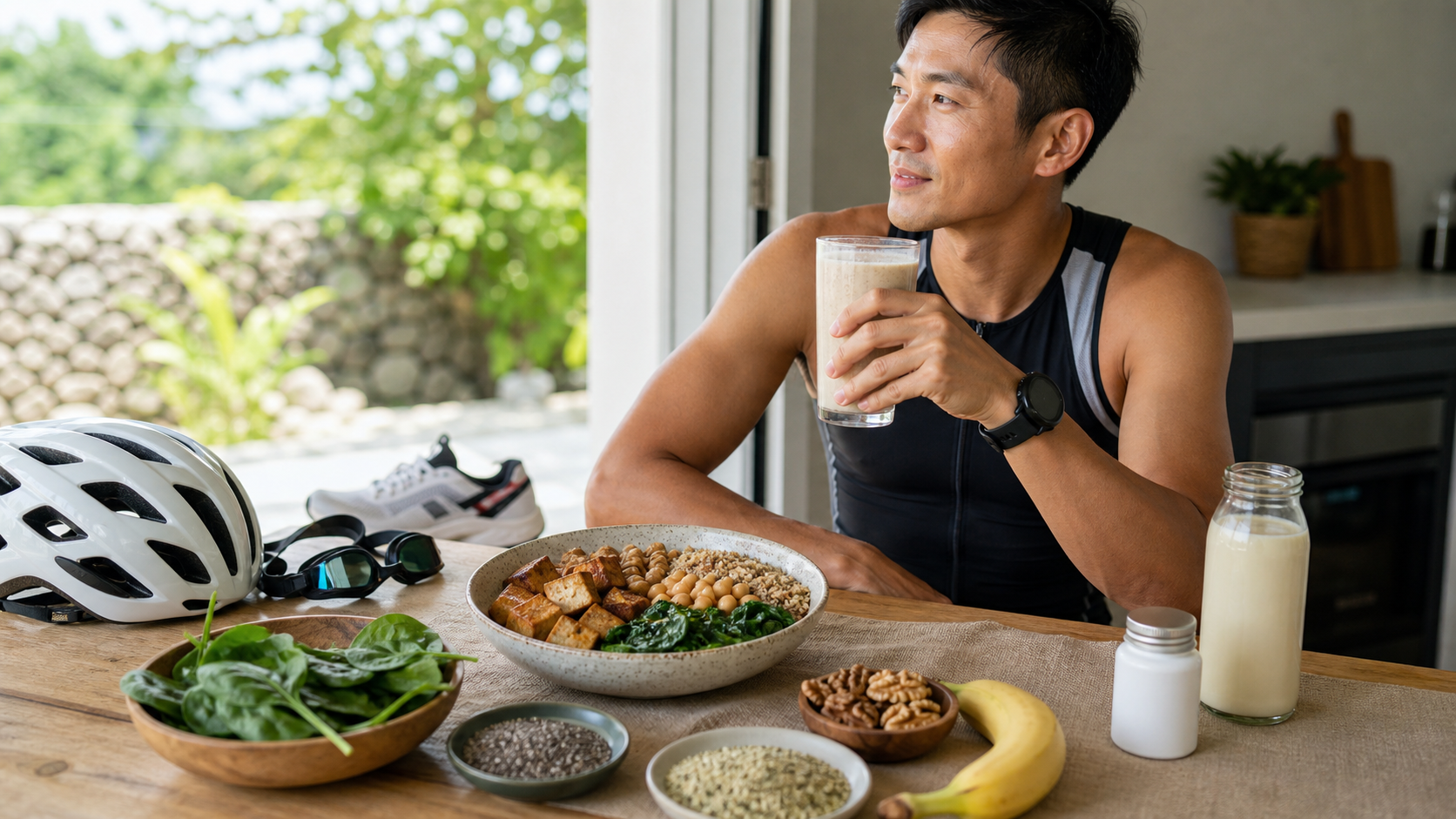
The Nutritional Challenges of a Plant-Based Triathlete
Plant-based triathletes face four major nutritional gaps:
- Complete protein: Plant proteins have incomplete amino acid profiles
- Vitamin B12: Plant foods contain virtually no B12
- Iron and zinc: Plant iron has low absorption rates
- Omega-3 EPA/DHA: Plants only contain ALA, which has a low conversion rate
Protein: The Complementarity Strategy
The Essential Amino Acid Gap
Almost every single plant protein is deficient in one essential amino acid:
| Food | Deficient Amino Acid |
|---|---|
| Rice, wheat, corn | Lysine |
| Legumes | Methionine |
| Nuts | Lysine |
Complementary Combinations
- Rice + legumes = complete protein (sushi, miso soup with rice)
- Whole wheat bread + peanut butter = complete protein
- Pasta + tofu
- Oats + almond milk + chia seeds
High Complete-Protein Plant Foods (Rare Exceptions)
| Food | Protein (g/100g) | Notes |
|---|---|---|
| Soy products (tofu, soy milk) | 8–18 g | Complete |
| Quinoa | 14 g (dry) | Complete |
| Hemp seeds | 31 g | Complete |
| Chia seeds | 17 g | Nearly complete |
| Spirulina | 57 g | Complete (but small serving size) |
| Tempeh | 19 g | Complete + fermented |
Daily Protein Example for a Plant-Based Triathlete (70 kg, target 140 g)
| Meal | Contents | Protein |
|---|---|---|
| Breakfast | Oats 60 g + soy milk 300 ml + hemp seeds 15 g | 25 g |
| Snack | Greek yogurt (lacto-ovo) 200 g | 18 g |
| Lunch | Quinoa 150 g (cooked) + chickpeas 100 g + vegetables | 28 g |
| Post-workout | 1 scoop pea + rice protein powder + banana | 25 g |
| Dinner | Tempeh 150 g + rice + radish soup + spinach | 30 g |
| Before bed | Almond milk 250 ml + chia seed pudding | 14 g |
| Total | 140 g |
Vitamin B12: Supplementation Is Mandatory
B12 exists only in animal foods (and trace amounts in fermented foods). All vegans must supplement.
Deficiency Symptoms
- Fatigue, anemia
- Neuropathy (numbness in hands and feet)
- Cognitive decline
- Severely impaired training performance
Supplement Options
| Form | Dosage | Frequency |
|---|---|---|
| Cyanocobalamin | 250–500 µg | Daily |
| Methylcobalamin | 1,000 µg | Daily |
| High-dose tablet | 2,500 µg | Twice weekly |
For Lacto-Ovo Vegetarians
Eggs (0.6 µg per egg), milk (1 µg per 250 ml), and cheese can provide the daily requirement of 2.4 µg relatively easily. However, those with high training volumes are still advised to supplement as a safety net.
Iron: Absorption Rate Is Key
Plant iron (non-heme) has an absorption rate of 2–20%, far lower than animal iron at 15–35%.
High-Iron Plant Foods (mg/100g)
| Food | Iron |
|---|---|
| Black sesame seeds | 24 |
| Pumpkin seeds | 9 |
| Red quinoa | 8 |
| Red amaranth | 12 |
| Red beans | 7 |
| Black beans | 7 |
| Oats | 5 |
| Spinach | 2.7 |
| Raisins | 2 |
4 Ways to Boost Absorption
- Pair with vitamin C: spinach + lemon juice, tofu + bell peppers
- Fermented foods: miso, natto, sourdough bread
- Soaking: soak nuts and legumes for 8 hours to reduce phytates
- Avoid inhibitors: don’t pair with tea, coffee, or excessive calcium
Supplements
Plant-based triathletes are advised to get blood tests for Ferritin annually:
- < 30 ng/ml: supplement 65 mg elemental iron daily
- 30–50 ng/ml: supplement 27 mg every other day
-
50 ng/ml: diet is sufficient
Zinc: Often Overlooked
Zinc is involved in protein synthesis, immunity, and wound repair. Daily requirement is 8–11 mg.
Plant Zinc Sources (mg/100g)
- Pumpkin seeds: 10
- Hemp seeds: 10
- Cashews: 6
- Chickpeas: 3
- Oats: 4
Plant-based athletes are advised to supplement 10–15 mg/d (take separately from iron, as they compete for absorption).
Omega-3: The EPA/DHA Conversion Dilemma
Plants contain ALA (alpha-linolenic acid), which must be converted into EPA/DHA to be useful. The conversion rate is only 5–10%.
High-ALA Plants (g/serving)
- Ground flaxseed, 1 tbsp: 2.5 g ALA
- Chia seeds, 1 tbsp: 1.8 g ALA
- Walnuts, 28 g: 2.5 g ALA
- Hemp seeds, 1 tbsp: 0.9 g ALA
Getting EPA/DHA Directly: Algae Oil Supplements
The only direct plant-based source of EPA+DHA is microalgae oil (fish oil originally comes from algae too):
- Daily dosage: 1,000–2,000 mg EPA+DHA
- High training volume or post-race recovery: can increase to 3,000 mg
Calcium and Vitamin D
Plant-based triathletes need 1,000–1,200 mg/d of calcium:
- Calcium-fortified soy milk, 250 ml: 300 mg
- Tofu, 100 g (made with calcium sulfate): 350 mg
- Black sesame seeds, 1 tbsp: 90 mg
- Dark leafy greens: 50–200 mg
Vitamin D: 1,000–2,000 IU daily (sun exposure + supplements).
Plant-Based Options for Race-Day Fueling
Most sports nutrition products are inherently plant-based (glucose, maltodextrin, fructose), but avoid:
- Energy chews containing gelatin: switch to pectin-based chews
- Recovery drinks containing whey protein: switch to pea/rice protein powder
- Products containing honey (for strict vegans): switch to maple syrup or agave syrup
Example: Plant-Based Race Week Meal Plan for Triathlon
| Day | Breakfast | Lunch | Dinner |
|---|---|---|---|
| Mon | Oats + soy milk + berries | Quinoa bowl + chickpeas + kale | Tempeh fried rice + miso soup |
| Tue | Soy milk toast + peanut butter | Tofu noodles + spinach | Red lentil curry + brown rice |
| Wed | Chia seed pudding + banana | Tofu sandwich | Tempeh burger patty + sweet potato |
| Thu | Oatmeal + hemp seeds | Quinoa salad + hummus | Tofu miso soup + soba noodles |
| Fri | Soy milk oats + walnuts | Black bean tacos + avocado | Tempeh sushi + seaweed soup |
Conclusion
Plant-based triathlon is not only feasible—many elite athletes (such as Rich Roll and Scott Jurek) are plant-based. The key is protein complementarity + mandatory B12 supplementation + proactive management of iron and Omega-3. Get the nutrition right, and plant power can still finish an IM 226.
Related Reading
- Dietary Strategies for Vegan Runners: A Complete Guide to Plant-Based Protein Supplementation
- Vegan Nutrition Strategies for Running: Plant-Based Protein Sources and Iron Supplementation Guide
- A Guide for Vegan Triathletes: Complete Planning for a Plant-Based Diet
- Dietary Strategies for Vegan Cyclists: Complete Nutritional Supplementation for a Plant-Based Diet
CT暗黑廚房) 車友必備 宇宙無敵鮮蚵湯 幫助訓練恢復 天然食補 好市多 超肥鮮蚵 破PR
7 年前
一日北高前的高裝檢 | 北高 360 | 挑戰11小時的裝備 | 一日雙塔 | 補給
6 年前
福隆鐵人團練隨拍
8 年前
Never Stop 西進武嶺 前後雙機 完整全程錄影 訓練台 實境
8 年前
水金九不厭五分 10度寒流冷到不願停!feat. 卡卡 / 公路車 / CT Yeh
6 個月前
一日北高常見問題大集合 | 攻略 | 路線 | 訓練 | 補給 | 自行車 單車 | 一日雙城 | 雙塔 | TWB北高360 | 屁股痛
6 年前
換車囉! TIME ADH 2023 全內線碟煞公路車 開箱實錄!/ Dyneema 碳纖維真的太猛了 / 曜越單車 / CT Yeh
3 年前
靠單車減肥35公斤 心得分享與整理
7 年前