Open-Water Swimming Saltwater Handling: Stomach Reactions to Swallowing Saltwater and Prevention
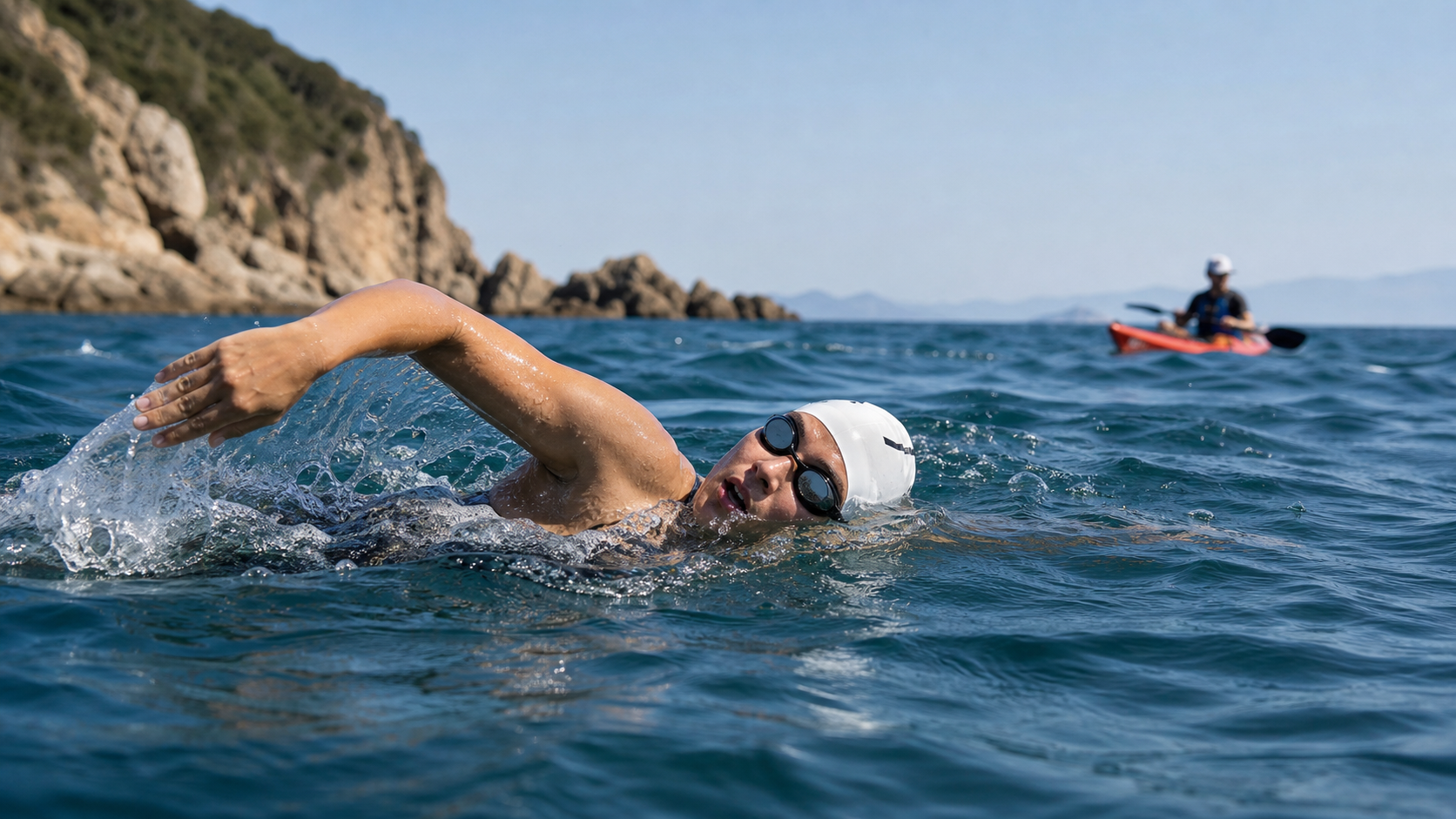
Why Seawater Causes Stomach Reactions
Composition of seawater:
- Sodium ion concentration of approximately 3.5% (4 times higher than blood)
- pH of approximately 8.1 (alkaline, stimulating stomach acid response)
- Contains impurities such as microorganisms, algae, and oil
When the body absorbs large amounts of seawater:
- Osmotic imbalance: Water is pulled into the intestines, causing dehydration
- Excessive stomach acid secretion: Attempts to neutralize alkaline substances
- Vomiting reflex: The body’s protective mechanism
- Electrolyte imbalance: May trigger cramps
After swallowing 100ml of seawater (about half a fist), 70% of athletes will experience stomach discomfort.
Timeline of Body Reactions After Swallowing Seawater
| Time | Reaction | Response |
|---|---|---|
| 0-30 seconds | Choking, gagging | Flip onto back and adjust breathing |
| 30 seconds-2 minutes | Stomach tightening, acid bloating | Slow deep breaths |
| 2-5 minutes | Nausea, urge to vomit | Keep swimming but slow down |
| 5-15 minutes | Actual vomiting | Flip onto back or seek help |
| 15-30 minutes | Severe dehydration | Withdraw from race, replenish fluids |
| 30 minutes+ | Electrolyte imbalance | Medical attention |
Breathing Techniques to Prevent Swallowing Water
1. The Value of Bilateral Breathing
Athletes who breathe only to one side will 100% swallow water when hit by side swells. Bilateral breathing allows you to choose the breathing side based on the direction of the swell:
- Swell from the right → breathe to the left
- Swell from the left → breathe to the right
- Swell from behind pushing your back → breathe to either side
2. Higher Breathing Position
In open-water swimming, the head should rise 5-10 cm higher during breathing than in the pool:
- Increase head rotation angle by 10 degrees
- Delay the timing of opening the mouth by 0.1 seconds
- Look slightly diagonally upward (look at the sky, not the water)
3. Lip and Teeth Filtration
When breathing, keep teeth slightly closed and tongue pressed against the roof of the mouth, forming a barrier:
- Prevents saltwater from pouring directly down the throat
- If water does get in, it’s only held in the mouth and can be spat out
- 1-2 weeks of practice can make it instinctive
Pre-Race Stomach Preparation
24 Hours Before the Race Diet
- Avoid overly oily or spicy foods (excess stomach acid)
- Avoid caffeine (dehydration)
- Drink plenty of water (500ml 2 hours before the race)
- Moderate salt intake (not too salty)
1 Hour Before the Race Actions
- Eat half a banana or a slice of bread (to buffer stomach acid)
- Drink 250ml of water (avoid sports drinks, as they worsen osmosis)
- Use the restroom to empty your bladder
10 Minutes Before the Race Warm-Up
- Take a mouthful of seawater and rinse (to prepare the stomach for the salinity)
- Spit it out, do not swallow
- Repeat 2-3 times to reduce vomiting reflex sensitivity
Mid-Race Rinsing Strategy
If you swallow seawater midway through the swim:
Phase 1 (Just swallowed, 0-30 seconds)
- Flip onto your back for 5-10 seconds
- Take a mouthful of seawater and spit it out immediately
- Repeat 2-3 times to wash away residual salt in the mouth
Phase 2 (Stomach discomfort, 30 seconds-2 minutes)
- Slow down to 80% pace
- Take deep breaths, exhale slowly
- Do not force yourself to vomit
- Usually subsides within 1-2 minutes
Phase 3 (Actually feeling like vomiting)
- Flip onto your back
- Allow yourself to vomit (you’ll actually feel better afterward)
- Rinse your mouth with seawater to clean up
- Assess whether to continue the race
Gear Choices to Prevent Choking on Water
Goggles
- Full-cover or anti-fog types for clear vision, reducing mistimed breathing
- Nose-clip types prevent water from entering through the nostrils
Nose Clip
- Not always worn in triathlons, but recommended for long-distance swimming
- Completely prevents water from entering the nostrils
- Disadvantage: breathing is restricted to mouth breathing only
Wetsuit
- Snug-fitting collar that doesn’t leak (prevents water from pouring in through the neck)
- Tight zipper
Post-Race Recovery
Post-race handling after swallowing seawater:
- Rehydrate immediately: Drink 500ml of plain water within 10 minutes after the race
- Electrolytes: Consume 500ml of sports drink within 30 minutes
- Food choices: Eat light foods (white rice, bananas), avoid greasy foods
- Monitor symptoms: Seek medical attention if vomiting or diarrhea persists after 4 hours
Salinity Differences Across Different Seas
| Sea | Salinity | Effect on Stomach |
|---|---|---|
| Dead Sea | 33% | Extremely dangerous (do not race) |
| Mediterranean Sea | 3.8% | High (prone to stomach pain) |
| Pacific Ocean | 3.5% | Moderate (standard salinity) |
| Atlantic Ocean | 3.5% | Moderate |
| Baltic Sea | 0.7% | Low (close to freshwater) |
| Taiwan waters | 3.4% | Moderate |
Training Methods
- Ocean adaptation swims: Swim in the ocean at least 2 times per month
- Saltwater rinsing practice: Simulate by rinsing with lightly salted water in the pool
- Exhalation training: Exhale forcefully in the water to prevent water from flowing into the throat
- Choking recovery: Deliberately choke on a small amount of water to practice regaining your rhythm
Conclusion
Swallowing seawater is a normal part of open-water swimming, not an accident. Skilled athletes can keep their seawater intake below 30ml per race, while less skilled ones may swallow 200-500ml. Through breathing techniques, pre-race preparation, and rinsing strategies, you can significantly reduce stomach reactions and maintain peak performance throughout the race.
Related Reading
- Cold Water Adaptation in Open Water: Training for the “Cold Shock Response”
- Body Care After Open-Water Swimming: Saltwater Cleansing and Muscle Recovery
- Hydration for Swimmers: Rehydration Plans for Insensible Fluid Loss During Training
- Exercise-Associated Hyponatremia: The Fatal Mistake of Drinking Water to the Point of Intoxication
CT暗黑廚房) 車友必備 宇宙無敵鮮蚵湯 幫助訓練恢復 天然食補 好市多 超肥鮮蚵 破PR
7 年前
#公路車 #Vo2Max #最大攝氧量 測驗 體驗 | 心肺測試
6 年前
一起升級!海鷗盃LSD團練...JJSC Zone2招待 騎到手抖 / 公路車 / CT Yeh
2 天前
水金九不厭五分 10度寒流冷到不願停!feat. 卡卡 / 公路車 / CT Yeh
6 個月前
[教學] Premiere 影片 手震 修正 教學 防抖 單眼 影像 GoPro 穩定 Video Stabilization
8 年前
大武山20%魔王陡坡【JJSC南台灣遊騎Day2】!屁股真的要裂開了...凡士林抹滿也沒用?神秘金教堂還有超便宜夜市
3 個月前
單車 梅山36灣 坡度介紹 路段介紹 空拍 (相關遊記影片,請參考說明或我的頻道喔,歡迎訂閱)
6 年前
2021 96聯賽 桃園市長盃 4K多視角實況 當天選手瓦數/推力比/均速/時間 即時數據分析 | 公路車 | CT Yeh
5 年前