The Physiological Mechanisms of Pre-Race Anxiety: A Complete Analysis of Adrenaline, Heart Rate, and Muscle Tension
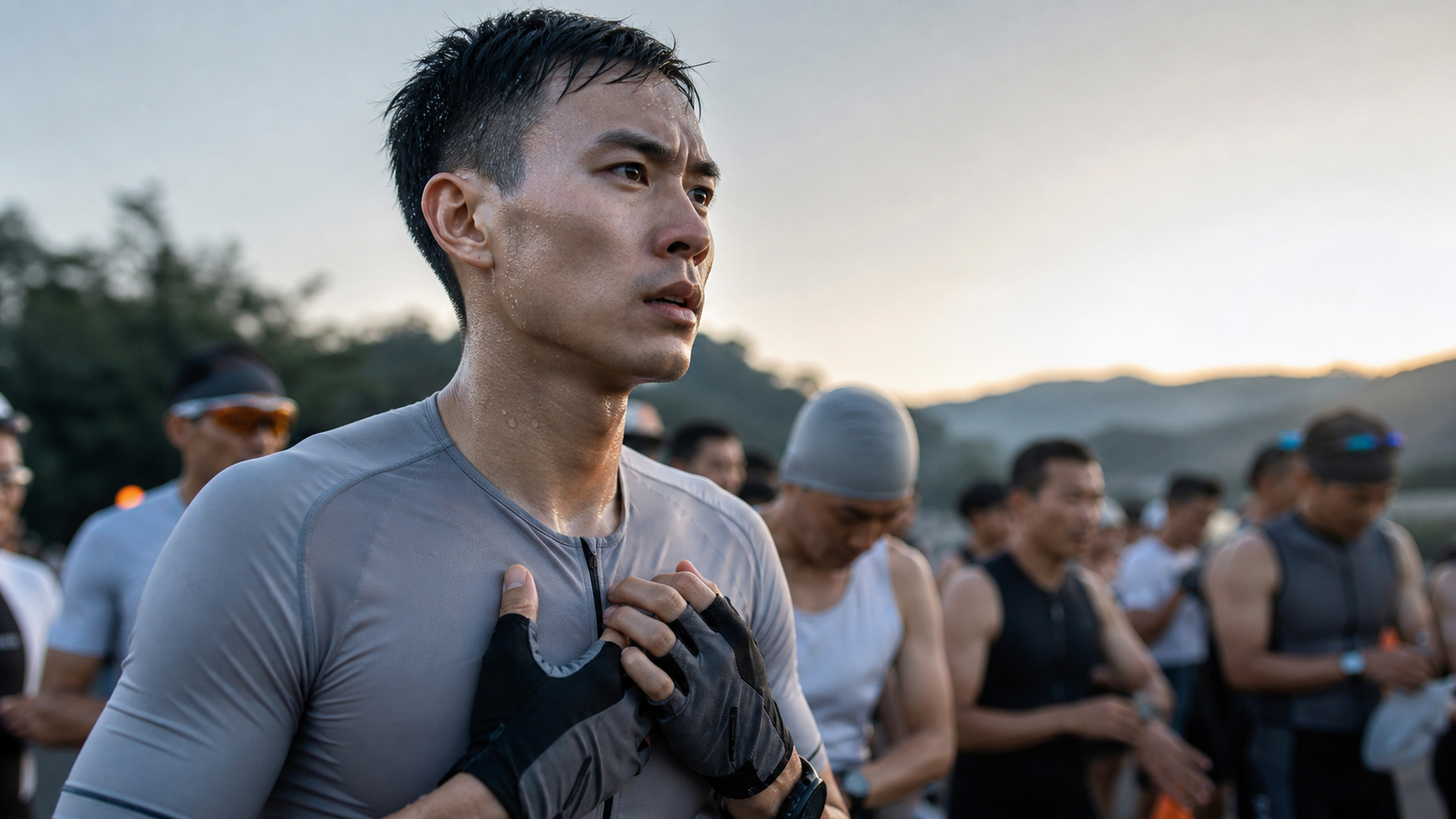
Pre-Race Anxiety Isn’t Mental Weakness—It’s Your Body Preparing for Battle
Thirty minutes before stepping onto the starting line, your heart rate spikes from a resting 60 to 110 bpm, your palms sweat, your stomach feels like it’s in a knot, and you might even feel the urge to run to the bathroom—these symptoms lead many athletes to believe they “lack mental toughness.” In fact, this is the standard response of the sympathetic nervous system, your body preparing for high-intensity output.
1. The HPA Axis and the Catecholamine Storm
The source of pre-race anxiety lies in the brain’s amygdala. When it perceives a threat (a race = potential failure), it activates two pathways:
| Pathway | Reaction Time | Substances Released | Primary Effects |
|---|---|---|---|
| Sympathetic Nervous System | Within seconds | Adrenaline, Noradrenaline | Heart rate ↑, Blood pressure ↑, Pupil dilation |
| HPA Axis | Within minutes | Cortisol | Blood sugar ↑, Suppresses non-essential functions (digestion, immunity) |
This is why, before a race, you experience:
- Rapid heartbeat: Adrenaline acts directly on the heart’s β1 receptors
- Shallow breathing: Bronchial dilation but disrupted respiratory rhythm
- Needing the bathroom: Blood is diverted away from the digestive system, causing abnormal intestinal motility
- Muscle tightness: The sympathetic nervous system increases muscle tone, priming you for explosive effort
2. The Inverted U Theory (Yerkes-Dodson Law)
Anxiety isn’t necessarily better when it’s lower. Research shows that athletic performance and anxiety levels follow an inverted U-shaped curve:
- Too little anxiety: Scattered attention, sluggish movements, insufficient explosive power
- Optimal zone: High focus, quick reactions, muscles primed and ready
- Excessive anxiety: Shaky hands, delayed decision-making, degraded technical form, premature fatigue
The optimal anxiety level varies by discipline:
- Shooting, Golf: Low anxiety (fine motor skills)
- Road cycling, Marathon: Moderate anxiety
- Sprinting, Weightlifting: High anxiety (explosive power demands)
3. Identify Your Anxiety Type
Cognitive Anxiety
- Repeatedly thinking “What if I DNF” or “What if I finish last”
- Overly dwelling on past failures
- Excessive rumination about opponents
Somatic Anxiety
- Heart palpitations, trembling, sweating, frequent urination
- Muscle tightness, stiff shoulders
- Stomach discomfort, nausea
The two types require different approaches: cognitive anxiety needs cognitive restructuring, while somatic anxiety needs physiological regulation.
4. Self-Assessment Checklist
30 minutes before the race, rate yourself (1-10):
| Item | Score |
|---|---|
| Degree of heart rate elevation | __/10 |
| Muscle tension | __/10 |
| Degree of racing thoughts | __/10 |
| Worry about the outcome | __/10 |
| Physical alertness | __/10 |
Total 20-30: Ideal arousal zone, ready to compete
Total 30-40: Elevated, need to execute anxiety-reduction rituals
Total 40+: Over-activated, need breathing techniques + cognitive restructuring
5. Reframing Your Anxiety
A 2016 Harvard study found that changing “I’m anxious” to “I’m excited” improved performance by an average of 17%. The reason: the physiological responses of both states are nearly identical (high arousal), but “excitement” is a positive emotion while “anxiety” is negative, and the brain adjusts its subsequent responses based on the label.
Three Practical Steps
- Acknowledge: When you feel your heart racing or hands trembling, pause and label it
- Rename: “My body is preparing me for this race”
- Give it meaning: “This means I care about this race, and I will perform well”
6. The Physiological Rhythm of the Final 60 Minutes
It’s recommended to establish a fixed routine so your body knows what to expect:
- T-60 minutes: Final carbohydrate intake, use the restroom
- T-30 minutes: Begin dynamic warm-up, low-intensity activity
- T-15 minutes: 5 minutes of breathing exercises (see anxiety management guide)
- T-5 minutes: Visualize the first kilometer, self-talk
- T-0: Trust your training, settle into your rhythm
Understanding the physiological nature of pre-race anxiety, you’ll realize: those reactions that scare you are precisely the signals that your body is ready to give it everything.
Related Reading
- The Complete Guide to Race Anxiety: Practical Methods for Physiological Responses, Pre-Race Rituals, Breathing, and Attention Regulation
- The Science of Pre-Race Anxiety: How to Manage Marathon Nerves
- The Neuroscience of Pre-Race Anxiety: Why the 10 Minutes Before the Start Are the Hardest
- Managing Pre-Race Anxiety: How to Turn Starting Line Nerves into Motivation
[教學] Premiere 影片 手震 修正 教學 防抖 單眼 影像 GoPro 穩定 Video Stabilization
8 年前
西進武嶺 免費訓練分析服務 Intervals | 練不夠還是練過頭?你哪一種類型選手?AI模型告訴你! | 備戰神器 | 公路車 訓練 | CT Yeh
4 年前
西進武嶺 自製新版AI配速表產生器 x 賽前攻略 抱佛腳! 沒有功率計也可以產生配速表嗎?有什麼其他眉角賽前要注意的呢? | 西進武嶺 / 東進武嶺 KOM 攻略 | 公路車 | CT Yeh
4 年前
戰略) Zwift Race 如何咬在第一集團 如何評估自己要開多少推力 (請開1.5倍速看)
7 年前
一日北高/長距離團騎 常見問題補充篇 / 組團或跟團的眉角 / 壯車友容易被瘦車友慢性拉爆 / 原來屁股痛可能是這個原因...? / 風場配速法 / 公路車 / CT Yeh
2 年前
Live) 備戰2019彰化經典百K 賽前攻略 (已完賽請看新影片
7 年前
FTL 與 SYB 車隊專訪 西進武嶺 實用攻略分享! 2小時 如何練?!你不知道的眉角!新手準備武嶺必看 EP1 | 實力派女車友 | 精華版 | 公路車 | CTYeh
4 年前
GoPro Max 屌打 GoPro 7 8 9 的暴力穩定度 低角度空拍機!
6 年前