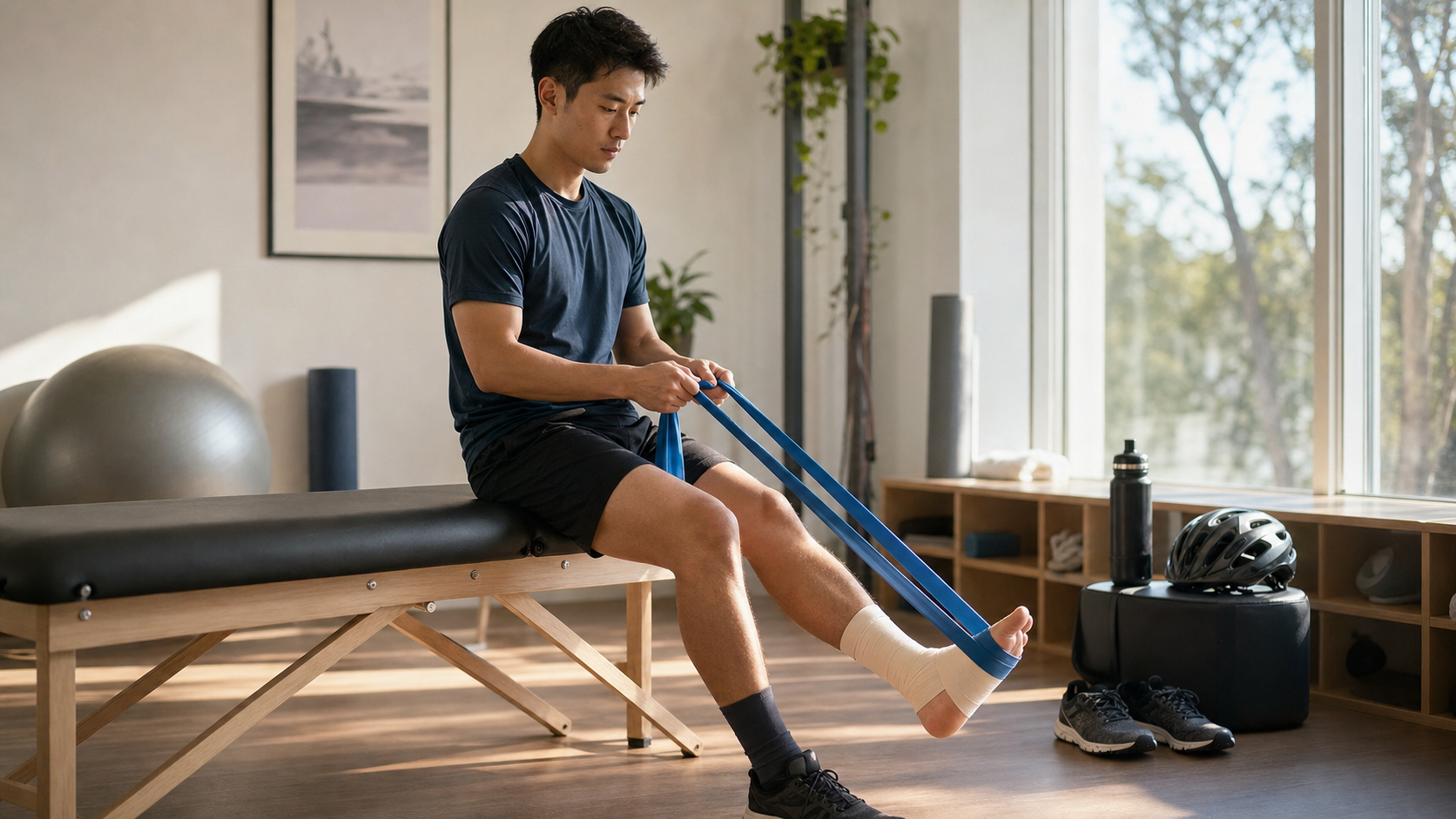
1. The Double Blow of Injury for Athletes
Injury brings:
Physical Aspects
- Pain, restricted movement
- Declining fitness
- Sleep disruption (inability to expend energy)
- Changes in appetite and weight
Psychological Aspects (Often Overlooked)
- Loss of identity (“Am I still a runner?”)
- Social disconnect (unable to join running groups)
- Anxiety (“What if I never get back?”)
- Depression (the pain of watching others train)
- Self-doubt (“I was too stubborn”)
2017 Cassidy study: After severe sports injuries, 30-50% of athletes experience clinical depression or anxiety symptoms.
2. Psychological Stages After Injury
Similar to the Kübler-Ross five-stage model:
| Stage | Psychological State | Duration |
|---|---|---|
| 1. Denial | “It’s not that bad, I can train tomorrow” | 1-3 days |
| 2. Anger | “Why me?” “It’s all the equipment’s fault” | 3-7 days |
| 3. Bargaining | “Doctor, how long until I can run?” | 1-2 weeks |
| 4. Depression | “I might never get back” | 2-6 weeks |
| 5. Acceptance | “I’ll grow something else during this time” | After 6 weeks |
Knowing which stage you’re in can prevent the secondary harm of thinking “Why am I so weak?”
3. Eight Strategies for Psychological Preparation During Injury
Strategy 1: Accept the Diagnosis—Don’t Seek a “Not Injured” Version
Common mistake: After injury, visiting 5 doctors to find the “most optimistic” one. Result: Delayed treatment, secondary injury.
Correct approach: Find a trusted sports medicine physician + physical therapist, and follow the complete treatment plan.
Strategy 2: Set “Rehabilitation Goals” Instead of “Training Goals”
The brain needs goals. Shift your goals from “running” to “rehabilitation”:
- Week 1: Reduce inflammation, walk pain-free
- Weeks 2-3: Restore basic range of motion
- Weeks 4-6: Rebuild strength
- Weeks 7-10: Low-intensity return
- Weeks 11-12: Return to training
Every mini goal achieved releases dopamine—you’re still “winning.”
Strategy 3: Preserve Your Athletic Identity
Identity is the biggest challenge during injury. Ways to maintain it:
- Keep wearing athletic clothing
- Keep attending running group meetups (even if you’re not running)
- Keep reading training books, listening to podcasts
- Keep writing in your training log (even if the content is rehabilitation)
You’re not a “former athlete”—you’re an “athlete in rehabilitation.”
Strategy 4: Switch Training Modalities
Depending on the injury location, find alternatives:
| Injured Area | Training Options |
|---|---|
| Knee | Swimming, upper-body strength training, deep-water running |
| Ankle | Indoor cycling, core training |
| Thigh | Upper-body cardio, yoga (avoiding the injured area) |
| Upper limbs | Running, cycling, lower-body strength training |
| Whole body | Meditation, visualization, motor learning |
Aerobic capacity isn’t maintained only through running—swimming and cycling can train your cardio just as well.
Strategy 5: Use Rehabilitation to Upgrade Weaknesses
Injuries often stem from weaknesses. Use the rehab period to:
- Core muscles: Overlooked by most runners
- Flexibility: Training addicts are almost always stiff
- Balance: Poor proprioception leads to repeated injuries
- Nutrition knowledge: Learn to eat right
- Sleep: Build deep-sleep habits
When you return after 8 weeks of rehab, you’ll find you’re actually stronger.
Strategy 6: Mental Visualization Training (No Regression)
2004 Cleveland Clinic study: 4 weeks of pure imagery training increased strength by 35% (see visualization article).
10 minutes of visualization daily:
- Imagine your running form and rhythm
- Imagine core engagement and foot strike
- Imagine breathing and pacing
The brain doesn’t “forget” training—you preserve your neuromuscular map.
Strategy 7: Limit Social Media
Checking Strava during injury is chronic self-harm. Recommendations:
- Turn off notifications from runner accounts
- Don’t watch running videos
- Don’t join running livestreams
Return in a limited way after 2-4 weeks.
Strategy 8: Build a Support System
Talk to these three types of people:
- Those who’ve been through it: Runners who were injured and returned
- Professionals: Physical therapists, sports psychologists
- Non-athletic friends: Step outside the sports circle; they remind you “life isn’t just running”
4. Psychological Challenges When Returning
Your body may be ready to return, but your mind might not be:
Challenge 1: Fear of the Injured Area (Kinesiophobia)
Every step brings worry: “Will it hurt again?”
How to handle it:
- Start at very low intensity (walk-run intervals)
- Use familiar, safe routes
- Have a partner accompany you for the first 3 sessions
- Don’t wear a GPS watch (avoid comparison)
Challenge 2: Feeling Betrayed by Your Body
“My body is no longer reliable.”
How to handle it:
- Cognitive restructuring: “My body is telling me where my limits are”
- Progressive testing: Push slightly further each week
- Celebrate small wins (completing 1K pain-free)
Challenge 3: Anxiety About Pace
“I’m slower than before the injury.”
How to handle it:
- Accept it: 3 months without training means a 20-30% decline
- Set a “return timeline” rather than a “catch-up timeline”
- It takes 6-12 months to return to your previous level
5. Long-Term Change: The Gift of Injury
Many athletes look back on major injuries and say: “That was the most important event of my athletic career.” Reasons:
- Learning to listen to your body
- Learning the value of rest
- Rethinking why you exercise
- Strengthening your identity beyond sport
- Cultivating deeper patience and humility
Athletes who have never been injured often get injured on a bigger stage. Injury is your body’s warning—and a gift for growth.
6. Case Studies
Jeremy Lin (NBA)
In 2017, he tore his patellar tendon and missed the entire season. He publicly shared his low point: “I thought my life was over.” During rehab, he began writing, preaching, and learning about venture capital. Though he was no longer a star upon returning, he said: “That year was the deepest growth of my life.”
Chi Cheng (Asian Gazelle)
She suffered multiple serious injuries in the 1970s. She said: “Injury transformed me from a ‘runner’ into a ‘sports promoter.’” After her injuries, she founded the Hope Foundation, influencing Taiwan’s walking movement for decades.
7. A Reminder to Yourself
The most common question during injury is “Why me?”—that’s the wrong question.
Try asking: “What is this injury trying to teach me?”
The answer might be:
- You were too greedy, too impatient
- You neglected a weakness
- You need to rebalance your life
- You need more humility
When you learn the lesson, the injury heals. When you resist it, the injury recurs.
Sport is a lifelong pursuit. You don’t need to rush back—you need to come back deeper.
Related Reading
- Returning to Sport After Injury for Amateur Athletes: The Psychological and Physical Path from Injury Back to the Starting Line
- Psychological Rehabilitation After Injury: The Fear of Returning to Sport Is Harder to Heal Than Tissue
- Psychological Recovery After Running Injuries: Building Confidence Against Relapse and Returning to Running
- Psychological Recovery After Race Failure: Rebuilding Confidence from Setbacks
西進武嶺 免費訓練分析服務 Intervals | 練不夠還是練過頭?你哪一種類型選手?AI模型告訴你! | 備戰神器 | 公路車 訓練 | CT Yeh
4 年前
滑雪新手們慘摔學習全紀錄(請開字幕),滑雪好好玩 | Snowboard + Ski | 岩原 スキー場 | 滑雪APP使用 | GoPro Max
6 年前
摔車後補裝備: 好市多新款單車安全帽& Specialized Romin 北高整路屁股都不痛的坐墊 | 一千元居然有MIPS | CT Yeh | 公路車
4 年前
FTL 與 SYB 車隊專訪 西進武嶺 實用攻略分享! 2小時 如何練?!你不知道的眉角!新手準備武嶺必看 EP1 | 實力派女車友 | 精華版 | 公路車 | CTYeh
4 年前
一個測試有沒有認真練車的方法😂 #公路車
10 個月前
[教學] Premiere 影片 手震 修正 教學 防抖 單眼 影像 GoPro 穩定 Video Stabilization
8 年前
CT 喇低賽) 單車 比賽總是沒照片? 攝影師的觀點大公開 姿勢就是力量! 請加速1.25倍收看
7 年前
一日北高/長距離團騎 常見問題補充篇 / 組團或跟團的眉角 / 壯車友容易被瘦車友慢性拉爆 / 原來屁股痛可能是這個原因...? / 風場配速法 / 公路車 / CT Yeh
2 年前