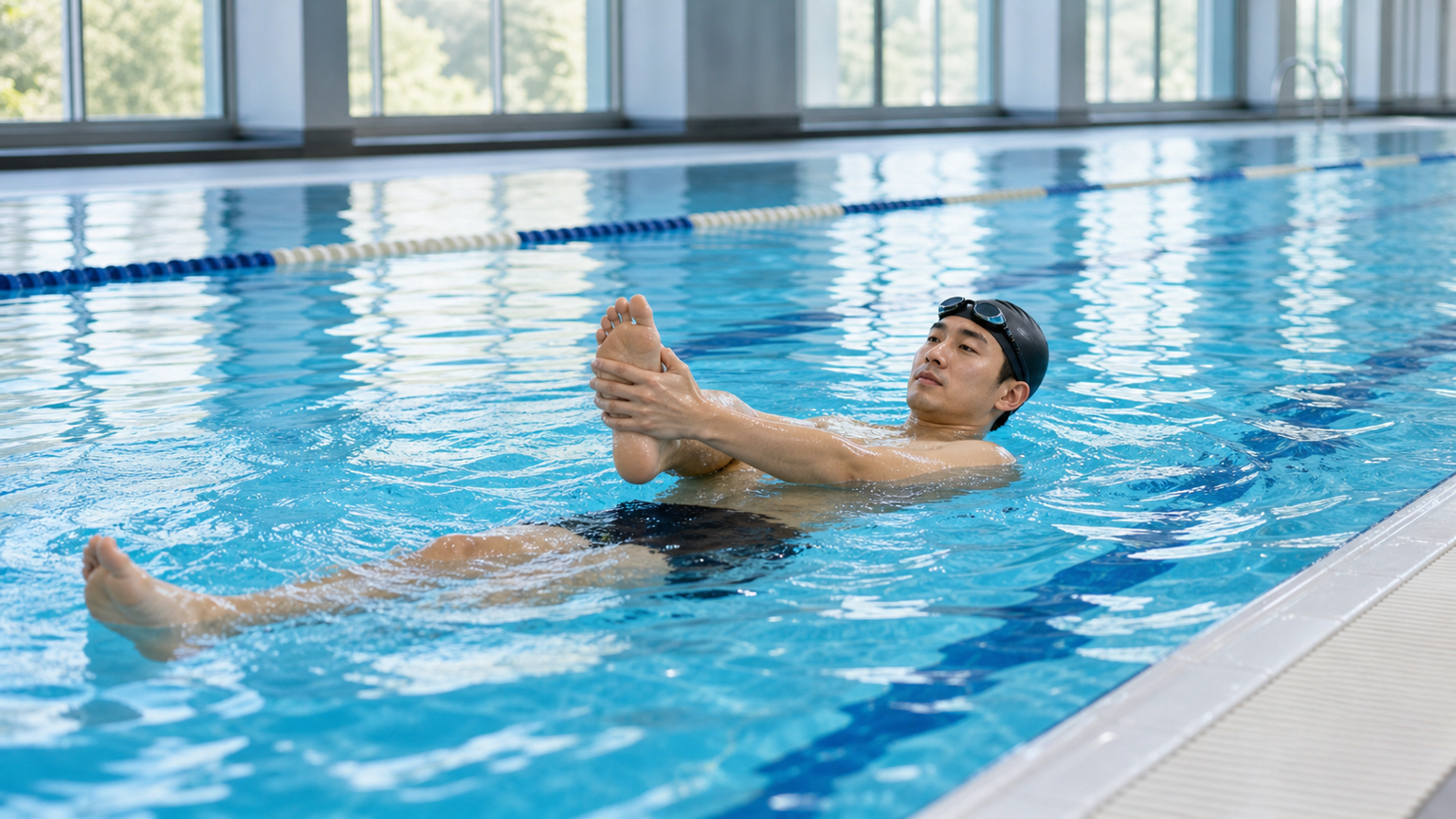
Swimming Cramps Are a Real Danger
On land, a cramp lets you sit down and rest, but a cramp in the water can lead to drowning if not handled properly. Research indicates that about 7% of pool accidents and 12% of open-water accidents are related to cramps. Every swimmer should know how to prevent and manage them.
The Physiological Mechanism of Cramps
A muscle cramp is an involuntary, tetanic contraction of muscle fibers, which can be caused by:
- Electrolyte imbalance: Insufficient sodium, potassium, magnesium, or calcium
- Dehydration: Reduced extracellular fluid volume
- Fatigue: Impaired muscle contraction control
- Cold: Lowered muscle temperature affecting nerve conduction
- Overstretching: Reflexive neural contraction
Common Cramp Sites in Swimming
1. Back of the Lower Leg (Gastrocnemius, Soleus) — Most Common
Accounts for over 60% of swimming cramps.
Common triggers:
- Freestyle kicking (large plantar flexion angle at the ankle)
- Backstroke kicking
- Outward rotation of the legs during the breaststroke kick
Why it cramps easily:
- Prolonged plantar flexion of the toes while swimming
- Continuous contraction of the gastrocnemius without relaxation
- Cold water further tightening the muscle
2. Plantar Region (Plantar Fascia, Intrinsic Foot Muscles)
Accounts for about 25% of swimming cramps.
Common triggers:
- Foot eversion during the breaststroke kick
- Training with fins
- Consecutive high-intensity kicking
3. Back of the Thigh (Hamstrings)
Accounts for about 10%.
Common triggers:
- After the starting dive
- Butterfly undulation movements
4. Front of the Thigh (Quadriceps)
Accounts for about 5%.
Common triggers:
- The moment of entry during a dive
- The push phase of the breaststroke kick
Why Swimming Is Especially Prone to Cramps
Swimming combines several high-risk factors:
- Low water temperature: Muscle temperature drops
- Continuous kicking: The calves barely stop
- Heavy sweating (it happens in water too!): Electrolyte loss
- Long distances: Cumulative muscle fatigue
- Training on an empty stomach: Insufficient energy impairs muscle control
Emergency Steps for Cramps in the Water
Step 1: Stay Calm, Avoid Panic
Panicking will:
- Accelerate energy depletion
- Increase the risk of swallowing water
- Worsen the cramp
Step 2: Float on Your Back to Keep Your Head Above Water
- Immediately roll onto your back
- Extend both arms flat on the water
- Take deep breaths
- Maintain buoyancy in the back-float position
Step 3: Passively Stretch the Cramped Muscle
Calf Cramp
- While floating on your back
- Straighten the cramped leg
- Grab your toes with your hand and pull firmly toward your body
- Hold for 30 seconds, repeat 3 times
Plantar Cramp
- Forcefully pull your toes upward
- Massage the sole of your foot at the same time
- Hold for 30 seconds
Hamstring Cramp
- Float on your back with both legs straight
- Hug the cramped leg with both arms, pulling it toward your chest as much as possible
- Hold for 30 seconds
Quadriceps Cramp
- Switch to floating on your front
- Reach back with your hand to grab the ankle of the cramped leg and pull it toward your buttocks
- Hold for 30 seconds
Step 4: Swim Slowly Toward the Pool Edge or Shore
- Propel yourself with the limbs that are not cramped
- If swimming freestyle, switch to single-arm strokes
- Kick with the non-cramped leg while floating on your back
- Do not attempt to swim normally
Step 5: Complete Care After Getting Out of the Water
- Fully stretch the cramped muscle for 2-3 minutes
- Replenish with an electrolyte drink
- Apply heat or soak in warm water
- Gently massage for 5 minutes
- Observe for 30 minutes; only re-enter the water if the cramp does not recur (it is recommended not to resume training that day)
Managing Cramps in Open Water
The risk of cramps in open water is higher because:
- The water temperature is lower
- Lifeguards may not be present
- The distance to shore is greater
Recommended gear:
- Roll-up float (buoyancy bag): Provides instant buoyancy when deployed
- Whistle: For calling for help
- Swim with a buddy
Prevention Strategies
1. Hydrate 30 Minutes Before Training
- 500ml of electrolyte drink
- Avoid training on an empty stomach
- Replenish 100-150ml every 30 minutes during training
2. Warm Up Thoroughly
10 minutes of dry-land warm-up:
- Dynamic stretching (high knees, heel flicks)
- Calf and plantar mobility exercises
- Gradually increasing pace
800m in-water warm-up:
- 200m slow freestyle
- 100m backstroke
- 200m kickboard work (gradually increasing pace)
- 200m pull drills
- 100m alternating fast and slow
3. Electrolyte Supplementation
For swimmers with high training volume:
| Timing | What to Consume |
|---|---|
| Before training | 500ml electrolyte drink |
| During training (>1 hour) | 150ml every 30 minutes |
| After training | 500ml electrolyte drink + protein |
| Daily | Balanced diet of sodium, potassium, magnesium, and calcium |
Good food sources:
- Magnesium: Nuts, dark chocolate, spinach
- Potassium: Bananas, potatoes, sweet potatoes
- Sodium: Small amounts of sea salt (slightly more for high training volume)
- Calcium: Dairy products, dark leafy greens
4. Strengthen Cramp-Prone Muscles
Calf Strength
- Standing calf raises 15 reps × 3 sets
- Single-leg calf raises 10 reps × 3 sets
- Weighted calf raises on a step 12 reps × 3 sets
Plantar Strengthening
- Towel curls 15 reps × 3 sets
- Pick up marbles with your toes
- Barefoot walking on a balance pad
Hamstrings
- Nordic Curls 5 reps × 3 sets
- Straight-leg deadlifts 10 reps × 3 sets
- Single-leg bridges 12 reps × 3 sets
5. Post-Training Stretching (Most Overlooked)
Spending 10 minutes stretching after a swim session can significantly reduce the chance of cramps the next day:
- Calf stretch (wall push) 30 seconds × 3 times
- Plantar foam rolling for 1 minute
- Hamstring stretch for 30 seconds
- Quadriceps stretch for 30 seconds
- Hip flexor stretch
6. Cold Water Precautions
When the water temperature is below 25°C:
- Wear a thermal swim cap (reduces heat loss by 30%)
- Wear a wetsuit if necessary
- Shorten individual training sessions
- Warm up extensively
Advanced Checks for Recurrent Cramps
If cramps occur frequently (more than 2-3 times per month), you should check:
- Blood electrolytes (sodium, potassium, magnesium, calcium)
- Vitamin D levels
- Thyroid function
- Nerve conduction
- Peripheral vascular circulation
When to Seek Medical Attention
The following situations require professional evaluation:
- Pain persists 24 hours after the cramp
- Obvious swelling or bruising at the cramp site (possible muscle tear)
- Abnormally increased frequency
- Accompanied by weakness or numbness
- Darker urine color (possible rhabdomyolysis)
Special Attention for Children
- Children have a higher risk of electrolyte imbalance
- Warm-ups must be thorough
- Enforce hydration during training
- Never swim alone
Cramp prevention is the foundation of water safety. A single cramp is enough to cause an accident; no prevention measure is over-preparation.
Related Reading
- Managing Cramps in Open Water: Self-Rescue Techniques for Leg Cramps
- Exercise-Induced Muscle Spasms: The True Causes of Cramps and Immediate Countermeasures
- Causes and Prevention of Cramps: Sodium, Hydration, and Muscle Fatigue
- Hydration and Electrolytes on the Basketball Court: The Real Reason for Fourth-Quarter Cramps
[教學] Premiere 影片 手震 修正 教學 防抖 單眼 影像 GoPro 穩定 Video Stabilization
8 年前
一日北高常見問題大集合 | 攻略 | 路線 | 訓練 | 補給 | 自行車 單車 | 一日雙城 | 雙塔 | TWB北高360 | 屁股痛
6 年前
Never Stop 西進武嶺 前後雙機 完整全程錄影 訓練台 實境
8 年前
一日北高/長距離團騎 常見問題補充篇 / 組團或跟團的眉角 / 壯車友容易被瘦車友慢性拉爆 / 原來屁股痛可能是這個原因...? / 風場配速法 / 公路車 / CT Yeh
2 年前
CT 喇低賽) 武嶺牽車 才是王道 西進牽車四小時內秘訣 攝手位置 如何判斷 防抽筋小秘訣
7 年前
滑雪新手們慘摔學習全紀錄(請開字幕),滑雪好好玩 | Snowboard + Ski | 岩原 スキー場 | 滑雪APP使用 | GoPro Max
6 年前
2016/05/13 單車 冷水坑下滑
10 年前
單車 一日北高 ( 雙城 ) 肥宅雙人瘋狂行 紀錄片 REACTO
10 年前