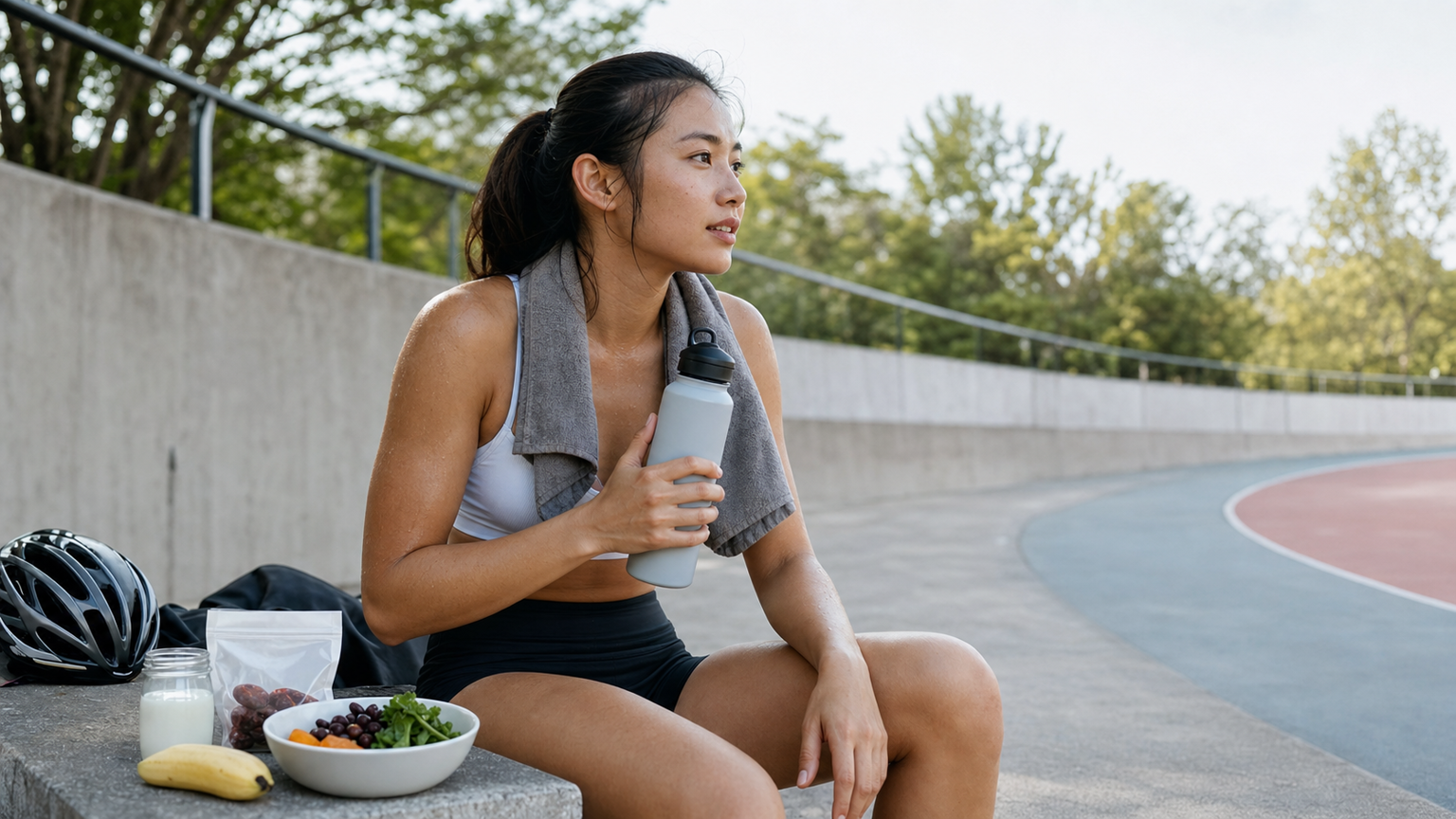
Three Key Differences in Female Fluid Regulation
Compared to men, female athletes face unique challenges in fluid and electrolyte management:
- Lower total body water percentage: Women 50–55%, men 60–65% (higher fat percentage)
- Hormonal influence on osmotic sensitivity: Estrogen lowers the thirst threshold
- Slower heat adaptation: Core temperature is 0.3–0.5°C higher during the luteal phase, reducing heat dissipation efficiency
Hydration Strategies by Menstrual Cycle Phase
| Phase | Fluid Status | Hydration Focus |
|---|---|---|
| Menstrual phase | Blood loss increases blood volume demand | Add 300–500 ml post-training + iron-rich foods |
| Follicular phase | Estrogen ↑, less sodium retention | Standard hydration is sufficient |
| Ovulation phase | Slight rise in body temperature | Watch for increased sweating |
| Early luteal phase | Progesterone ↑, increased sodium loss | Add 0.5–0.75 L + extra electrolytes |
| Late luteal phase (PMS) | Sodium retention, edema | Don’t cut water, but reduce sodium intake |
Special Challenges of the Luteal Phase
During the luteal phase, progesterone antagonizes aldosterone, increasing sodium loss. Meanwhile, elevated core temperature raises sodium concentration in sweat. Research shows:
- During the luteal phase, sodium loss through sweat increases by 10–20% at the same exercise intensity
- With the same fluid intake but neglecting electrolytes, the risk of hyponatremia rises significantly
- Long-duration exercise (>2 hours) during the luteal phase requires particular attention to sodium replenishment
Practical Hydration During Menstruation
Blood Loss Reference
- Normal total menstrual blood loss: 30–80 ml
- Iron loss: 5–15 mg
- Additional fluid needs: 250–500 ml more per day
Hydration During Menstrual Cramps
Gastrointestinal discomfort caused by prostaglandins can lead to:
- Avoiding fluids, nausea
- Diarrhea causing additional fluid loss
- Vomiting causing electrolyte loss
Strategy: Drink small amounts frequently (100–150 ml every 15 minutes), warm water is better than cold, and add low-concentration electrolytes (sodium 200–400 mg/L).
Triathlon and Long-Distance Hydration Recommendations
24 Hours Before the Race
- Fluid intake: 35–40 ml/kg (women should aim for the lower end of the range compared to men)
- Sodium intake: 8–12 g/day (food + beverages)
- Luteal phase + high heat: take the upper limit of 12 g
2 Hours Before the Race
- Drink 5–7 ml/kg (60 kg → 300–420 ml)
- Sodium-containing drinks with 300–500 mg sodium
During the Race
- Cycling: 500–750 ml/hour, with 500–800 mg/L sodium
- Running: 400–600 ml/hour, with 400–700 mg/L sodium
- Aim for the upper limit during the luteal phase
- Athletes wearing blood sodium monitoring wristbands: target 135–142 mmol/L
Hyponatremia: Higher Risk in Women
Why are women more at risk?
- Lighter body weight means even slight overhydration can cause dilution
- Longer race times (slower pace)
- Stronger antidiuretic hormone (ADH) response
- Higher ADH sensitivity during the luteal phase
Warning Symptoms
- Headache, nausea, vomiting
- Swelling in fingers and ankles
- Body weight after the race heavier than before the race (extremely dangerous sign)
- Confusion, seizures
Prevention Principles
- Don’t drink maximum amounts at every aid station
- Sodium-containing drinks are better than plain water
- Keep the difference between pre-race and post-race body weight between -2% and +1%
- Drink when thirsty in the latter part of the race; don’t force fluids when not thirsty
A Common Mistake
“I don’t want to move during my period, but I’m very thirsty” — this is exactly when you need to hydrate in small, frequent amounts, and iron + vitamin C + moderate warm water can relieve cramps and fatigue. Menstruation is not a reason to skip hydration.
Related Reading
- Menstrual Cycle and Training: Training Adaptation Differences Between Follicular and Luteal Phases
- Female Running Physiology: How Hormones Affect Endurance Performance
- Iron in Female Athletes: The Double Burden of Menstrual Blood Loss and Endurance Exercise
- [Nutrition Recovery] Guide to Measuring Electrolyte and Fluid Loss Rates During Endurance Exercise: The Golden Rules of Hourly Sweat Loss, Sodium Replacement Ratios, and Recovery Scheduling](/articles/11388)
西進武嶺 免費訓練分析服務 Intervals | 練不夠還是練過頭?你哪一種類型選手?AI模型告訴你! | 備戰神器 | 公路車 訓練 | CT Yeh
4 年前
FTL 與 SYB 車隊專訪 西進武嶺 實用攻略分享! 2小時 如何練?!你不知道的眉角!新手準備武嶺必看 EP1 | 實力派女車友 | 精華版 | 公路車 | CTYeh
4 年前
CT暗黑廚房) 車友必備 宇宙無敵鮮蚵湯 幫助訓練恢復 天然食補 好市多 超肥鮮蚵 破PR
7 年前
靠單車減肥35公斤 心得分享與整理
7 年前
西進武嶺 自製新版AI配速表產生器 x 賽前攻略 抱佛腳! 沒有功率計也可以產生配速表嗎?有什麼其他眉角賽前要注意的呢? | 西進武嶺 / 東進武嶺 KOM 攻略 | 公路車 | CT Yeh
4 年前
一日北高/長距離團騎 常見問題補充篇 / 組團或跟團的眉角 / 壯車友容易被瘦車友慢性拉爆 / 原來屁股痛可能是這個原因...? / 風場配速法 / 公路車 / CT Yeh
2 年前
#公路車 #Fitting 靠人工智慧APP 幫你調整單車
6 年前
#公路車 #西進武嶺 配速配瓦實驗 坡度分析 四小時內攻略 建大盃 NeverStop #西進武嶺攻略
6 年前