Ultramarathon Electrolyte Strategy: Timing and Dosage Calculation for Sodium, Potassium, and Magnesium Supplementation
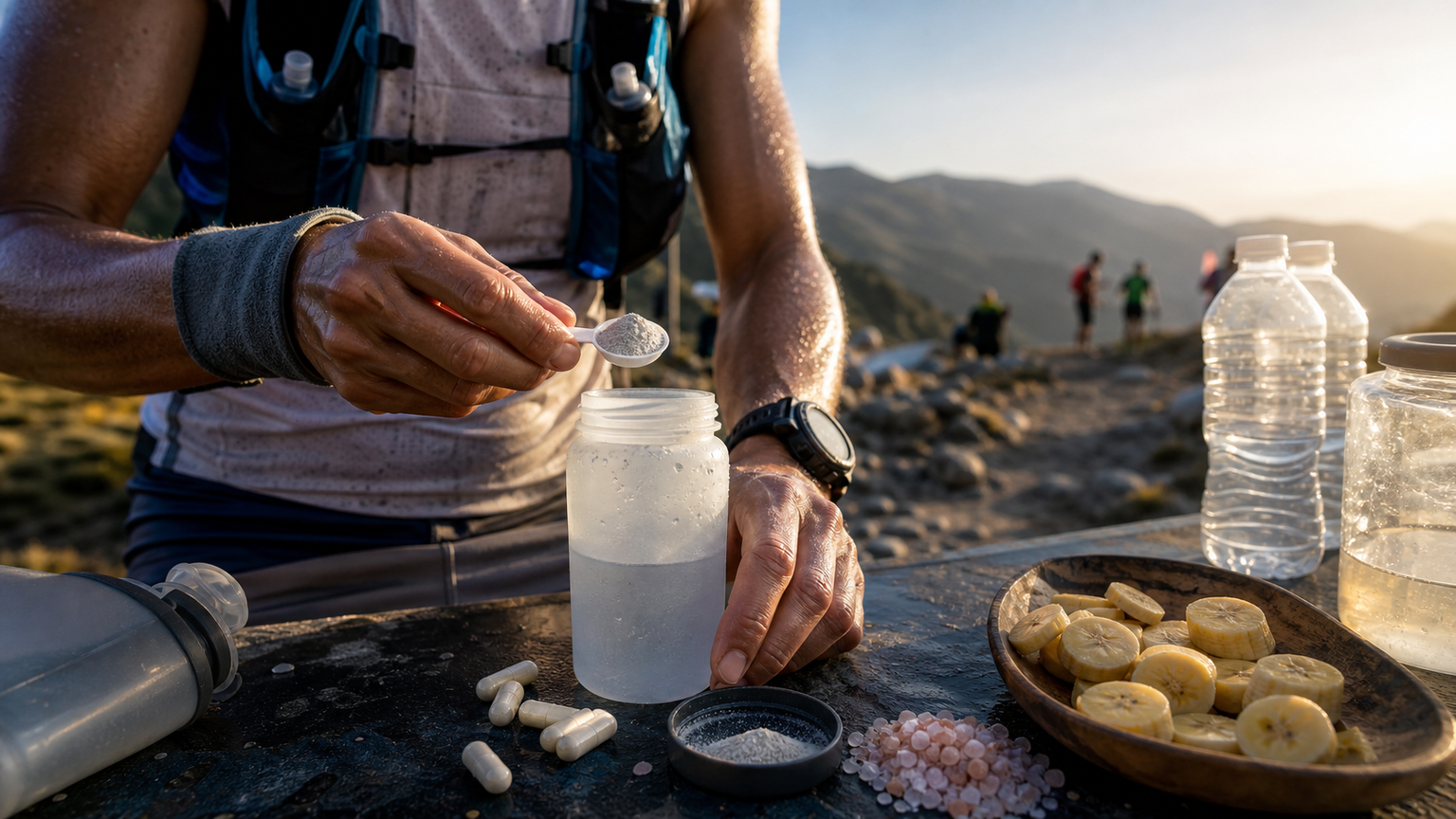
Ultramarathon Electrolyte Strategy: Timing and Dosage Calculation for Sodium, Potassium, and Magnesium
Introduction
When you’re 12 hours into an ultramarathon and suddenly your leg muscles cramp, or you’re hit with a splitting headache and mental confusion—these symptoms likely point to the same problem: electrolyte imbalance. Electrolytes (minerals such as sodium, potassium, magnesium, and calcium) are essential for maintaining cell membrane potential, nerve transmission, and muscle contraction. In ultramarathons, where exertion is prolonged and intense, electrolyte loss far exceeds that of daily life. If supplementation is mishandled, the consequences can be severe.
1. Physiological Roles of the Three Key Electrolytes
Sodium
Sodium is the primary cation in extracellular fluid, responsible for maintaining plasma osmotic pressure and blood volume. Sodium concentration in sweat is approximately 30–60 mEq/L (with huge individual variation), making it the electrolyte lost in the greatest quantity by ultramarathon runners. Hyponatremia (blood sodium <135 mEq/L) is one of the most dangerous medical emergencies in ultramarathons and can be fatal in severe cases.
Potassium
Potassium is the primary cation in intracellular fluid, working with sodium to maintain cell membrane potential. Potassium deficiency can lead to muscle weakness, arrhythmia, and increased fatigue. Potassium concentration in sweat is relatively low (about 5 mEq/L), but prolonged sweating can still result in cumulative depletion.
Magnesium
Magnesium participates in over 300 enzymatic reactions and plays a critical role in muscle relaxation, energy metabolism (ATP production), and nerve transmission. Magnesium deficiency is a major cause of cramping in ultramarathon runners, especially in the later stages of a race when muscles are fatigued. Magnesium loss in sweat is approximately 3–5 mg/L.
2. Estimating Electrolyte Loss
| Electrolyte | Concentration in Sweat (approximate) | Loss per 1 L of Sweat per Hour | Recommended Daily Intake (normal adults) |
|---|---|---|---|
| Sodium | 500–1500 mg/L | 500–1500 mg | 1500–2300 mg |
| Potassium | 150–250 mg/L | 150–250 mg | 3500–4700 mg |
| Magnesium | 3–5 mg/L | 3–5 mg | 300–420 mg |
Individual variation in sweat salt content: “Salty sweaters” (those with white salt crystals on their skin after exercise) may lose 3–4 times more sodium than average runners and need to increase their intake accordingly.
3. Supplementation Strategies for Each Electrolyte
Sodium Supplementation Strategy
Principle: small amounts, frequent intake, continuous replenishment—not one large bolus
- Recommended sodium intake per hour: 400–700 mg (adjust based on sweat rate and individual sweat salt concentration)
- Sources:
- Sports drinks (500 mL typically contains 300–500 mg sodium)
- Electrolyte tablets (approximately 150–300 mg sodium per tablet)
- Saltine crackers (5 crackers ≈ 200 mg sodium)
- Salt capsules (approximately 215 mg sodium per capsule)
- Important: Do not rely on plain water alone for hydration; drinking only water over long periods dilutes blood sodium
Potassium Supplementation Strategy
Potassium is relatively easy to replenish through food:
- Banana (1): approximately 350–400 mg potassium
- Sports drink (500 mL): approximately 80–120 mg potassium
- Recommended: eat one banana or other potassium-rich food every 2 hours
Magnesium Supplementation Strategy
- In the week before the race, take magnesium before bed (magnesium glycinate or magnesium malate, 300–400 mg) to boost baseline muscle magnesium stores
- If cramping occurs during the race, consider taking an electrolyte supplement containing magnesium
- Caution for those with sensitive stomachs: magnesium oxide (a common cheap product) has a strong laxative effect and should be avoided during a race
4. Timing Framework for Electrolyte Supplementation
- 30 minutes before the start: Consume 500 mL of a sodium-containing sports drink to pre-establish electrolyte reserves
- Early race (hourly): Electrolyte drink + whole foods, totaling 400–600 mg sodium per hour
- Late race (high heat/heavy sweating): Increase electrolyte tablets or salt capsules, raising sodium intake to 600–800 mg per hour
- Nighttime (reduced sweating): Sodium intake can be reduced, but a baseline amount should still be maintained
5. Warning Signs of Electrolyte Imbalance
- Early symptoms of hyponatremia: Headache, nausea, general weakness, confusion (note! These symptoms are the opposite of dehydration—do not drink plain water at this point)
- Symptoms of hypokalemia: Muscle weakness, heart palpitations, heavy feeling in the legs
- Symptoms of hypomagnesemia: Muscle spasms, twitching, drowsiness (sometimes hard to distinguish from general fatigue)
Conclusion
Electrolyte management is the most overlooked aspect of ultramarathon fueling, yet it carries the most severe consequences. Testing your own sweat salt content during training, understanding your personal electrolyte needs, and establishing a systematic supplementation rhythm during races—these are the cornerstones of an electrolyte strategy that gets you to the finish line safely.
Related Reading
- Electrolyte Supplementation Strategies for Road Running: The Key Role of Sodium, Potassium, and Magnesium in Long-Distance Events
- Electrolyte Guide: Ratios and Timing for Sodium, Potassium, and Magnesium
- Electrolytes and Athletic Performance: The Science of Fluid Balance in Endurance Sports
- Hyponatremia in Ultramarathons: The Dangers of Overhydration and the Importance of Electrolyte Balance
CT暗黑廚房) 車友必備 宇宙無敵鮮蚵湯 幫助訓練恢復 天然食補 好市多 超肥鮮蚵 破PR
7 年前
西進武嶺 免費訓練分析服務 Intervals | 練不夠還是練過頭?你哪一種類型選手?AI模型告訴你! | 備戰神器 | 公路車 訓練 | CT Yeh
4 年前
CT 喇低賽) 武嶺牽車 才是王道 西進牽車四小時內秘訣 攝手位置 如何判斷 防抽筋小秘訣
7 年前
水金九不厭五分 10度寒流冷到不願停!feat. 卡卡 / 公路車 / CT Yeh
6 個月前
雨戰! 西進武嶺員工旅遊 加料 各路段大數據分析 | 同事端出5公斤的公路車來挑戰!? EP1
4 年前
洗單車神器 吹水機! 實際洗車用用看 暴力洗鍊條大法 | 公路車 | CT Yeh
4 年前
西進武嶺 自製新版AI配速表產生器 x 賽前攻略 抱佛腳! 沒有功率計也可以產生配速表嗎?有什麼其他眉角賽前要注意的呢? | 西進武嶺 / 東進武嶺 KOM 攻略 | 公路車 | CT Yeh
4 年前
FTL 與 SYB 車隊專訪 西進武嶺 實用攻略分享! 2小時 如何練?!你不知道的眉角!新手準備武嶺必看 EP1 | 實力派女車友 | 精華版 | 公路車 | CTYeh
4 年前