Protein Needs in Ultramarathon: Muscle Breakdown and Protein Supplementation During Prolonged Exercise
Protein Needs for Ultramarathon: Muscle Breakdown and Protein Supplementation During Prolonged Exercise
Introduction
In discussions of ultramarathon fueling, carbohydrates often take center stage while protein is frequently overlooked. However, as exercise duration exceeds 6–8 hours, protein catabolism gradually increases, and muscle begins to be used as an energy source—a phenomenon that becomes more severe when carbohydrate intake is insufficient. Understanding protein needs in ultramarathon is not just about minimizing muscle loss; it is also about maintaining immune function, stabilizing mood, and accelerating recovery after the race.
1. Protein Metabolism in Ultramarathon
Protein Oxidation During Exercise
During prolonged endurance exercise, protein can contribute approximately 3–10% of total energy supply (with a higher proportion typically seen during hypoglycemia or when glycogen is depleted). Branched-chain amino acids (BCAAs, particularly leucine, isoleucine, and valine) are the amino acids preferentially oxidized in muscle.
Post-Exercise Muscle Damage
The downhill sections of an ultramarathon cause severe exercise-induced muscle damage (EIMD) from eccentric contractions, manifesting as:
- Muscle soreness (DOMS)
- Muscle swelling
- Markedly elevated creatine kinase (CK)
- Temporary decline in muscle function
2. Protein Requirements for Ultramarathon Runners
| Phase | Daily Protein Requirement per kg (g/kg) | Notes |
|---|---|---|
| Normal training period | 1.4–1.8 | Standard for endurance athletes |
| Pre-race tapering period | 1.6–2.0 | Increase protein ratio to protect muscle |
| Race day | 0.8–1.2 (during the race) | Focus remains on carbohydrates; protein is secondary |
| 72 hours post-race | 2.0–2.5 | Highest demand period for muscle repair |
3. Protein Supplementation Strategy During the Race
In an ultramarathon, protein supplementation is not the primary task (carbohydrates and electrolytes take priority), but the following recommendations can help reduce muscle breakdown:
Protein Sources Suitable for Intake During the Race
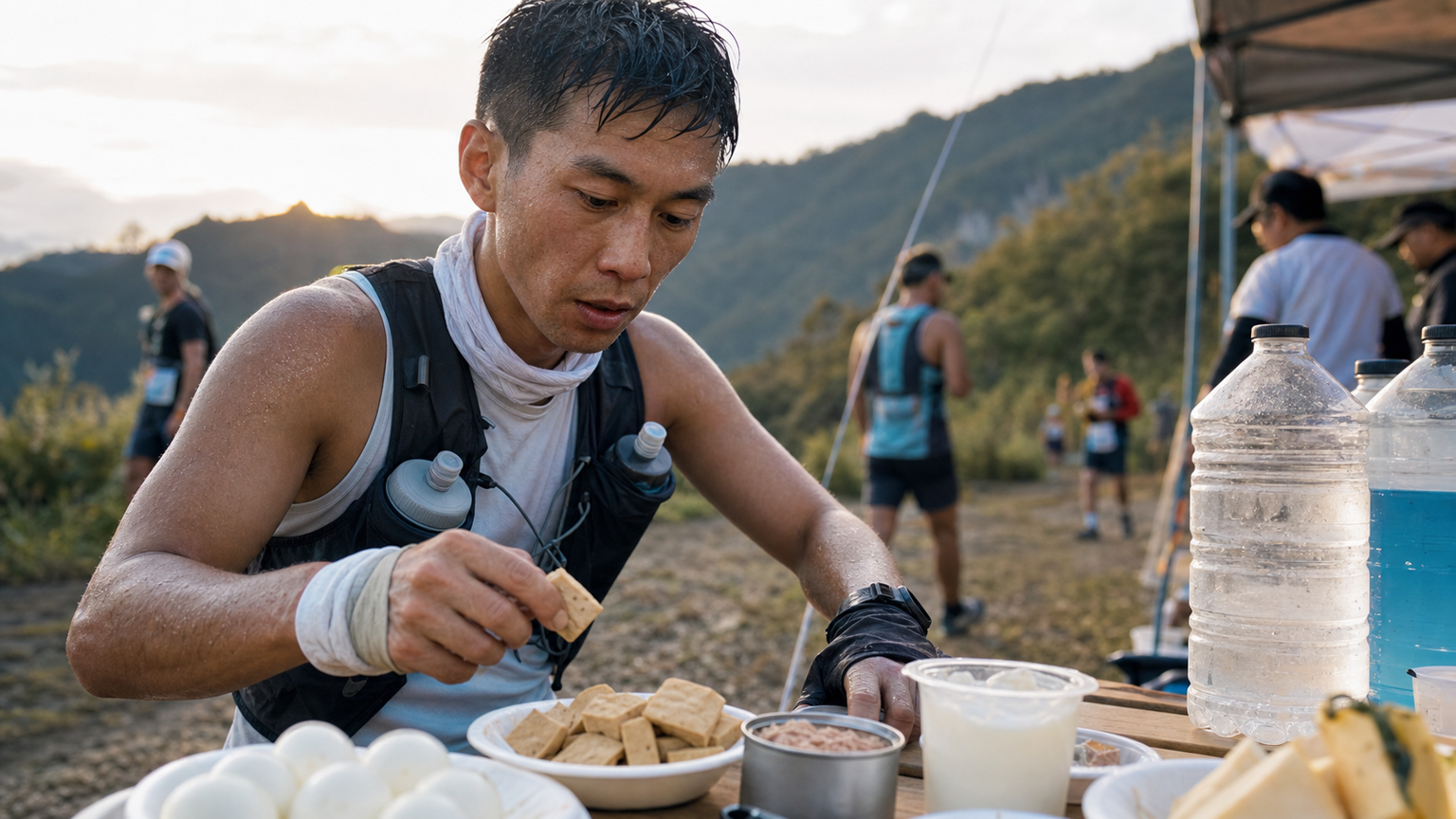
- Eggs (boiled): 6g protein per egg, easy to digest, commonly found at aid stations in Taiwan
- Dried tofu: Portable, approximately 8–10g protein per piece
- Milk or yogurt (small amounts): Contains whey protein, but individual lactose tolerance should be considered
- Canned tuna (small amounts): High protein, low fat, provided at some larger aid stations
Precautions
- Protein intake during the race should follow the principle of “small amounts,” not exceeding 5–10g per hour
- High-protein foods (such as chicken pieces) significantly slow gastric emptying after high-intensity exercise; excessive intake can worsen gastrointestinal discomfort
- If supplementing with BCAA products, it is recommended to choose brands that have been tested during training before race day
4. Post-Race Protein Recovery Strategy
Within 30–60 minutes after finishing (the golden recovery window):
- Consume 20–40g of high-quality protein (whey protein powder, eggs, milk)
- Simultaneously consume 50–80g of carbohydrates (to promote insulin secretion and accelerate protein synthesis)
6–24 hours after finishing:
- Consume meals containing 20–30g of protein every 3–4 hours
- Prioritize complete proteins (chicken, fish, eggs, tofu)
5. Optimizing Protein Intake During Training
- Within 30 minutes after long runs, supplement with 25–30g of protein (paired with carbohydrates)
- Consume slow-release protein before bed (casein, such as low-fat milk or Greek yogurt) to reduce nighttime muscle breakdown
- Distribute daily protein evenly across 4–5 meals during training, avoiding concentration at dinner
Conclusion
Protein may not play as prominent a role as carbohydrates in ultramarathon, but the cost of neglecting it becomes clearly evident during the post-race recovery period. From daily training to pre-race preparation, and then to post-race recovery nutrition, establishing a complete protein strategy will allow you to start your next race in optimal condition.
Related Reading
- Protein Metabolism in Marathon: Strategies for Managing Muscle Breakdown During Long-Distance Running
- Protein During Exercise: Should You Add Protein to Your Fueling for Ultra-Distance Events
- Protein Intake Timing and Dosage Before, During, and After Cycling: Latest Sports Nutrition Perspectives
- Protein Synthesis and Muscle Repair: A Muscle-Building Guide for Endurance Athletes
CT暗黑廚房) 車友必備 宇宙無敵鮮蚵湯 幫助訓練恢復 天然食補 好市多 超肥鮮蚵 破PR
7 年前
西進武嶺 免費訓練分析服務 Intervals | 練不夠還是練過頭?你哪一種類型選手?AI模型告訴你! | 備戰神器 | 公路車 訓練 | CT Yeh
4 年前
一日北高/長距離團騎 常見問題補充篇 / 組團或跟團的眉角 / 壯車友容易被瘦車友慢性拉爆 / 原來屁股痛可能是這個原因...? / 風場配速法 / 公路車 / CT Yeh
2 年前
一日北高常見問題大集合 | 攻略 | 路線 | 訓練 | 補給 | 自行車 單車 | 一日雙城 | 雙塔 | TWB北高360 | 屁股痛
6 年前
洗單車神器 吹水機! 實際洗車用用看 暴力洗鍊條大法 | 公路車 | CT Yeh
4 年前
一日北高前的高裝檢 | 北高 360 | 挑戰11小時的裝備 | 一日雙塔 | 補給
6 年前
CT 喇低賽) 單車 比賽總是沒照片? 攝影師的觀點大公開 姿勢就是力量! 請加速1.25倍收看
7 年前
福隆鐵人團練隨拍
8 年前