Introduction
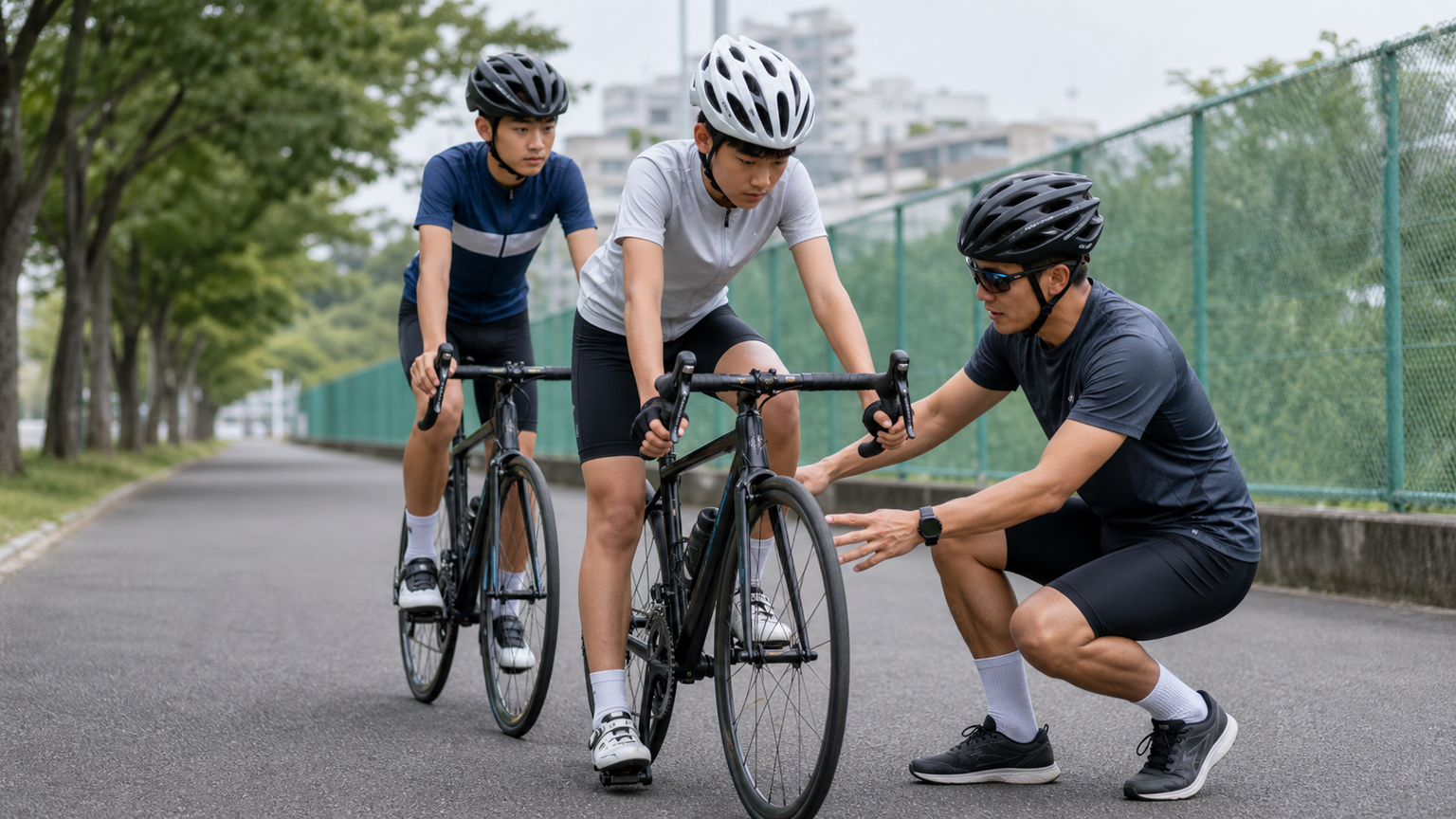
Cycling has flourished in Taiwan in recent years, with more and more teenagers taking up road bikes, mountain bikes, and even competing in junior categories. Ages 12 to 18 are a critical period for rapid musculoskeletal growth; proper introduction to the sport can lay a lifelong foundation for athleticism. Conversely, incorrect equipment or overtraining can cause irreparable damage. This article consolidates safety guidelines and skill development pathways for youth cycling training in Taiwan, helping parents and coaches make informed decisions.
Principles for Choosing Safety Gear
Helmets Are the One Piece of Equipment That Cannot Be Compromised
Teenagers have a higher head-to-body-weight ratio than adults, so the risk of head injury in a crash is greater. When choosing a helmet, pay attention to:
- Certification marks: In the Taiwanese market, choose helmets certified to CE EN1078 or CPSC to ensure they have passed impact tests
- Proper fit: The helmet should sit snugly on the top of the head, not shift when shaking the head, and allow two fingers to fit under the strap when buckled
- Replacement cycle: Replace immediately after any major impact, even if it looks intact; general recommendation is replacement after 3 to 5 years, as the foam degrades over time
- Road vs. mountain: Road helmets offer better ventilation but weaker side protection; mountain helmets cover more of the back of the head, making them suitable for off-road beginners
Bike Selection by Age
| Age | Recommended Frame Size | Suitable Bike Type | Notes |
|---|---|---|---|
| 12–13 years | XS (47–49cm) | Junior road bike, 26-inch mountain bike | Adjustable handlebars, short cranks (165mm) |
| 14–15 years | XS–S (49–52cm) | Entry-level standard road bike | Confirm top tube length matches height |
| 16–17 years | S (52–54cm) | Road bike, hardtail mountain bike | Can begin using adult-spec components |
| 18 years | S–M (54–56cm) | Depends on height and riding purpose | Can undergo a full bike fit |
Other Essential Gear
- Cycling shorts: Padded shorts effectively reduce saddle pressure and prevent circulation issues from long rides
- Gloves: Protect the hands as the first point of contact in a fall, and also reduce accumulated vibration on long rides
- Reflective vest or bike lights: Many Taiwanese teenagers train in the early morning or evening, so lights and reflective materials are basic safeguards
Three Stages of Skill Development
Stage One (Ages 12–13): Building Balance and Road Feel
The goal at this stage is not speed, but getting the body accustomed to interacting with the bike. Key training items:
- Slow-speed balance drills: Weave in an S-pattern at very slow speeds in a parking lot to train center-of-gravity control at low speeds
- Proper braking habits: Develop the reflex of prioritizing the rear brake, and applying both brakes simultaneously in emergencies
- Gear-shifting timing: Understand shifting down before climbing to avoid knee overload from mashing a hard gear
- Weekly mileage recommendation: No more than 50–60 km per week, with each ride lasting 30–45 minutes
Stage Two (Ages 14–16): Endurance Base and Skill Refinement
- Cadence training: Develop an aerobic cadence habit of 80–90 RPM to protect the knee joints
- Climbing technique: Alternate between seated and standing climbs, learning weight distribution
- Group riding etiquette: Learn drafting distance, hand signals, and calling out hazards as basic group riding norms
- Weekly mileage recommendation: Gradually build up to 80–120 km per week
Stage Three (Ages 17–18): Developing Competitive Ability
- Begin incorporating time-trial efforts and simulated race scenarios
- Learn basic energy management: how to pace effort over long distances
- Weekly mileage can build up to 150–200 km, but must be paired with recovery weeks
Most Common Mistakes Made by Parents and Coaches
- Buying adult-sized bikes directly: Adult frames are too long for teenagers, causing hunched posture and excessive wrist pressure, which can affect the spine over time
- Measuring progress by speed: Teenage bones are still growing; high-intensity speed training should not be systematically introduced until after age 17
- Ignoring rest days: Keep at least 2 days per week of complete rest or light activity to allow muscles and bones time to rebuild
- Entering children in adult races too early: Every county and city in Taiwan has junior categories; race experience should first be accumulated in junior divisions
Practical Advice: Resources in Taiwan and a Starting Path
- Join a school or local team: Many counties and cities in Taiwan have youth teams under cycling associations, offering systematic guidance and a safe training environment
- Choosing early races: Start with county/city family cycling events or orienteering races rather than jumping straight to a 100 km challenge
- Regular evaluations with a coach: Have a technical and fitness assessment every three months to ensure training stays on the right track
- Keep a riding log: Use Garmin, Wahoo, or a phone app to record every ride, which helps spot early signs of overtraining
Conclusion
For teenagers, cycling is a sport that combines aerobic health, outdoor exploration, and competitive potential. The key is for parents and coaches to let go of the anxiety that “earlier means stronger,” and let children enjoy the joy of riding under the protection of safe gear and at the right pace of skill development. A solid foundation is the true starting point for future competitive success.
Related Reading
- Youth Cycling Athlete Training Guide: From Sparking Interest to Systematic Development
- Family Life for Cycling Enthusiasts: Planning and Safety for Parent-Child Rides
- MTB Youth Development Courses: A Growth Journey from the First Descent to Technical Trails
- Protecting Young Riders: The Complete Guide to Cycling Safety for Children and Teenagers
單車 一日北高 ( 雙城 ) 肥宅雙人瘋狂行 紀錄片 REACTO
10 年前
一日北高常見問題大集合 | 攻略 | 路線 | 訓練 | 補給 | 自行車 單車 | 一日雙城 | 雙塔 | TWB北高360 | 屁股痛
6 年前
一日北高/長距離團騎 常見問題補充篇 / 組團或跟團的眉角 / 壯車友容易被瘦車友慢性拉爆 / 原來屁股痛可能是這個原因...? / 風場配速法 / 公路車 / CT Yeh
2 年前
滑雪新手們慘摔學習全紀錄(請開字幕),滑雪好好玩 | Snowboard + Ski | 岩原 スキー場 | 滑雪APP使用 | GoPro Max
6 年前
太平山單車員工旅遊 | 這樣玩CP值最高!| 公路車
5 年前
ThinkRider 智騎 XXPRO 訓練台,高階機種功能 只要 1/3價格!? 實測功率對比、噪音實測 / 公路車 / CT Yeh
1 年前
一日北高前的高裝檢 | 北高 360 | 挑戰11小時的裝備 | 一日雙塔 | 補給
6 年前
2026 車錶排行榜!誰是最多車友正在使用?練家子最愛哪款?🏆 (2萬名車友數據) / 公路車 / CT Yeh
5 個月前