Ramp Test Execution Guide: How to Properly Perform the 3-Minute Incremental Test and Common Mistakes
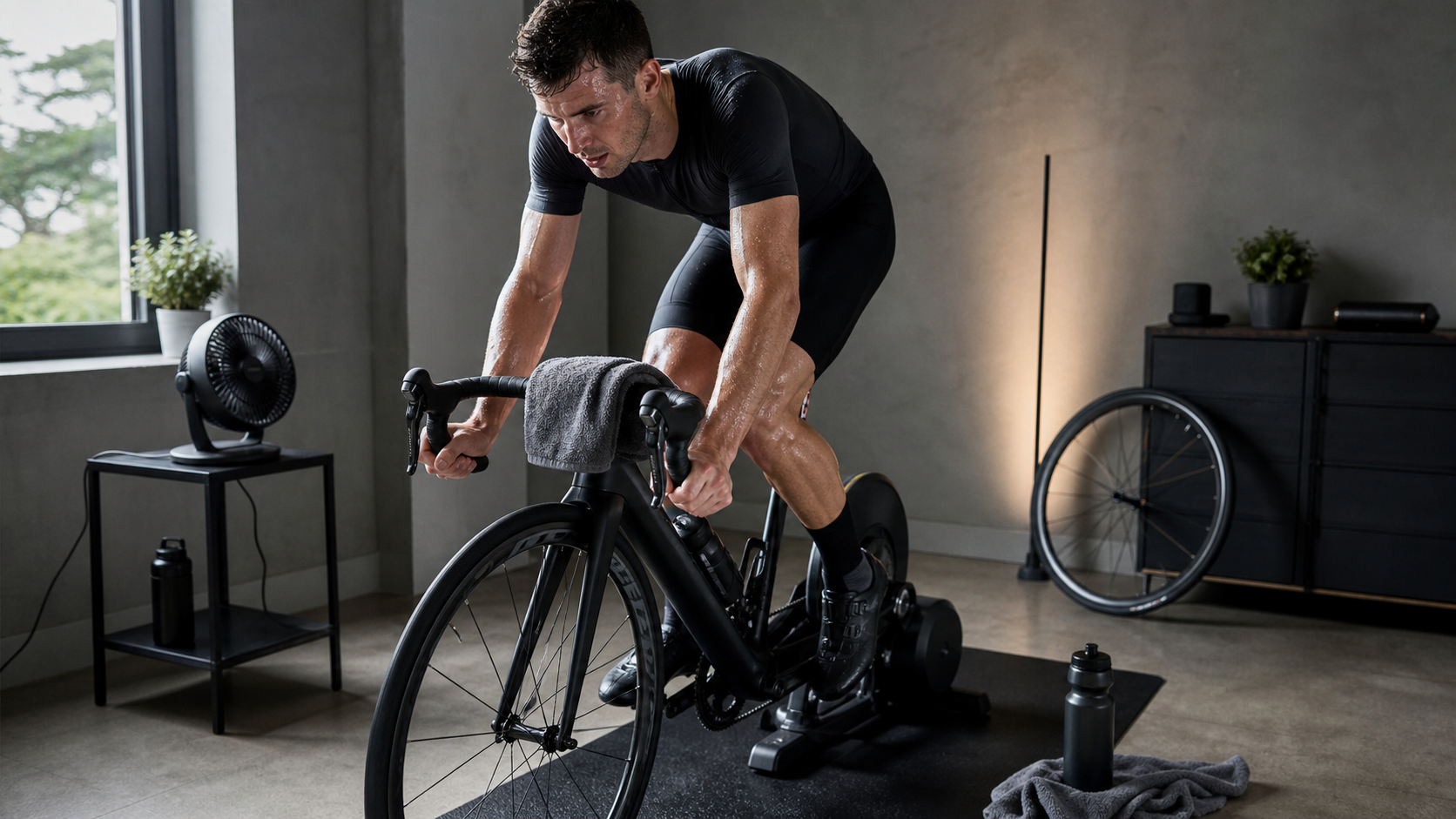
Introduction
The traditional FTP testing method—a 20-minute all-out ride—is accurate, but for most riders it carries immense psychological pressure, and execution quality often suffers from inconsistency. In recent years, the Ramp Test (incremental test) has gradually become the mainstream FTP testing method due to its simplicity and lower psychological burden. Zwift, TrainerRoad, and Wahoo platforms all have this testing protocol built in.
However, “simple to operate” does not mean “impossible to get wrong.” Incorrect warm-up, premature adrenaline surges, and improper conversion formulas can all skew the test results, which in turn affects the intensity settings of your entire training plan.
How the Ramp Test Works
The standard Ramp Test protocol is: start from a lower power output (typically 40–50% of FTP), increase by a fixed wattage each minute (typically 5% of FTP, or an absolute value of 10–25W), and ride until exhaustion.
FTP Conversion Formula (the most widely used Zwift/TrainerRoad version):
FTP = Final Completed Power × 75%
For example: if the power in the final minute you manage to complete is 340W, then FTP = 340 × 0.75 = 255W
This 75% coefficient is based on statistical regression and represents the ratio between most riders’ maximum 1-minute power and FTP under this incremental protocol.
Standard Execution Protocol
| Stage | Duration | Power Target | Notes |
|---|---|---|---|
| Warm-up | 10–15 minutes | Z1–Z2 (< 70% FTP) | Add 2–3 10-second sprints in the final minute |
| Official Test | Until exhaustion | +5% FTP per minute | Executed automatically in ERG mode |
| Cool-down | 5–10 minutes | Z1 (< 55% FTP) | Gradually lower heart rate |
Correct Execution Details
Minutes 1–5: Stay Restrained
The test feels easy in the early stages, and many riders can’t resist “pushing a little harder” or increasing cadence. In ERG mode, extra effort won’t raise the power early, but it will consume additional energy. It’s recommended to maintain a steady cadence of 80–95 RPM.
Minutes 6–12: Ride at a Steady Pace
During this period, power enters the FTP range and breathing becomes heavier. Focus on rhythm and breathing—don’t over-analyze “how much longer can I hold on”—and keep your mind focused.
Final Push (usually minutes 15–20): All-Out Effort
When you feel like “one more step and I can’t turn the pedals,” gritting your teeth and holding on for an extra 15–30 seconds can often get you one more step up, making the converted FTP more accurate. The explosive effort in these final moments affects the final result and is worth the cost.
When to Stop: When you can no longer maintain the required power for more than 15 seconds no matter what, you can end the test.
Common Mistakes
Mistake 1: Insufficient Warm-up
Starting the test directly without a proper warm-up means the cardiorespiratory system hasn’t been fully activated in the first few minutes, which can cause earlier exhaustion in the latter part of the test and underestimate FTP. It’s recommended to warm up for at least 12–15 minutes and bring your heart rate up to the FTP range for 1–2 minutes before entering the official test.
Mistake 2: Pushing Too Hard Early On (Non-ERG Mode)
When performing the Ramp Test in resistance mode (non-ERG), pushing too hard in the early stages depletes glycogen prematurely, causing you to crack earlier than you should. It’s recommended to use ERG mode to eliminate the variable of self-pacing.
Mistake 3: High-Intensity Training Within 24–48 Hours Before the Test
Residual fatigue is the most common cause of underestimating FTP. It’s recommended to do only Z1–Z2 easy riding in the 48 hours before the test to ensure your body is in optimal condition.
Mistake 4: Choosing the Wrong Test Time
Testing on an empty stomach in the morning or testing late at night while fatigued will both underestimate your true FTP. It’s recommended to test in the afternoon or early evening, 2–3 hours after your last meal, when neuromuscular response is at its best.
Mistake 5: Over-Reliance on a Single Test Result
The Ramp Test has an error margin of approximately ±5–8%, and a single test result is heavily influenced by that day’s condition. It’s recommended to perform 2–3 consecutive tests (spaced 1–2 weeks apart) and take the average as your baseline FTP.
Ramp Test vs. 20-Minute Test Differences
- Ramp Test: Tends to overestimate FTP for riders with strong anaerobic capacity (sprinters); may underestimate for pure endurance riders with weak anaerobic capacity
- 20-Minute Test: Better reflects true FTP, but requires good pacing and self-management, with significant variation in execution quality
Recommendation: Use the Ramp Test for routine training monitoring, and schedule 1–2 20-minute tests per year for cross-validation.
Practical Tips
- Standardize Test Conditions: Use the same trainer, same riding position, and same time of day for every test to reduce variables
- Record the Power File from the Test: Analyze the power curve afterward to see whether cadence and power were stable in the final minutes
- Taiwan Riders: Watch Out for Summer Room Temperature: If you don’t use a fan during indoor training in Taiwan’s summer, heart rate drift can cause premature exhaustion and underestimate FTP
Conclusion
The Ramp Test is currently the closest thing to a “foolproof” FTP testing method, but foolproof doesn’t mean there’s no learning curve. Mastering the proper warm-up protocol, restraining the early impulse, and eliminating fatigue and environmental interference are what allow the Ramp Test to truly reflect your current fitness. The test result is the starting point of your training plan and deserves to be taken seriously.
Related Reading
- The Complete FTP Test Guide: Comparing the 20-Minute Test, 8-Minute Test, and Ramp Test
- Complete FTP Test Guide: How to Choose Between the 20-Minute Test and Ramp Test
- Full Comparison of FTP Testing Methods: Accuracy and Applicability of the 20-Minute, 8-Minute, and Ramp Tests
- Comprehensive Comparison of FTP Testing Methods: Accuracy and Applicable Scenarios of the 20-Minute Test vs. Ramp Test
RAMP FTP Test 直播 究竟能撐到幾瓦 訓練台 Gravat Zwift
6 年前
西進武嶺 8000名單車友數據分析 PART1 | 從新手到高手數量/瓦數/推力比/FTP推力比/功率計使用率 大解析 | 公路車 | CTYeh
5 年前
西進武嶺配速器 3.0更新 / NEW 免功率FTP估算! / 大數據xAI體能模型 / 如何模擬人止關前集團效應 / 配速儲存功能 / AI全台自行車賽事行事曆 / 公路車 / CT Yeh
1 年前
西進武嶺 自製新版AI配速表產生器 x 賽前攻略 抱佛腳! 沒有功率計也可以產生配速表嗎?有什麼其他眉角賽前要注意的呢? | 西進武嶺 / 東進武嶺 KOM 攻略 | 公路車 | CT Yeh
4 年前
單車AI教練!全新 ChatGPT4o 幫你分析訓練成果!排武嶺課表,分析騎車姿勢! 太神了! / 公路車 / CT Yeh / feat. 緯緯
2 年前
FTL 與 SYB 車隊專訪 西進武嶺 實用攻略分享! 2小時 如何練?!你不知道的眉角!新手準備武嶺必看 EP1 | 實力派女車友 | 精華版 | 公路車 | CTYeh
4 年前
西進武嶺 免費訓練分析服務 Intervals | 練不夠還是練過頭?你哪一種類型選手?AI模型告訴你! | 備戰神器 | 公路車 訓練 | CT Yeh
4 年前
車友來我家測FTP...好硬啊🤣 #cycling #公路車
2 年前