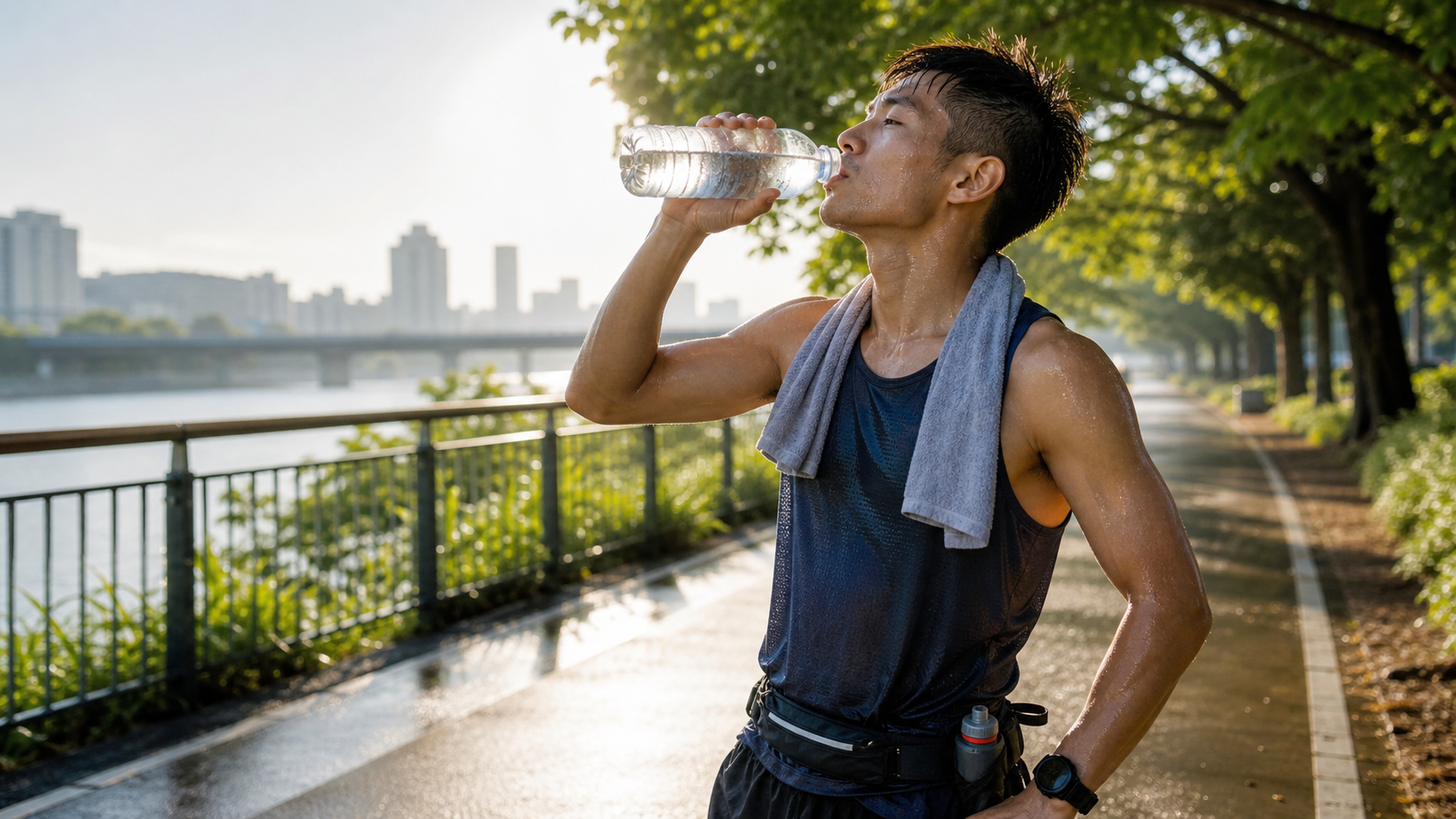
Runner’s Hydration Management: The Quantified Impact of 2% Dehydration on Running Performance
Introduction
Taiwan’s hot and humid summer environment makes hydration management a critical variable in road running performance. Many runners feel like they “worked especially hard” after a race or training session without realizing that dehydration is the main culprit. Sports science research consistently shows that even just 2% of body weight lost through fluid is enough to significantly reduce running performance. This article quantifies the impact of dehydration and provides science-based hydration strategies.
The Quantified Relationship Between Dehydration Level and Running Performance
| Dehydration Level (% body weight) | Fluid Loss (70 kg runner) | Impact on Running Performance | Subjective Feelings |
|---|---|---|---|
| 1% | 700 mL | Almost no impact | Slight thirst |
| 2% | 1400 mL | Performance worsens by 5–8% | Noticeable thirst, mild dizziness |
| 3% | 2100 mL | Performance worsens by 8–12% | Reduced attention, elevated heart rate |
| 4% | 2800 mL | Performance worsens by 12–15% | Severe fatigue, headache |
| ≥5% | ≥3500 mL | Risk of heat exhaustion, safety hazard | Nausea, mental confusion |
Specific examples of performance impact at 2% dehydration:
- A runner who normally completes a 10K in 50 minutes may need 53–54 minutes after 2% dehydration
- A marathoner targeting a 4-hour finish may see their finish time delayed to 4 hours 12–20 minutes if they remain mildly dehydrated
How Does Dehydration Affect Running Physiology?
Cardiovascular System
- Decreased blood volume → the heart must beat faster to maintain the same cardiac output
- At the same pace, 2% dehydration can raise heart rate by 5–10 beats per minute
- Reduced cardiac reserve shortens the time you can sustain high-intensity pacing
Thermoregulation
- Sweat glands need water to dissipate heat effectively
- Dehydration accelerates the rate at which core body temperature rises
- In Taiwan’s summer heat (> 30°C), the thermoregulatory impairment from dehydration is 2–3 times greater than in cooler environments
Muscle Function
- Electrolytes (sodium, potassium, magnesium) are lost through sweat, affecting electrochemical signal transmission in muscles
- Muscle contraction efficiency declines, increasing the likelihood of cramps
- Running economy decreases—the same speed requires more oxygen consumption
Cognitive Function
- The brain is extremely sensitive to dehydration; 2% dehydration can significantly impair attention and decision-making
- Runners may make suboptimal pacing decisions, going out too fast in the first half and fading in the second half
Estimating Sweat Rate for Taiwanese Runners
Typical sweat rates under Taiwan’s summer (June–September) conditions:
| Temperature and Humidity | Sweat Rate (mL/hour) | Notes |
|---|---|---|
| 25°C / 60% humidity | 600–900 | Moderate spring/autumn climate |
| 30°C / 75% humidity | 900–1400 | Typical Taiwanese summer |
| 33°C / 85% humidity | 1200–1800 | Peak of Taiwan’s midsummer |
| Long hill climbs or high-intensity training | Up to 2000–2500 | Increases by 30–50% |
Estimating your sweat rate (simple method):
- Weigh yourself fasted before running (kg)
- Run for 1 hour (record fluid intake)
- Weigh yourself immediately after running
- Sweat rate (L/hr) = (pre-run weight - post-run weight) + fluid intake
Science-Based Hydration Strategies
Pre-Training Hydration
- 2–4 hours before training: slowly drink 500–700 mL of water
- 15–30 minutes before training: top up with another 200–300 mL
- Goal: urine should be pale yellow (like diluted lemonade)
Hydration During Training
- General principle: replenish 150–200 mL every 15–20 minutes
- Long runs (over 60 minutes): estimate fluid needs based on sweat rate, aiming to replace 70–80% of sweat loss (full replacement is not necessary; mild dehydration of < 2% is acceptable)
- Electrolyte supplementation: for runs exceeding 90 minutes, consume electrolyte-containing sports drinks or electrolyte tablets to avoid hyponatremia
Post-Training Hydration
- Goal: replenish 150% of sweat loss (because you continue to sweat and urinate after rehydrating)
- Specific formula: (pre-run weight - post-run weight) × 1.5 = fluid needed (liters)
- Adding a small amount of electrolytes (sodium) accelerates fluid retention in the body
The Risk of Overhydration: Hyponatremia
The opposite problem also exists—excessive fluid intake (especially plain water) can lead to hyponatremia:
- Sodium concentration in the blood becomes diluted
- Symptoms: headache, nausea, confusion, seizures (can be fatal in severe cases)
- High-risk groups: slower runners (spending long hours on the course with high fluid intake), participants in long-distance events in hot environments
- Prevention: do not exceed 800–1000 mL of water per hour during long runs, and pair it with electrolyte supplementation
Practical Recommendations
- When training in Taiwan’s summer, confirm the location of water stations on every running route
- Ensure adequate hydration the day before a long run (drink more water in the evening), and pair your pre-race breakfast with 400–500 mL of fluid
- Urine color is the most convenient hydration status indicator: dark yellow = needs fluid, colorless = overhydrated, pale yellow = optimal
- Electrolyte-containing coconut water is a natural post-long-run option in Taiwan’s summer
Conclusion
In Taiwan’s climate, hydration management is one of the highest priorities in road running performance management. 2% dehydration can slow your pace by 5–8%, handing away a PB goal that was within reach. Building a systematic hydration routine—pre-training hydration, timed replenishment during training, and active recovery afterward—pays off more directly than any expensive gear. Every sip of water is part of your running performance.
Related Reading
- Fluid Loss and Running Performance: Quantifying the Impact of Every 1% of Body Weight Lost
- Hydration Strategies for Runners: Sweat Rate Calculation and Electrolyte Balance
- Calculating Fluid Needs for Road Running: Sweat Rate Testing and Hourly Intake Guidelines
- Runner’s Hydration Management: Hourly Fluid Loss Calculation and Replenishment Strategies
2016/05/13 單車 冷水坑下滑
10 年前
西進武嶺 免費訓練分析服務 Intervals | 練不夠還是練過頭?你哪一種類型選手?AI模型告訴你! | 備戰神器 | 公路車 訓練 | CT Yeh
4 年前
CT 喇低賽) 單車 比賽總是沒照片? 攝影師的觀點大公開 姿勢就是力量! 請加速1.25倍收看
7 年前
Live) 備戰2019彰化經典百K 賽前攻略 (已完賽請看新影片
7 年前
#公路車 #Vo2Max #最大攝氧量 測驗 體驗 | 心肺測試
6 年前
半日 小台灣 極限單車路線挑戰實錄
7 年前
靠單車減肥35公斤 心得分享與整理
7 年前
2019 夏季KOM 5小 完賽心得 準備攻略 東進武嶺 夏季登山王之路 Taiwan KOM Challenge
7 年前