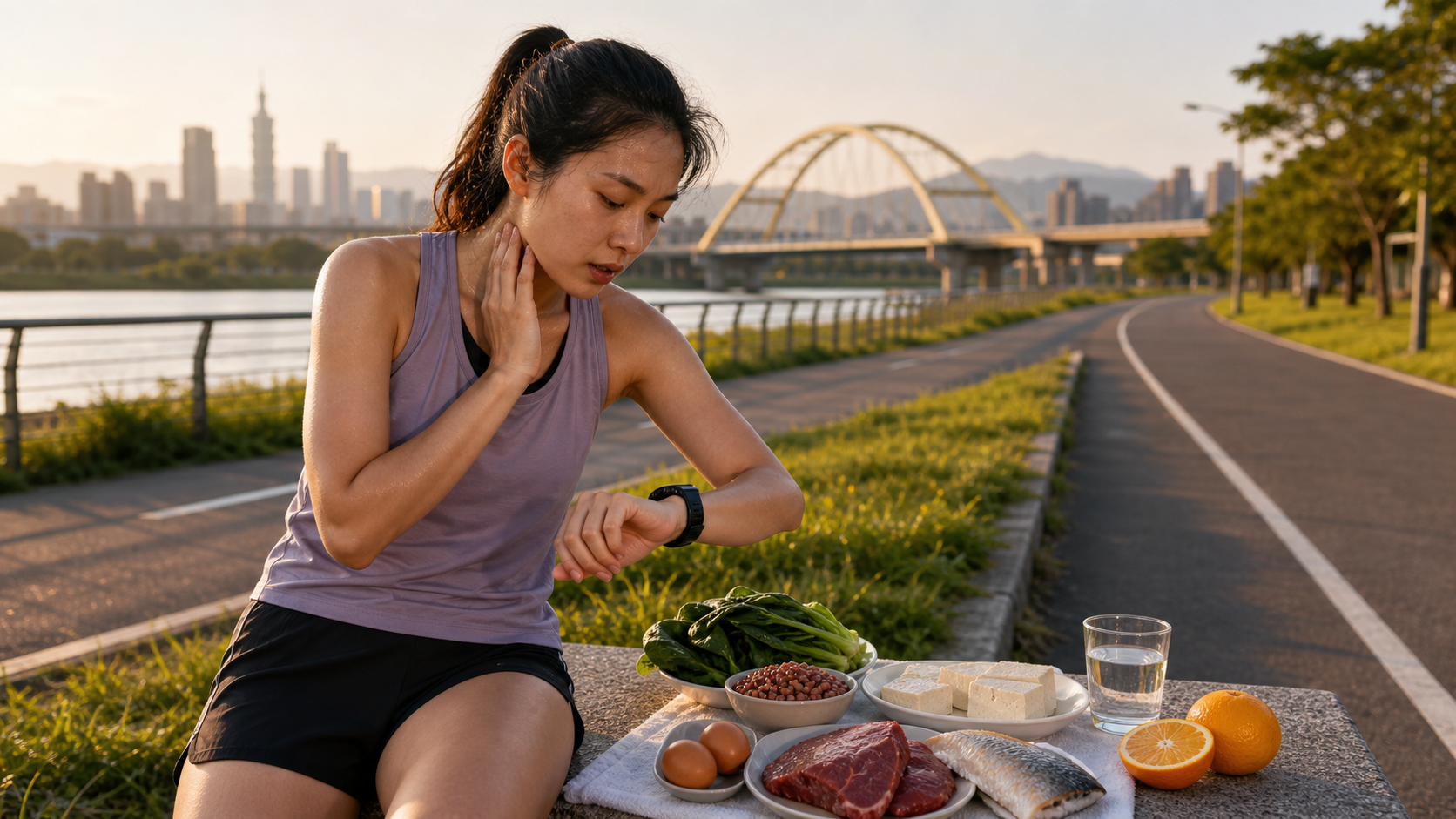
Introduction
“Why am I not improving despite following my training plan?” — This is one of the most frequently asked questions by female runners in Taiwan’s running group forums. Training logs look normal, sleep is sufficient, and perceived exertion isn’t particularly high, yet pace performance has hit a plateau.
Iron Deficiency Anemia and its precursor state, Iron Deficiency without Anemia, are the most underestimated causes of this phenomenon. Research shows that among actively training female runners, the prevalence of iron deficiency is as high as 25–35%, and Taiwanese women face even higher risk due to a dietary culture that leans toward vegetables with relatively lower red meat consumption.
Why Does Running Deplete More Iron?
The Three Mechanisms of Iron Loss
Mechanism 1: Foot Strike Hemolysis
The repetitive impact of the feet striking the ground during running mechanically destroys red blood cells in the capillaries of the feet. The released hemoglobin is filtered by the kidneys and excreted in urine (sometimes visible as darker urine). Each long run can destroy approximately 1–5% of circulating red blood cells.
Mechanism 2: Gastrointestinal Microbleeding
During high-intensity, long-duration running, blood flow is redistributed to the muscles, leaving the digestive tract relatively ischemic. This can cause mild mucosal bleeding, resulting in continuous small amounts of blood loss.
Mechanism 3: Menstrual Blood Loss
The average blood loss per menstrual cycle is 30–80 mL (containing approximately 15–40 mg of iron), making it the primary route of iron loss for women.
Iron Requirements vs. General Recommendations
| Population | Daily Iron Requirement |
|---|---|
| General adult women | 15 mg/day |
| Female runners in training | 25–30 mg/day |
| Vegetarian female runners | 30–35 mg/day |
| General adult men | 10 mg/day |
Identifying Anemia: Symptoms and Blood Markers
Common Symptoms
- Plateaued pace, unable to go faster even when the cardiorespiratory system feels “maxed out”
- Still fatigued upon waking in the morning
- Heart rate spikes when climbing stairs or small hills
- Pale complexion, pale conjunctiva (when the eyelid is flipped open)
- Irritability, difficulty concentrating
- Increased hair loss
- Brittle nails with vertical ridges
Blood Test Markers
Taiwan’s National Health Insurance regular adult health check-ups include a complete blood count, which can serve as an initial screening:
| Marker | Normal Range (Female) | Iron Deficiency Warning Value |
|---|---|---|
| Hemoglobin (Hb) | 12–16 g/dL | < 12 g/dL |
| Serum Ferritin | 15–200 ng/mL | < 20 ng/mL |
| Transferrin Saturation | 20–50% | < 15% |
| MCV (Mean Corpuscular Volume) | 80–100 fL | < 80 fL |
Important: The “iron deficiency without anemia” state — where hemoglobin is normal but ferritin is < 20 ng/mL — also impairs running performance, yet it is often overlooked in health check-ups. The ferritin target for athletes should be > 35 ng/mL.
Dietary Intervention: Strategies to Boost Iron Intake with Taiwanese Foods
Iron-Rich Foods in Taiwan
Heme Iron (15–35% absorption rate) — derived from animal products, with the highest absorption efficiency:
- Pork liver: 13 mg iron per 100g (a common ingredient in Taiwanese home cooking and one of the most effective foods for iron replenishment)
- Beef: 2–3 mg iron per 100g
- Pig’s blood cake: a Taiwanese specialty food, containing approximately 8 mg iron per 100g
- Clams: 15 mg iron per 100g, suitable for a variety of cooking methods
- Clam soup, clams with loofah: Taiwanese home-style dishes that are excellent sources of iron
Non-heme Iron (2–8% absorption rate) — derived from plant-based foods:
- Red amaranth: 13 mg iron per 100g (absorption rate is low, but large quantities can compensate)
- Red beans: 7 mg iron per 100g
- Black sesame: 9 mg iron per 100g
- Dark leafy greens (sweet potato leaves, spinach, water spinach)
Strategies to Enhance Iron Absorption
- Pair with Vitamin C: Drinking a glass of orange juice after a meal can increase non-heme iron absorption by 2–3 times
- Separate foods that inhibit absorption: Space coffee and tea (polyphenols) 1 hour apart from iron-containing foods
- Avoid consuming large amounts of calcium and iron together: Do not take milk and iron supplements at the same time
Sample One-Day Meal Plan (Taiwanese Foods)
- Breakfast: Whole wheat toast + boiled egg + stir-fried sweet potato leaves + orange
- Lunch: Steamed rice + braised pork liver (2–3 times per week) + stir-fried spinach
- Dinner: Clam and loofah soup + red bean rice + stir-fried amaranth
- Snack: Black sesame milk (note the timing regarding calcium and iron absorption)
Use of Supplements
If blood markers show no improvement after 4–6 weeks of dietary adjustment, you should seek medical evaluation to determine whether oral iron supplements are needed:
- Common oral iron supplements in Taiwan: Ferrous Sulfate, Ferrous Gluconate
- Recommended to take on an empty stomach (for higher absorption), but those with empty-stomach discomfort may take after meals
- Take with Vitamin C
- Side effects: constipation and dark-colored stools are normal
- Intravenous iron: for severe iron deficiency or poor oral absorption, to be used at a physician’s discretion
Medical Advice in Taiwan
- Add a ferritin test to your annual regular health check-up (out-of-pocket cost approximately NT$300–500, not covered by National Health Insurance)
- Both internal medicine and obstetrics/gynecology can evaluate iron deficiency issues
- If you have menorrhagia (blood loss > 80 mL per cycle or lasting > 7 days), actively treat the underlying cause
Conclusion
For female runners in Taiwan, iron management should not be an afterthought but rather part of the training plan. By checking ferritin once per quarter and incorporating heme-iron-rich Taiwanese foods (clams, pork liver, pig’s blood cake), most runners can maintain optimal iron status and ensure that every training session truly translates into performance gains.
Related Reading
- Anemia Risk in Female Runners: Iron Requirements and Dietary Supplementation Strategies
- Iron Deficiency and Exercise-Induced Anemia in Female Runners: You May Not Know You’re Iron Deficient
- Iron Supplementation for Road Runners: Dietary Strategies for Anemia Prevention in Female Runners
- Iron Supplementation for Female Runners: Identifying and Managing Exercise-Induced Anemia Through Diet
西進武嶺 免費訓練分析服務 Intervals | 練不夠還是練過頭?你哪一種類型選手?AI模型告訴你! | 備戰神器 | 公路車 訓練 | CT Yeh
4 年前
CT暗黑廚房) 車友必備 宇宙無敵鮮蚵湯 幫助訓練恢復 天然食補 好市多 超肥鮮蚵 破PR
7 年前
台灣旅行團參加 第7回まえばし赤城山ヒルクライム大会 雙視點
8 年前
CT 喇低賽) 武嶺牽車 才是王道 西進牽車四小時內秘訣 攝手位置 如何判斷 防抽筋小秘訣
7 年前
靠單車減肥35公斤 心得分享與整理
7 年前
2016/05/13 單車 冷水坑下滑
10 年前
2026 車錶排行榜!誰是最多車友正在使用?練家子最愛哪款?🏆 (2萬名車友數據) / 公路車 / CT Yeh
5 個月前
Never Stop 西進武嶺 前後雙機 完整全程錄影 訓練台 實境
8 年前