# Bicycle Chain Maintenance Guide: A Complete Process for Cleaning, Lubricating, and Knowing When to Replace
Introduction
“The chain is the cheapest consumable, but improper maintenance can cause the entire drivetrain to fail prematurely.” This saying is widely circulated in Taiwan’s cycling community, yet many riders still only think about maintenance when their chain starts making noise. Proper chain maintenance not only extends the chain’s lifespan but also protects the cassette and chainrings, saving you several times the cost in replacement parts.
Recommended Maintenance Intervals
| Riding Conditions | Recommended Cleaning Frequency | Recommended Lubrication Frequency | Replacement Mileage Reference |
|---|---|---|---|
| Dry, sunny days (flat roads) | Every 300km | Every 150–200km | 3,000–4,000km |
| Rainy/humid conditions | After every ride | After every ride | 1,500–2,000km |
| Taiwan’s plum rain season | Weekly | Before every ride | 1,500–2,000km |
| Off-road/gravel | Every ride | Every ride | 800–1,500km |
Taiwan’s climate is humid, especially in the northern region where the rainy season lasts 4–5 months. Chain maintenance frequency must be more aggressive than the guidelines recommended in Europe and the US.
Cleaning Tools and Steps
The choice of tools for cleaning the chain affects the cleaning results:
Tool List:
- Chain cleaner (recommended, such as the Park Tool rotating brush type)
- Degreaser (bicycle-specific; avoid using WD-40 as a long-term lubricant)
- Old toothbrush or dedicated chain brush
- Clean rags or paper towels
Cleaning Steps:
- Pour degreaser into the chain cleaner’s reservoir
- Attach the cleaner to the chain, then backpedal to run the chain through the cleaning mechanism for 30–50 rotations
- Rinse the chain with clean water to remove residual degreaser
- Dry thoroughly: This is the most critical step. Use a dry cloth to grip the chain and wipe it back and forth, or let it air-dry for at least 30 minutes
- Apply lubricant only after the chain is completely dry
Choosing the Right Lubricant Type
Taiwan’s climate places special demands on lubricant selection:
- Wet Lube: Suitable for Taiwan’s plum rain season and typhoon season. High viscosity, resistant to being washed off by rain, but easily picks up sand and dust, requiring more frequent cleaning
- Dry Lube: Suitable for dry, sunny rides. After the solvent evaporates, it leaves a waxy film on the chain that doesn’t attract dust, but it has poor water resistance and must be reapplied after rain
- Wax Lube: The hot-melt wax method that has become popular in recent years. Offers the lowest friction and good durability, but the initial preparation process is more involved
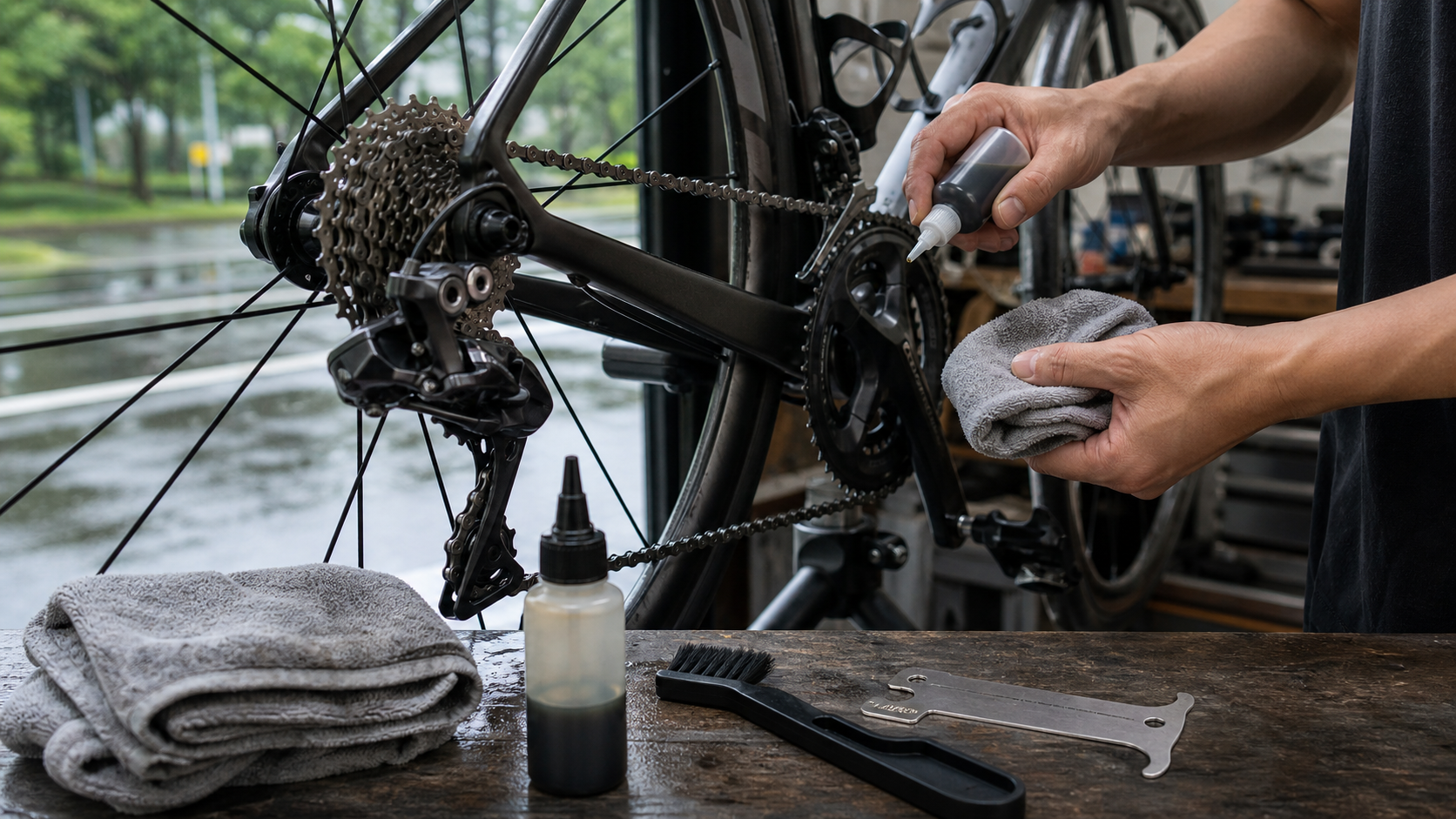
Application Method: Drip the lubricant onto the inner side of the chain link by link, slowly turning the pedals as you go so the oil penetrates into every roller. After application, let it sit for 5–10 minutes, then use a dry cloth to wipe off excess oil (excess oil on the surface is the main culprit for attracting dust).
Determining Chain Stretch
After extended use, wear between the metal pins and link plates causes the chain pitch to increase, commonly known as “chain stretch”:
- Visual inspection: Pull the chain away from the front chainring. If you can see a noticeable gap (more than half a tooth thickness), it’s time to replace
- Chain checker tool method (recommended): Use a chain wear indicator tool (around NT$150–300). It’s generally recommended to replace the chain at 0.5% elongation (especially since 12-speed chains are more sensitive)
12-speed drivetrains have thinner and narrower chains, making them less tolerant of elongation. It’s strongly recommended to purchase a chain checker and monitor regularly.
Practical Tips
- Don’t use WD-40 as a lubricant: WD-40 is a water-displacing/rust-prevention spray, not a long-term lubricant. Using it will accelerate chain wear
- Rotate between two chains: Suitable for heavy trainers riding 200km or more per week, this can extend cassette life
- Keep maintenance records: Use the gear tracking feature in Garmin Connect or Strava to set chain replacement reminders
- Recycle old chains: Metal waste should be recycled. Some bike shops offer chain recycling services
Conclusion
Chain maintenance offers the highest return on investment of any bicycle maintenance task. Each cleaning and lubrication session takes no more than 15 minutes, yet it can save you from prematurely replacing your cassette (NT$800–3,000) and chainrings (NT$2,000–15,000). Taiwan’s humid and rainy climate makes this habit even more essential, so we recommend adding a weekly chain check to your regular pre-ride routine.
Related Reading
- Everyday Bike Maintenance Habits: A 10-Minute Weekly Chain Cleaning Routine
- The Complete Chain Maintenance Guide: Cleaning, Lubricating, Knowing When to Replace, and Common Mistakes
- The Complete Road Bike Chain Maintenance Guide: Cleaning, Lubricating, and Knowing When to Replace
- The Complete Guide to Road Bike Chain Maintenance and Lubrication: Secrets to Extending Drivetrain Life
洗單車神器 吹水機! 實際洗車用用看 暴力洗鍊條大法 | 公路車 | CT Yeh
4 年前
自助洗車場 洗單車 50元有找 清鍊條大法 居然還有小小兵
7 年前
碟煞公路車 銑面器 !? 原來銑完差這麼多! 降低蹭碟機率! | TIME 公路車 保養小記錄 | CT Yeh
3 年前
把帶被我推爛,換新的防推爛款💪 #cycling #公路車 #曜越單車
2 年前
單車 一日北高 ( 雙城 ) 肥宅雙人瘋狂行 紀錄片 REACTO
10 年前
摔車後補裝備: 好市多新款單車安全帽& Specialized Romin 北高整路屁股都不痛的坐墊 | 一千元居然有MIPS | CT Yeh | 公路車
4 年前
靠單車減肥35公斤 心得分享與整理
7 年前
#公路車 #Fitting 靠人工智慧APP 幫你調整單車
6 年前