The Therapeutic Benefits of Swimming for Hypertension: A Study on Blood Pressure Reduction with Three Swimming Sessions per Week
Introduction
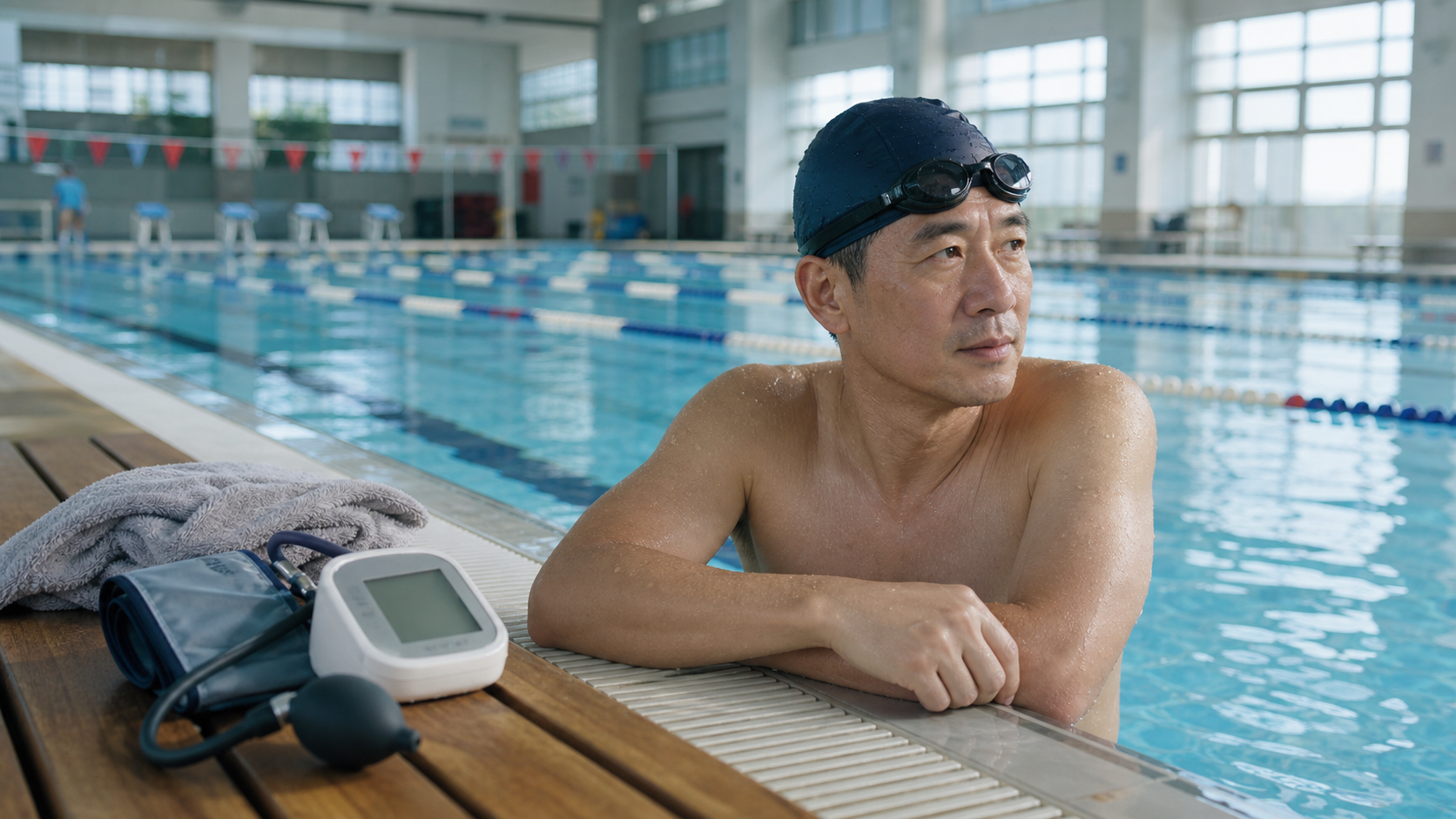
According to statistics from the Health Promotion Administration, the prevalence of hypertension among adults aged 18 and above in Taiwan is approximately 25%, which translates to over 5 million people living with high blood pressure long-term. While medication is certainly important, lifestyle changes—especially regular aerobic exercise—have been listed by international cardiology societies as a first-line non-pharmacological therapy. Swimming, due to its low-impact, whole-body, and comfortable-environment characteristics, has gradually become one of the top recommended exercises by cardiologists in Taiwan.
Physiological Mechanisms of Blood Pressure Reduction Through Swimming
Swimming is an aerobic exercise, and long-term training can lower blood pressure through the following pathways:
- Improved vascular endothelial function: Repeated increases in cardiac output promote the release of nitric oxide (NO), making blood vessel walls more elastic
- Reduced sympathetic nervous system tone: Regular aerobic exercise suppresses excessive sympathetic activation, lowering both resting heart rate and vascular resistance
- Regulation of the renin–angiotensin system: Studies show that moderate-intensity aerobic exercise can inhibit renin activity and reduce angiotensin II concentrations
- Weight management benefits: Swimming burns calories without stressing the joints, making it especially advantageous for obese hypertensive patients
- Autonomic nervous system balance: The warm aquatic environment induces parasympathetic activation, resulting in more pronounced blood pressure reduction at rest
Research Data: Blood Pressure Reduction from 3 Sessions per Week
Multiple randomized controlled trials (RCTs) have quantitatively assessed the blood pressure-lowering effects of swimming interventions:
| Study Source | Participants | Training Duration | Systolic BP Reduction | Diastolic BP Reduction |
|---|---|---|---|---|
| Tanaka et al. (USA, 2000) | 18 older adults with hypertension | 12 weeks | −9 mmHg | −5 mmHg |
| Australian Swimming Blood Pressure Trial (2012) | 60 individuals with stage 1 hypertension | 16 weeks | −7 mmHg | −5 mmHg |
| China Multi-Center Study (2019) | 120 patients with controlled hypertension | 24 weeks | −11 mmHg | −7 mmHg |
| Taiwan NCKUH Observational Study (2021) | 45 community residents with hypertension | 12 weeks | −8 mmHg | −4 mmHg |
Overall, moderate-intensity swimming (target heart rate approximately 50–70% of maximum heart rate) performed 3 times per week, 30–45 minutes per session, for 12 consecutive weeks can lower systolic blood pressure by an average of 7–11 mmHg and diastolic blood pressure by 4–7 mmHg. Comparative studies show that this reduction is comparable to the effects of some mild antihypertensive medications.
The Taiwan Context: Where to Swim and How
Public swimming pools are available in every city and county across Taiwan, with admission fees ranging from NT$50 to NT$120. Some counties and cities offer discounted tickets for seniors and individuals with disabilities. Hypertensive patients are advised to adopt the following strategies:
- Choose heated pools with water temperatures of 28–30°C to avoid cold water triggering rapid vasoconstriction (some indoor pools in Taipei maintain this temperature year-round)
- Focus on freestyle or backstroke, avoiding high-intensity strokes such as butterfly from the outset
- Measure blood pressure before and after each swimming session to establish a personal baseline
- If systolic blood pressure exceeds 160 mmHg, suspend aquatic training for the day and consult a physician
Practical Recommendations
- Get medical clearance before starting: Have a cardiologist or family medicine physician assess your medication status. Some antihypertensive drugs (such as beta-blockers) affect heart rate response, so exercise intensity assessment needs adjustment.
- Progress gradually: Swim 15–20 minutes per session during weeks 1–2, then extend to 30–45 minutes once adapted.
- Pair with a blood pressure tracking app: Taiwan’s Health Cloud platform or Google Health can both record daily blood pressure trends, making it easier to discuss medication adjustments with your physician.
- Avoid breath-holding sprints: Hypertensive patients should not engage in breath-holding activities (such as underwater swimming) to prevent sudden blood pressure spikes.
- Swim with a partner or friend: Swimming with others is not only safer but also leads to higher adherence rates. Taiwan’s community swim teams or early-morning swim classes are excellent social resources.
Conclusion
Swimming is an exercise option for hypertensive patients that rarely combines both safety and effectiveness. Three sessions per week, maintained consistently, can not only effectively support blood pressure management but also improve overall cardiovascular health and quality of life. Taiwan’s well-developed public swimming pool infrastructure provides favorable conditions for this exercise. After physician evaluation, hypertensive patients may well consider the pool an important venue for daily health management.
Related Reading
- The Benefits of Swimming for Chronic Diseases: Aquatic Exercise for Hypertension and Diabetes
- The Scientific Benefits of Swimming for Cardiovascular Health: What Research Says
- The Scientific Benefits of Swimming for Cardiovascular Health
- Swimming and Heart Health: Research on the Cardiovascular Benefits of Long-Term Aerobic Swimming
CT暗黑廚房) 車友必備 宇宙無敵鮮蚵湯 幫助訓練恢復 天然食補 好市多 超肥鮮蚵 破PR
7 年前
抖肩舞 台灣x日本交流版 (台灣 vs 前橋) 赤城山登山賽 coincidance
8 年前
一日北高常見問題大集合 | 攻略 | 路線 | 訓練 | 補給 | 自行車 單車 | 一日雙城 | 雙塔 | TWB北高360 | 屁股痛
6 年前
[防寒衣體驗] 鐵人魂 三鐵 防寒衣試穿會 於松運 深水游泳池 鯨魚池
8 年前
#公路車 #Vo2Max #最大攝氧量 測驗 體驗 | 心肺測試
6 年前
靠單車減肥35公斤 心得分享與整理
7 年前
一日北高/長距離團騎 常見問題補充篇 / 組團或跟團的眉角 / 壯車友容易被瘦車友慢性拉爆 / 原來屁股痛可能是這個原因...? / 風場配速法 / 公路車 / CT Yeh
2 年前
[教學] Premiere 影片 手震 修正 教學 防抖 單眼 影像 GoPro 穩定 Video Stabilization
8 年前