Pregnancy Swimming Safety Guide: Appropriate Swimming Intensity and Stroke Choices for Each Trimester
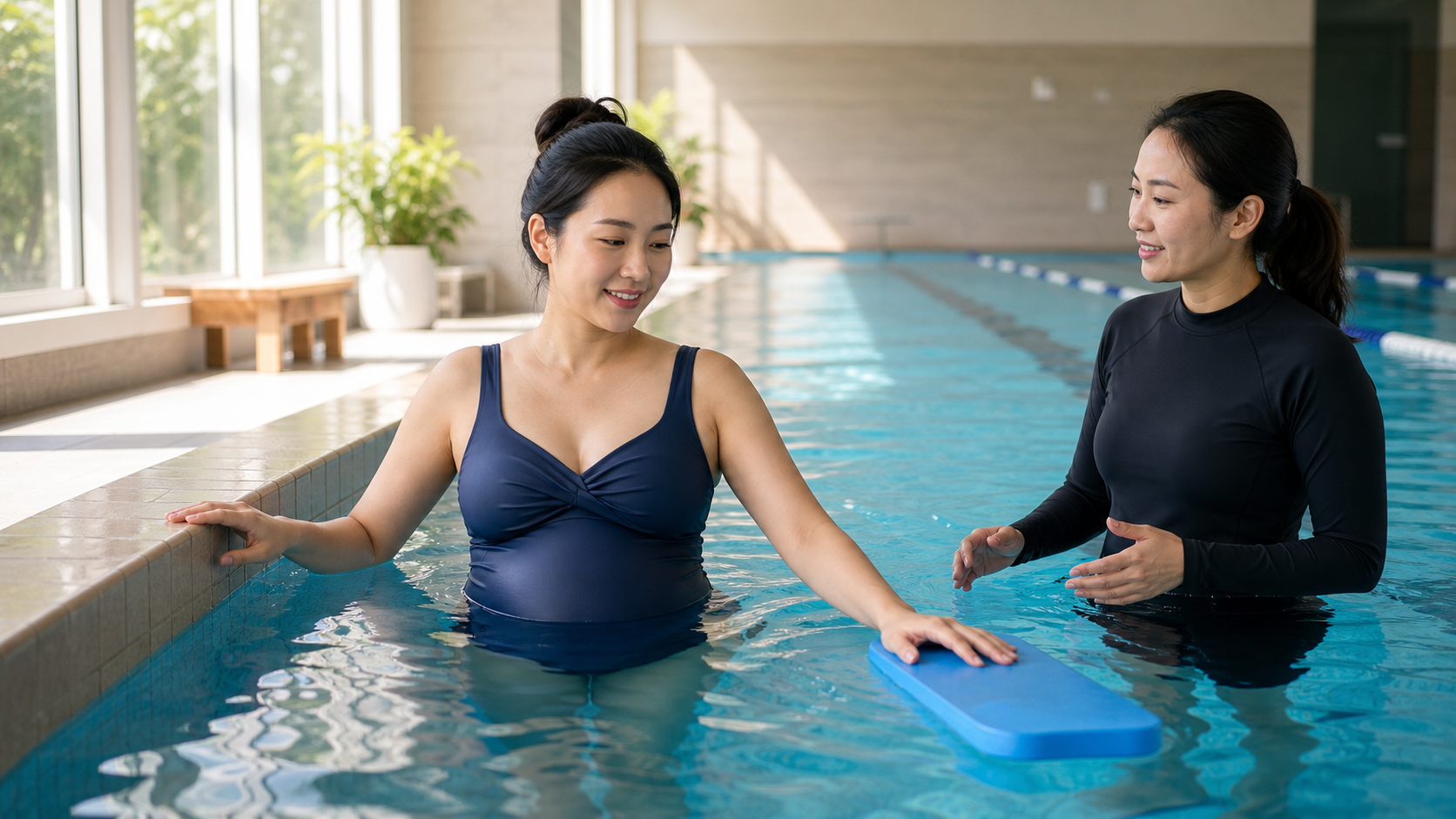
Introduction
Moderate exercise during pregnancy has been backed by extensive scientific evidence for its benefits to both maternal and fetal health. The Taiwan Association of Obstetrics and Gynecology recommends that pregnant women accumulate at least 150 minutes of moderate-intensity aerobic exercise per week, and swimming is among the most widely recommended options—the buoyancy of water significantly reduces the strain of pregnancy weight on the lumbar spine and pelvis, water temperature helps regulate body heat to prevent overheating, and the risk of falls is nearly nonexistent.
Key Benefits of Swimming During Pregnancy
Regular swimming during pregnancy offers a wide range of benefits:
- Reduced edema: Water pressure promotes venous return, improving the lower-limb swelling commonly seen in pregnancy
- Relief from back pain: Buoyancy supports the weight of the uterus, reducing muscle tension caused by lumbar lordosis
- Prevention of gestational hypertension: Regular aerobic exercise lowers the risk of gestational hypertension and preeclampsia by approximately 30%
- Management of gestational diabetes: Improves insulin sensitivity and supports blood sugar control
- Preparation for childbirth: Enhances breathing control, aiding respiratory regulation during labor contractions
- Faster postpartum recovery: Maintaining fitness during pregnancy leads to quicker physical recovery after delivery
Swimming Recommendations by Trimester
| Trimester | Weeks | Intensity Recommendation | Suitable Strokes | Prohibited Movements |
|---|---|---|---|---|
| First trimester | 1–12 weeks | Low to moderate (heart rate not exceeding 140 bpm) | Breaststroke, backstroke, freestyle (with breathing adaptation) | Diving, jumping in, intense sprinting |
| Second trimester | 13–27 weeks | Moderate (heart rate 120–140 bpm) | Freestyle and backstroke as primary strokes; reduce breaststroke kicking (pubic symphysis pressure) | Supine position for more than 3 minutes (compression of the inferior vena cava) |
| Third trimester | 28–40 weeks | Light to moderate (heart rate 110–130 bpm) | Water walking, backstroke, elementary backstroke | Breaststroke kicking (relaxed pelvic ligaments), rapid direction changes |
Special note—restrictions on breaststroke kicking:
After the second trimester, the hormone relaxin causes relaxation of the pelvic ligaments, and the outward abduction kicking motion of breaststroke may aggravate symphysis pubis dysfunction (SPD). If pelvic pain symptoms are already present, switch to freestyle kicking instead.
Safety Guidelines for Swimming During Pregnancy
Pre-swim assessment:
- Before each swim, confirm there is no abdominal pain, vaginal bleeding, or abnormal discharge
- Swimming is strictly prohibited if placenta previa has been diagnosed
- Swimming is prohibited for those with threatened miscarriage, signs of preterm labor, or cervical incompetence
Pool environment selection:
- Choose a pool with moderate chlorine levels to avoid irritation from high chlorine concentrations
- Water temperature should be 28–32°C; avoid overheating (core body temperature during pregnancy should not exceed 38°C for more than 10 minutes)
- Some maternal and child swimming centers in Taiwan (such as venues partnered with local health bureaus) offer water aerobics classes specifically designed for pregnant women
Entering and exiting the water:
- Use entry steps with handrails; avoid jumping in from the pool edge
- Avoid standing up quickly after exiting the water to prevent orthostatic hypotension
- Replenish fluids adequately after each swim (baseline water needs are already increased during pregnancy)
Frequently Asked Questions
- Can swimming cause infection? The risk of infection in compliant, chlorinated pools is extremely low, but swimming should be paused during an active bout of vaginitis
- Can I swim until just before delivery? Most obstetricians consider it safe for women without contraindications to swim up to 36–38 weeks, but rest frequency should be increased
- What about increased fetal movement in the water? Increased fetal movement during swimming is a normal response (due to water temperature changes and stimulation from the mother’s movements); there is no need for concern
Practical Tips
- Obtain written consent from your obstetrician before starting a swimming program during pregnancy.
- Aim for 15–20 minutes for your first swim, then increase by 5 minutes each week based on comfort level.
- Wear maternity-specific swimwear that provides proper abdominal support to avoid safety concerns from regular bikinis slipping.
- Swim with a partner or friend; do not swim alone.
- Exit the water and rest immediately if you experience any discomfort (dizziness, palpitations, or a sensation of contractions).
Conclusion
Swimming is one of the most pregnancy-friendly forms of exercise—the properties of water perfectly align with the physiological needs of pregnant women. As long as you adjust intensity and stroke selection according to your trimester, follow safety guidelines, and obtain medical clearance, swimming can bring physical comfort, emotional well-being, and thorough childbirth preparation throughout your pregnancy. With the growing availability of prenatal water exercise programs in Taiwan, mothers don’t have to go it alone—together, we welcome new life in the water.
Related Reading
- Safety Guide for Swimming During Pregnancy: Precautions and Benefits for Each Trimester
- Swimming Safety Guidelines During Pregnancy: Beneficial for Both Mother and Baby
- The Complete Guide to Swimming During Pregnancy: Safe Water Temperature, Stroke Selection, Intensity Limits, and Contraindications
- Swimming During Pregnancy: A Safety Guide and Its Benefits for Mother and Baby
靠單車減肥35公斤 心得分享與整理
7 年前
CT 喇低賽) 武嶺牽車 才是王道 西進牽車四小時內秘訣 攝手位置 如何判斷 防抽筋小秘訣
7 年前
一日北高常見問題大集合 | 攻略 | 路線 | 訓練 | 補給 | 自行車 單車 | 一日雙城 | 雙塔 | TWB北高360 | 屁股痛
6 年前
[教學] Premiere 影片 手震 修正 教學 防抖 單眼 影像 GoPro 穩定 Video Stabilization
8 年前
CT暗黑廚房) 車友必備 宇宙無敵鮮蚵湯 幫助訓練恢復 天然食補 好市多 超肥鮮蚵 破PR
7 年前
西進武嶺 免費訓練分析服務 Intervals | 練不夠還是練過頭?你哪一種類型選手?AI模型告訴你! | 備戰神器 | 公路車 訓練 | CT Yeh
4 年前
單車 一日北高 ( 雙城 ) 肥宅雙人瘋狂行 紀錄片 REACTO
10 年前
單車 梅山36灣 坡度介紹 路段介紹 空拍 (相關遊記影片,請參考說明或我的頻道喔,歡迎訂閱)
6 年前