How Swimming Improves Depression: The Neural Mechanisms by Which Aerobic Exercise Promotes Serotonin Secretion
Introduction
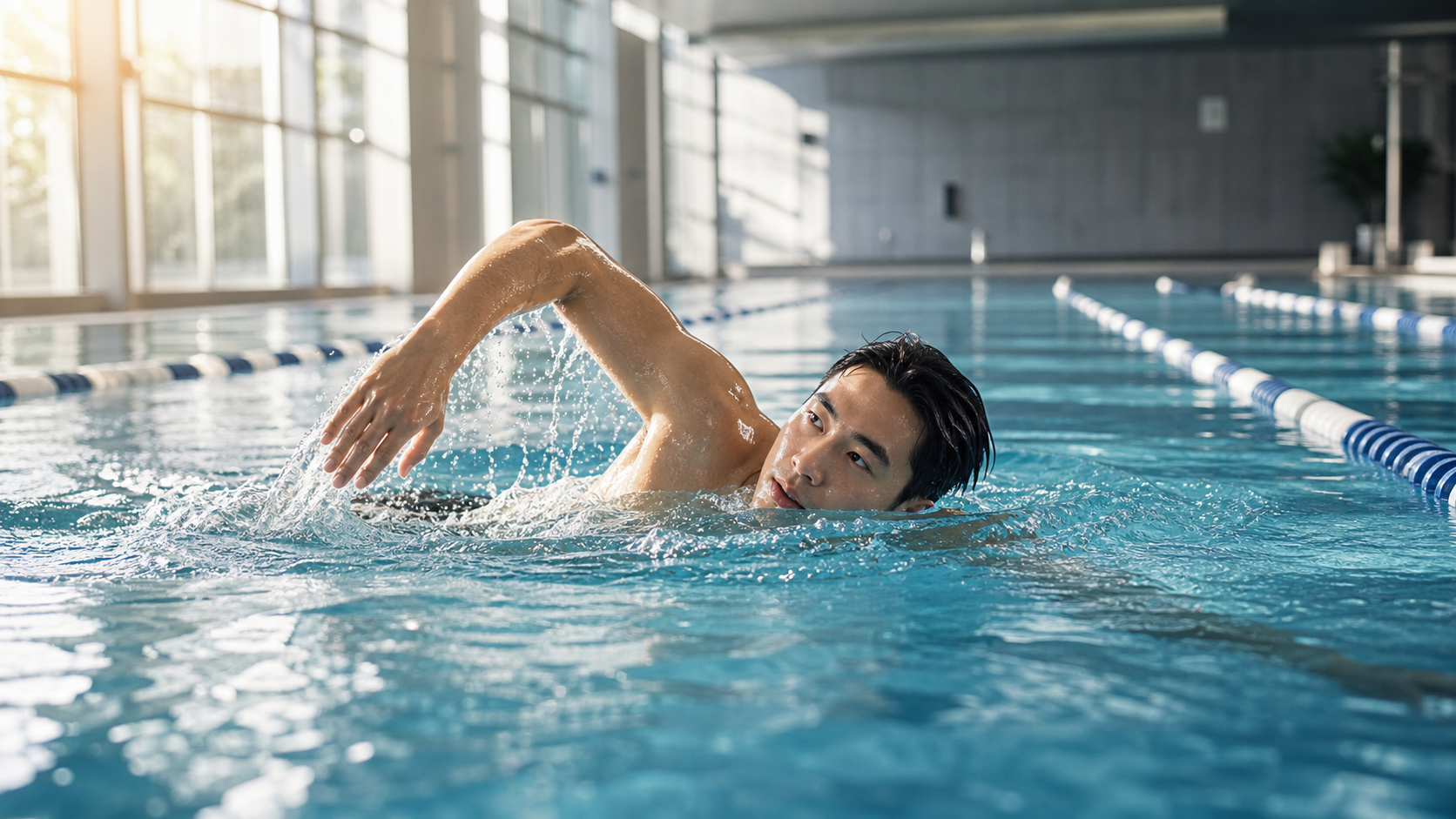
The lifetime prevalence of depression in Taiwan is approximately 8–12%, yet the treatment-seeking rate remains low. Medication is the primary treatment, but research shows that regular aerobic exercise can be as effective as antidepressant drugs (particularly SSRIs) in improving mild to moderate depressive symptoms. Swimming, as a form of exercise that combines aerobic activity, sensory stimulation, and social interaction, offers unique advantages in improving depression.
The Neurobiological Mechanisms of Swimming’s Antidepressant Effects
1. Serotonin System Activation
Aerobic exercise (including swimming) promotes the activation of serotonin neurons in the brain’s raphe nuclei, increasing serotonin concentration in the synaptic cleft—which is precisely the target of SSRI antidepressants. Swimming, with its distinctive rhythmic movements, produces a particularly sustained effect on serotonin secretion.
2. Increased Brain-Derived Neurotrophic Factor (BDNF)
Depressed patients show significantly lower BDNF levels in the hippocampus, accompanied by hippocampal volume atrophy. Aerobic exercise is one of the most effective non-pharmacological means known to promote BDNF secretion. After 8–12 weeks of regular swimming, plasma BDNF levels can increase by 20–40%, promoting hippocampal neurogenesis.
3. Dopamine and β-Endorphin Release
The “runner’s high” induced by swimming—the aquatic version might be called the “swimmer’s high”—originates from the massive release of β-endorphins, providing an immediate mood-boosting effect.
4. HPA Axis (Hypothalamic–Pituitary–Adrenal Axis) Regulation
Depressed patients typically exhibit excessive cortisol secretion. Regular aerobic exercise can modulate HPA axis reactivity, lowering baseline cortisol levels and reducing a core physiological abnormality of depression.
5. Additional Sensory Benefits of the Aquatic Environment
The tactile stimulation of water (water flow contacting the skin) can activate the vagus nerve, triggering the “relaxation response.” The blue visual environment of the pool and the sound of water have been confirmed by psychological research to produce a “blue mind” effect, lowering cortisol and enhancing mindfulness.
Summary of Research Evidence
| Study | Subjects | Intervention | Depression Assessment Tool | Results |
|---|---|---|---|---|
| Muñoz-Blanco et al. (2021) | Adults with moderate depression | Swimming 3 times/week for 12 weeks | BDI-II | Depression scores reduced by 38% |
| Mura & Carta (Cochrane Review, 2013) | Depressed patients | Various aerobic exercises (including swimming) | HAM-D | Large antidepressant effect (d=0.82) |
| Taiwan Veterans General Hospital Psychiatry Study (2020) | 40 patients with mild depression | Aquatic aerobic exercise for 8 weeks | PHQ-9 | Intervention group showed significantly greater improvement than control group |
Practical Recommendations for Swimming as an Adjunct to Depression Treatment
Key Challenge—Low Motivation:
The most difficult aspect of depression is that the illness itself undermines the will to act. The following strategies can help overcome initial barriers:
- Structured Scheduling: Set fixed times (e.g., Monday, Wednesday, Friday at 9 AM) and put them on the calendar to reduce the mental energy cost of decision-making each time
- Minimum Commitment Method: Set the initial goal as “just get to the pool,” without forcing yourself to complete a fixed swimming volume
- Social Accountability: Arrange to go with friends or a swimming club, using social commitment to boost the motivation to leave the house
Integration of Taiwan’s Mental Health Resources:
- Swimming should be combined with psychotherapy (Cognitive Behavioral Therapy, CBT); do not completely replace medication or psychotherapy with swimming
- Community Mental Health Centers in Taiwan’s cities and counties offer free counseling (Ministry of Health and Welfare’s 1925安心專線)
- Some hospital psychiatry departments have “exercise therapists” or exercise prescription services in partnership with sports centers
Practical Recommendations
- Set a goal of 20–30 minutes of moderate-intensity swimming per session (able to talk but slightly breathless), 3–4 times per week.
- Record your emotional state (1–10 scale) after swimming to build your own “emotion–exercise” correlation data.
- Choose a pool with morning swim classes or an established swimming community—social connection is the best motivation for maintaining a routine.
- Inform your physician about your exercise plan while taking antidepressant medication, as heart rate responses during exercise may need monitoring with certain drugs.
- If you cannot swim at all on a given day, accept it and continue with tomorrow’s plan—perfectionism is a major enemy of depression.
Conclusion
The effectiveness of swimming in improving depression has been elevated from “folk wisdom” to a treatment adjunct supported by neuroscience. The multi-sensory therapeutic qualities of the aquatic environment, the serotonin-promoting effects of rhythmic exercise, and the sense of belonging from community swimming together form a recovery pathway that benefits both mind and body. For depression patients in Taiwan, walking into the pool with the support of their medical team may well be an important step toward recovery.
Related Reading
- The Benefits of Swimming for Mental Health: The Relationship Between Aquatic Exercise and Anxiety and Depression
- The Benefits of Swimming for Mental Health: Alleviating Anxiety and Depression
- Swimming and Mental Health: Scientific Research on Aquatic Meditation and Stress Reduction
- Swimming and Stress Management: Practical Methods of Aquatic Meditation and Mental Health Research on Regular Swimming
CT暗黑廚房) 車友必備 宇宙無敵鮮蚵湯 幫助訓練恢復 天然食補 好市多 超肥鮮蚵 破PR
7 年前
抖肩舞 台灣x日本交流版 (台灣 vs 前橋) 赤城山登山賽 coincidance
8 年前
台灣旅行團參加 第7回まえばし赤城山ヒルクライム大会 雙視點
8 年前
#公路車 #Vo2Max #最大攝氧量 測驗 體驗 | 心肺測試
6 年前
[防寒衣體驗] 鐵人魂 三鐵 防寒衣試穿會 於松運 深水游泳池 鯨魚池
8 年前
一日北高/長距離團騎 常見問題補充篇 / 組團或跟團的眉角 / 壯車友容易被瘦車友慢性拉爆 / 原來屁股痛可能是這個原因...? / 風場配速法 / 公路車 / CT Yeh
2 年前
#PUSHBIKE 原來這麼好玩! 小朋友 滑步車 初體驗 超可愛
6 年前
水金九不厭五分 10度寒流冷到不願停!feat. 卡卡 / 公路車 / CT Yeh
6 個月前