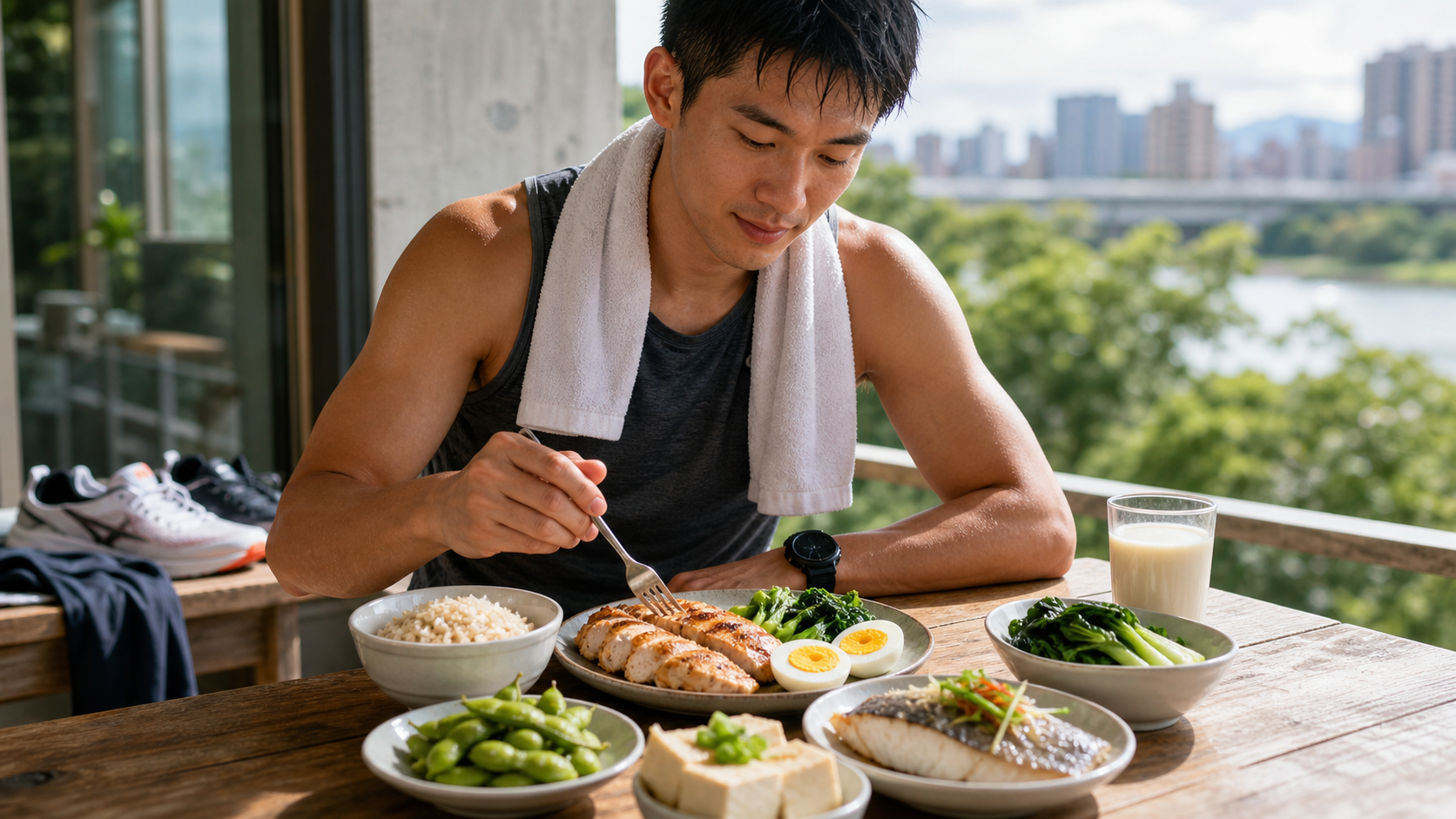
Introduction
Running is a high-impact, high-expenditure sport. While carbohydrates are the primary fuel, the role of protein is often severely underestimated. Protein is not only used to repair the micro-damage to muscles caused by the impact of every footstrike, but it is also the foundation for maintaining the immune system and synthesizing enzymes and hormones. For serious runners logging more than 40 km per week, a protein intake of 1.4–1.7g per kg of body weight is the minimum recommended standard set by the International Society of Sports Nutrition (ISSN). This article will help you easily reach this goal using ingredients familiar in Taiwan.
Why Runners Need More Protein
The general adult protein recommendation is 0.8g per kg, but endurance training demands far more than this:
- Muscle Repair: The eccentric contractions of running (downhill, braking) cause micro-tears in muscle fibers that require amino acids for repair
- Tendon and Bone Health: Collagen synthesis relies on amino acids such as proline
- Energy Substrate: In the later stages of long runs, approximately 5–10% of energy comes from the oxidation of branched-chain amino acids (BCAA)
- Immune Function: Glutamine is an important fuel for immune cells, and its depletion accelerates after heavy training
Protein Requirements and Training Intensity
| Runner Type | Weekly Mileage | Recommended Protein (g/kg/day) |
|---|---|---|
| Recreational Jogger | < 20km | 1.0–1.2 |
| General Amateur Runner | 20–50km | 1.2–1.4 |
| Serious Amateur Runner | 50–80km | 1.4–1.7 |
| Elite Marathon Runner | > 80km | 1.6–2.0 |
Protein Content of Common Taiwanese Ingredients
Animal Protein (per 100g edible portion)
| Ingredient | Protein | Fat | Notes |
|---|---|---|---|
| Chicken Breast (skinless) | 23g | 1g | Highest quality lean protein |
| Pork Loin | 22g | 4g | Common main dish in Taiwanese bento boxes |
| Tilapia (Taiwan Tilapia) | 20g | 2g | Taiwanese aquaculture, great value |
| Beef Shank | 21g | 5g | Rich in collagen |
| Boiled Egg, 1 (50g) | 6g | 5g | Highest complete protein score |
| Low-Fat Milk 240ml | 8g | 4g | Contains whey protein |
Plant Protein (per 100g edible portion)
| Ingredient | Protein | Notes |
|---|---|---|
| Firm Tofu | 8g | Traditional Taiwanese food, easy to find |
| Edamame (shelled) | 13g | Complete protein, contains all essential amino acids |
| Soy Milk 240ml | 8g | Top breakfast choice |
| Tempeh | 19g | Fermented soy, high absorption rate |
| Black Beans | 36g (dry weight) | Traditional Taiwanese ingredient |
Sample Daily Menu for a 60kg Runner (Target: 95g Protein)
Using a target of 1.6g per kg, a 60kg runner needs approximately 96g of protein per day:
| Meal | Food | Protein |
|---|---|---|
| Breakfast | Soy Milk 450ml + 2 Tea Eggs | 22g |
| Morning Snack | Edamame 100g | 13g |
| Lunch | Chicken Breast 150g + Tofu 100g + Brown Rice | 38g |
| Afternoon Snack | Low-Fat Milk 240ml + Banana | 8g |
| Dinner | Tilapia Fillet 150g + Half Block of Firm Tofu + Vegetables | 35g |
| Total | Approx. 116g |
Protein Intake Timing Strategies
The Golden 30 Minutes After Exercise
Consuming 20–25g of protein within 30 minutes after a run maximizes muscle protein synthesis.
Recommended quick protein sources:
- Low-Fat Milk 500ml (contains whey protein)
- Unsweetened Soy Milk 500ml + 1 Tea Egg
- 3 Eggs (boiled)
Pre-Sleep Casein Supplementation
Consuming 30–40g of slow-release protein before bed (such as cottage cheese or Greek yogurt) can sustain muscle repair during sleep:
- Greek Yogurt 200g: approximately 17g protein
- Taiwanese Fermented Tofu (low salt): pair with meals
Practical Tips
- Make good use of convenience store resources: store-bought tea eggs, unsweetened soy milk, and chicken breast rice balls are the most convenient protein sources for Taiwanese runners
- No need to rely on whey protein powder—a combination of soy milk, tofu, and chicken breast can easily meet the target
- Include at least one protein source at every meal; avoid consuming excessive amounts in a single sitting (absorption efficiency decreases for single meals exceeding 40g of protein)
- For plant proteins, pair them with grains (such as brown rice + legumes) to achieve complementary amino acid profiles
Conclusion
Protein management is the most overlooked dietary task among road runners in Taiwan. There is no need to buy expensive supplements—starting with everyday soy milk, chicken breast, tilapia, and edamame, you can easily reach the athletic standard of 1.4–1.7g per kg using local Taiwanese ingredients. Let your muscles fully recover after every training session so you can steadily improve your running performance.
Related Reading
- Protein Needs for Runners: Timing and Food Sources for 1.4–1.7 g/kg Intake
- Protein Needs for Road Runners: Daily Intake for Muscle Repair and Synthesis
- Dietary Needs for Teenage Runners: Calorie and Protein Requirements During Growth
- Daily Protein Needs for Swimmers: Calculating Based on Body Weight and Training Volume
CT暗黑廚房) 車友必備 宇宙無敵鮮蚵湯 幫助訓練恢復 天然食補 好市多 超肥鮮蚵 破PR
7 年前
靠單車減肥35公斤 心得分享與整理
7 年前
一日北高常見問題大集合 | 攻略 | 路線 | 訓練 | 補給 | 自行車 單車 | 一日雙城 | 雙塔 | TWB北高360 | 屁股痛
6 年前
一日北高前的高裝檢 | 北高 360 | 挑戰11小時的裝備 | 一日雙塔 | 補給
6 年前
單車 一日北高 ( 雙城 ) 肥宅雙人瘋狂行 紀錄片 REACTO
10 年前
一日北高/長距離團騎 常見問題補充篇 / 組團或跟團的眉角 / 壯車友容易被瘦車友慢性拉爆 / 原來屁股痛可能是這個原因...? / 風場配速法 / 公路車 / CT Yeh
2 年前
16/02/16 - 夜訪中社路 緩慢進步中
10 年前
Live) 備戰2019彰化經典百K 賽前攻略 (已完賽請看新影片
7 年前